Navan
'the cave'
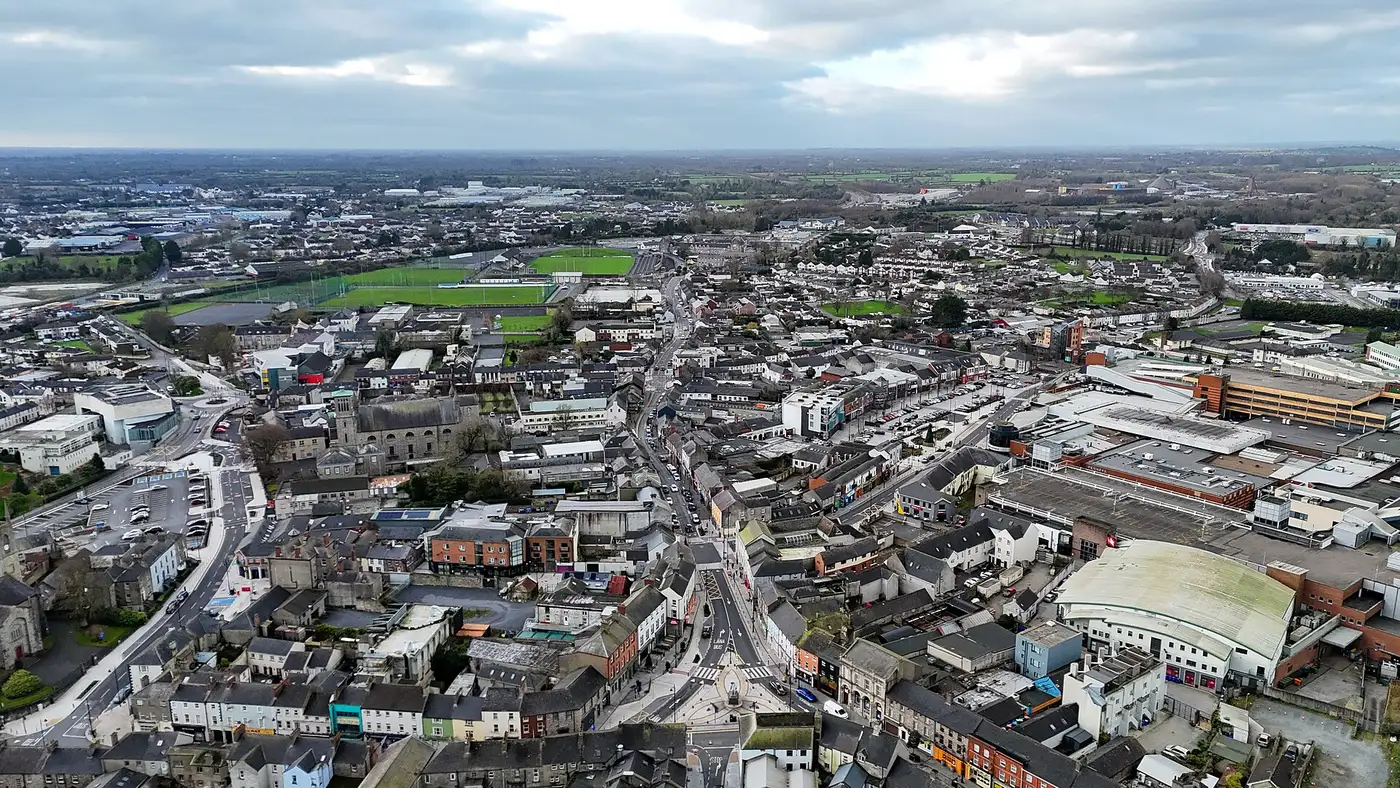
Where the Blackwater meets the Boyne, in the richest farmland in Ireland and among the greatest concentration of ancient monuments in Europe — Tara, Newgrange, Loughcrew and the Hill of Slane are all within a short drive. Tara Mines, Europe's largest zinc mine, is beside the town.
A small Roman bronze figure, probably a household god, was found in the Boyne near Navan, most likely left in the river as an offering, and two Roman coins have turned up in the town. Navan itself was founded by the Normans: Hugh de Lacy, granted Meath in 1172, gave the barony to his knight Jocelyn de Angulo, who built a fort from which the town grew. The three streets inside the old walls — Trimgate, Watergate and Dublingate, now Ludlow Street — keep their medieval line, though the buildings are Victorian and Edwardian. The town hall began as the bridewell in 1831.
Drawn from the History section of the Wikipedia article on Navan ↗, rewritten here and adding nothing it does not say; licensed CC BY-SA 4.0.
- Lia Fáil · tomb · 9 km
- Hill of Tara · royal site · 10 km
- Knowth · tomb · 14 km
- Newgrange · tomb · 15 km
- Newgrange cursus · tomb · 15 km
- Monknewtown · tomb · 15 km
- Athlumney Castle · castle · under 1 km
- Dunmoe Castle · castle · 4 km
- Durhamstown Castle · castle · 7 km
- Slane Castle · castle · 10 km
- Skryne Castle · castle · 11 km
- Trim Castle · castle · 13 km
Straight-line distances from the town centre, from each site's documented coordinates.
- Hill of Tara · Seat of the High Kings, with the Lia Fáil that cried out under a rightful king — and, in 1899, holes dug by British Israelites hunting the Ark of the Covenant.
- The Boyne · 1 July 1690 (12 July new style): William beats James at Oldbridge. Fewer died than at Aughrim a year later, but this is the battle everyone remembers.
- Monasterboice · Muiredach's Cross (the finest high cross in Ireland, a 10th-century Bible carved in stone) and a round tower still standing after a Viking burning in 1097.
- Brú na Bóinne (Newgrange) · Home of the Dagda, chief of the Tuatha Dé Danann, won by Aengus, god of love, who asked to stay 'a day and a night', meaning all days and all nights. In the older telling Aengus plays the trick on his foster-father Elcmar; later versions make the victim the Dagda himself.
- Tara — the Lia Fáil · The Stone of Destiny, one of four treasures of the Tuatha Dé Danann, which roared beneath the foot of every rightful king of Ireland.
- Ardee — the ford of Ferdia · Áth Fhirdia: where Cú Chulainn fought his foster-brother Ferdia for three days, killed him with the gae bolga, and wept over his body. The town is named for the dead man.
All of these are pinned on the Hidden Ireland map.
All towns and cities → · Every town name in Irish · Know Navan better? Add to the story.