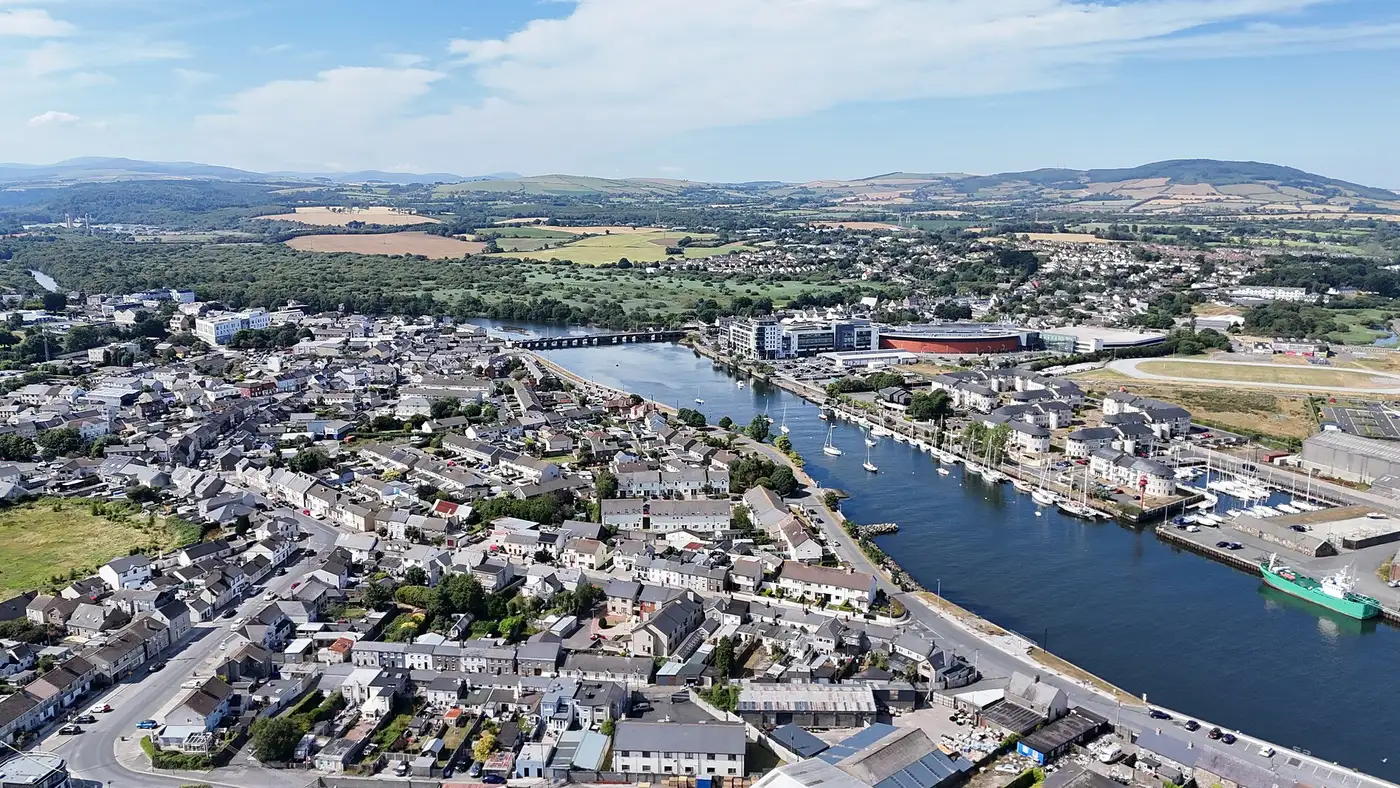
Arklow
Norse, 'Arnkell's meadow'; the Irish name means 'the great estuary'
A Norse-named fishing and shipbuilding port at the mouth of the Avoca. Its Tyrrell yard built Gipsy Moth III, in which Francis Chichester won the first single-handed transatlantic race in 1960. A pivotal battle of the 1798 rising was fought at the edge of the town.
Arklow's English name is Norse, Arnkell's lág, the low land of a Viking leader named Arnkell; in Irish it is An tInbhear Mór, the great estuary. Palladius, the first bishop sent to Ireland, is recorded as landing here in 431. After the Normans came, Henry II granted the town and castle to Theobald Walter, ancestor of the Butlers, and in 1264 the Dominicans were given the land still called Abbeylands. The MacMurrough kings of Leinster held the manor in the 15th century until Muiris Kavanagh gave it back to the Earl of Ormond in 1525.
In November 1649 Royalist troops ambushed Commonwealth soldiers outside the town and were beaten off. The Allens bought the manor from the Duke of Ormonde in 1714, and it passed by marriage to the Proby family, Barons Carysfort. On 9 June 1798 a large force of Wexford rebels attacked the town to carry the rising towards Dublin and was driven back with hundreds killed, one of the bloodiest battles of the rebellion. For most of its history Arklow was a seafaring town of shipping, fishing and shipbuilding.
Drawn from the History section of the Wikipedia article on Arklow ↗, rewritten here and adding nothing it does not say; licensed CC BY-SA 4.0.
- Castletimon Ogham Stone · ogham stone · 14 km
Straight-line distances from the town centre, from each site's documented coordinates.
All towns and cities → · Every town name in Irish · Know Arklow better? Add to the story.