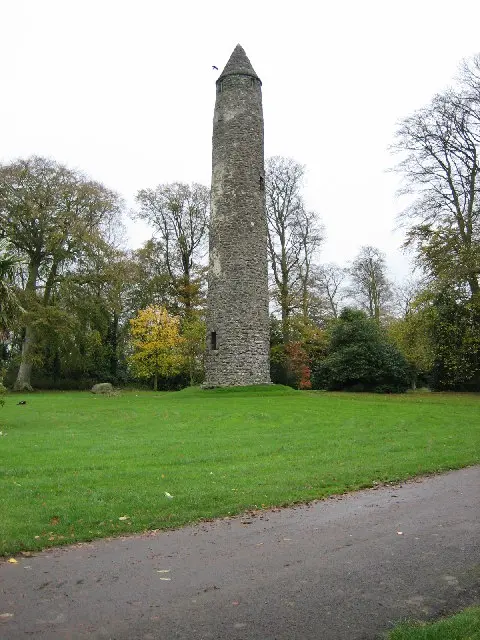
Antrim
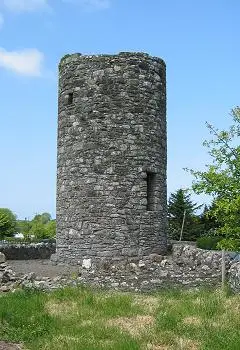
Built around 10th century.Its main entrance is 2 m above the ground, suggesting that it was used as protection. The site of the monastery was burned down in 1147. It is locally known as The Steeple.
Tall, tapering, and older than any castle in the country: the round tower is the one building the world recognises as Irish. Ireland has the survivors of well over sixty, with two in Scotland and one on the Isle of Man, and almost nothing like them anywhere else.
The Irish name says what they were for. Cloigtheach means bell house, and they were the bell towers of the early medieval monasteries — the bell rung by hand from the top, the tower always standing near a church, with its door facing the church's west doorway. That rule is so reliable that where a tower survives and the church does not, the position of the lost church can be worked out without digging.
The door is usually well above the ground, which is where the popular story comes from: that the monks climbed in and pulled the ladder up when the Vikings came. They may well have. The towers also kept the monastery's valuables, and a raised door on a building full of treasure needs no Vikings to explain it. What they were built as, first and foremost, was a bell tower and a landmark — a sign, visible for miles, that here was a house of God.
Most were built between the tenth and twelfth centuries. They were built to last, and did: the complete ones still stand around thirty metres, Ardmore in Waterford with a noticeable lean and three string-courses, Antrim locally known simply as The Steeple. The list below follows George Lennox Barrow's 1979 survey of every surviving tower, with its condition and height.
Sources: Wikipedia — Irish round tower ↗ · G. L. Barrow, The Round Towers of Ireland (1979), via the same article's survey table
Built around 10th century.Its main entrance is 2 m above the ground, suggesting that it was used as protection. The site of the monastery was burned down in 1147. It is locally known as The Steeple.
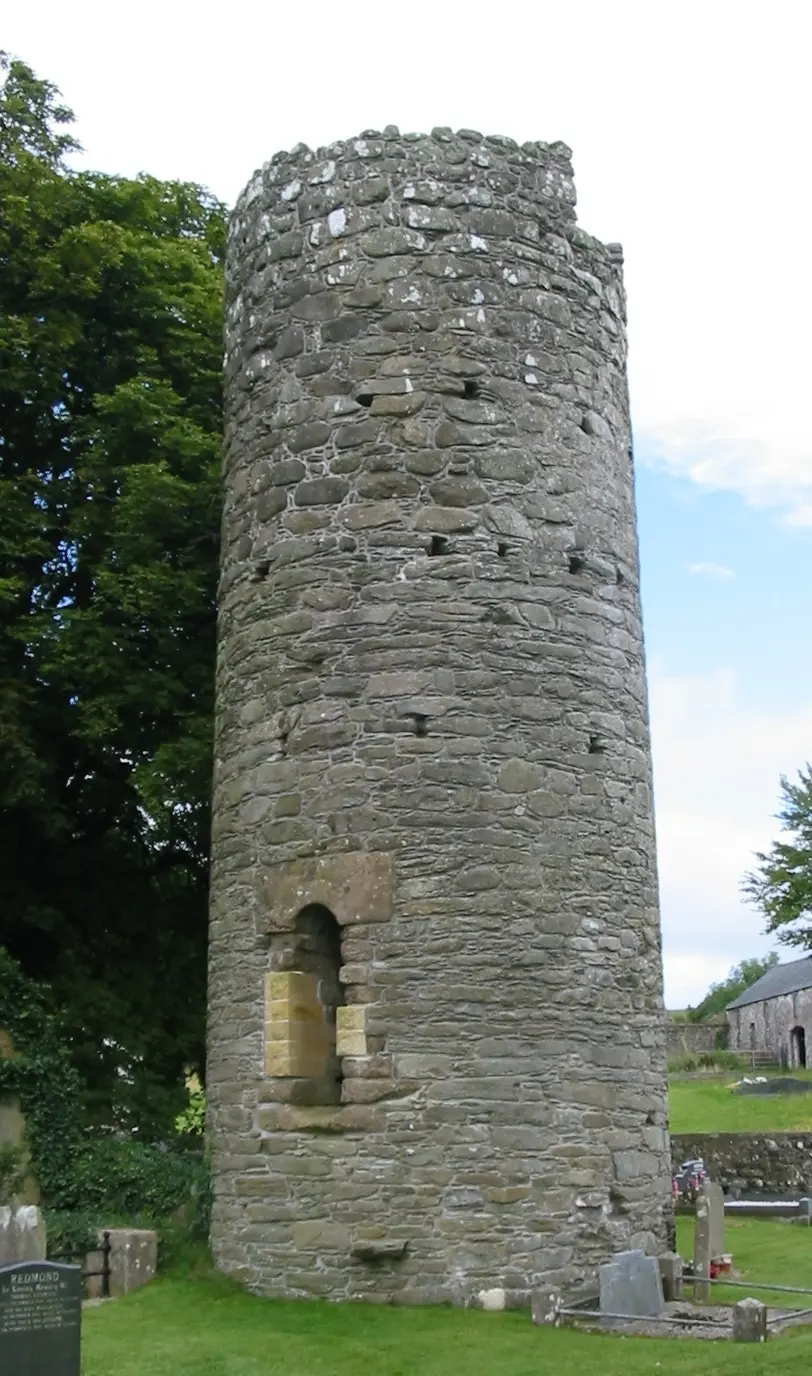
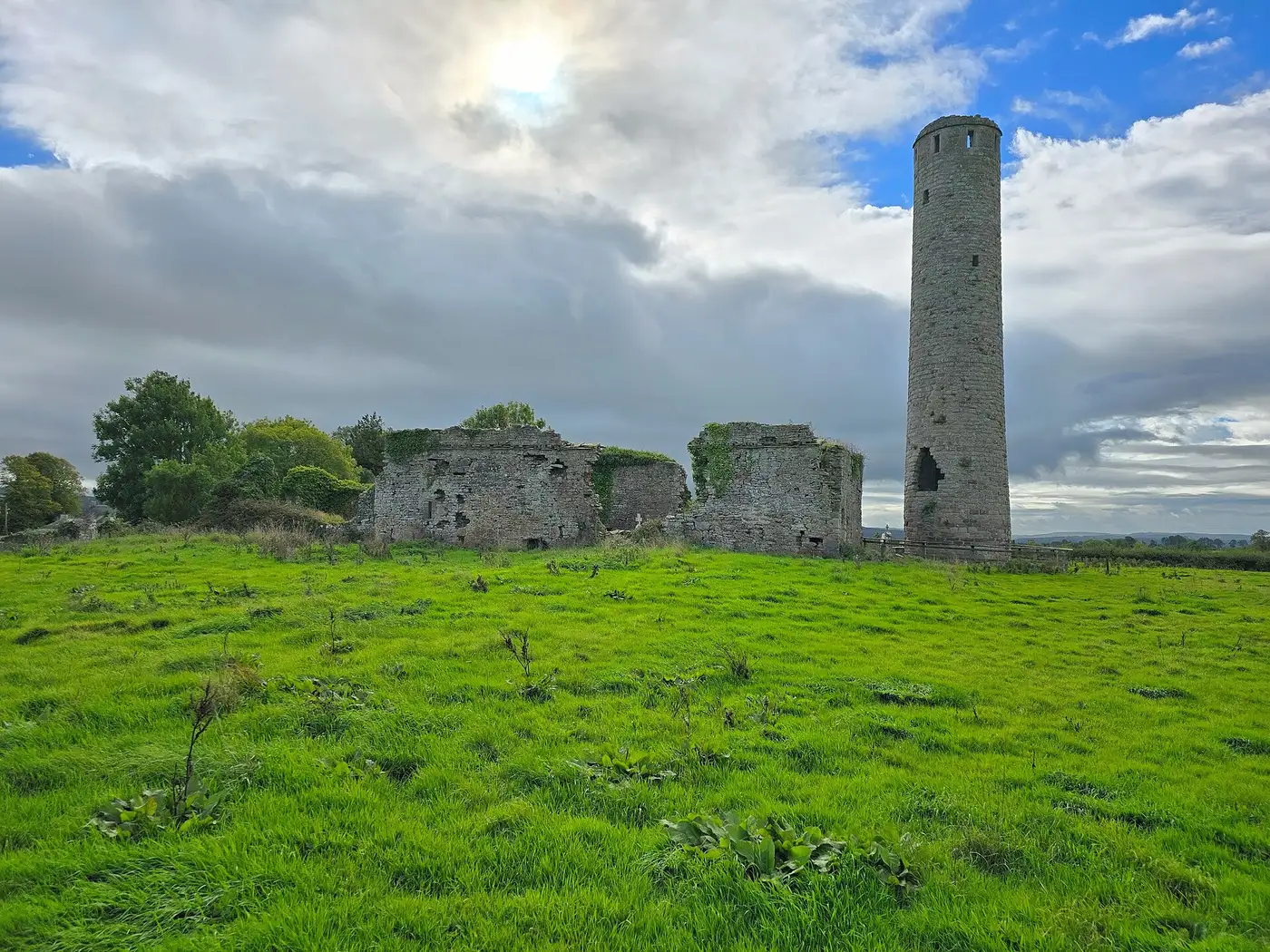
Round tower at Armoy, County Antrim — incomplete, 10.8 metres.
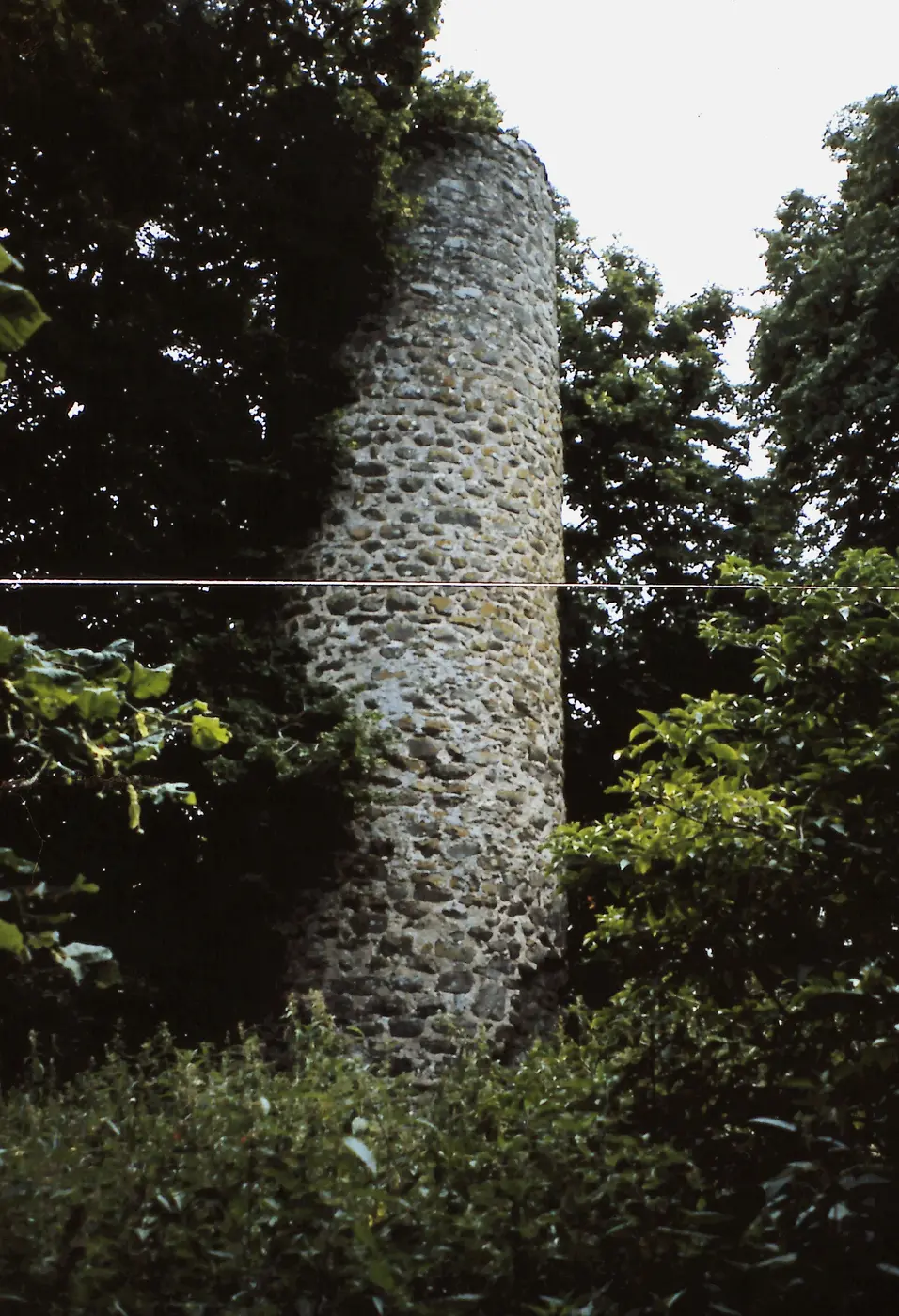
Round tower at Ram's Island, County Antrim — incomplete, 12.8 metres.
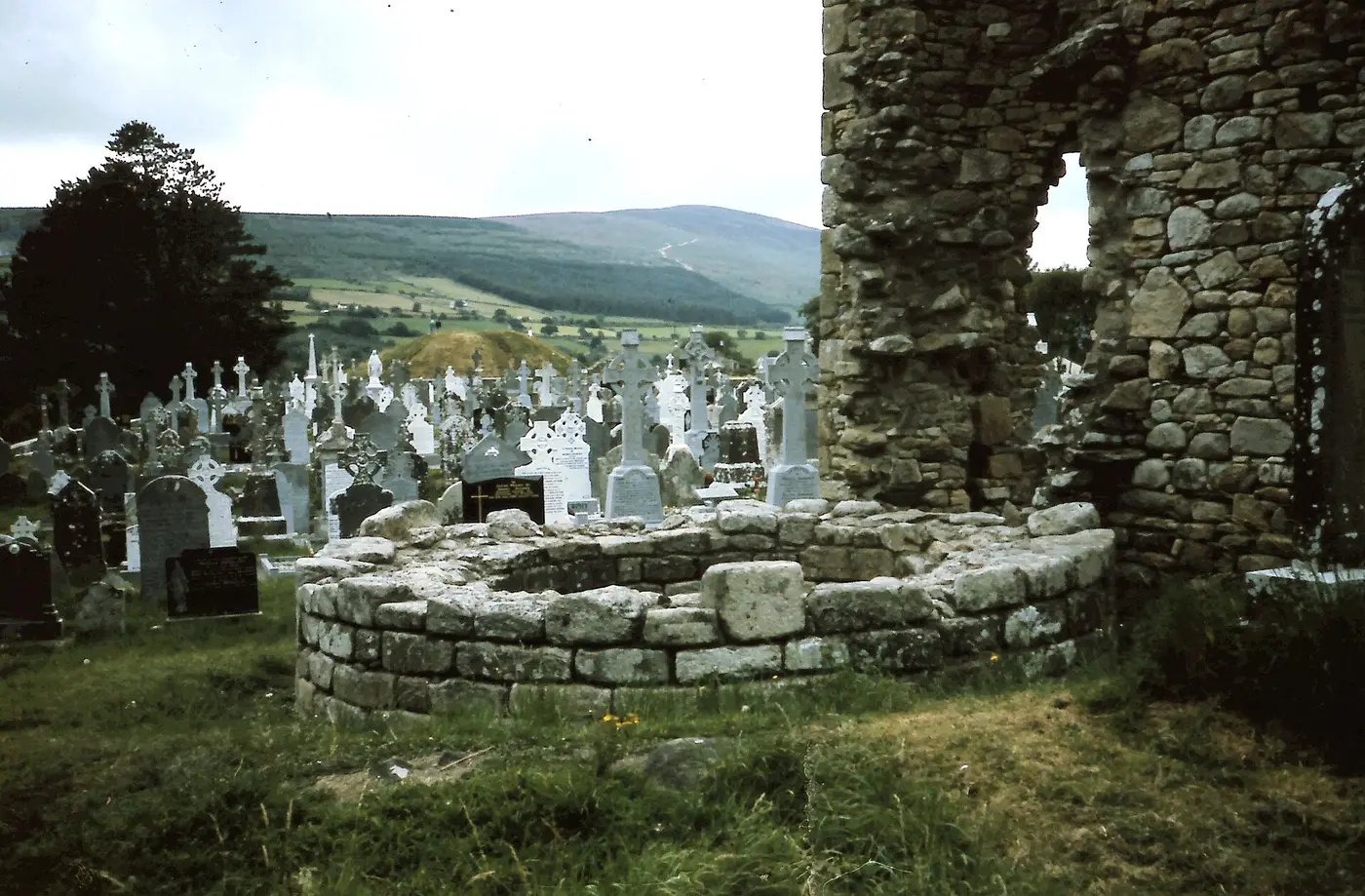
Round tower at St Mullin's, County Carlow — incomplete, 1 metre.
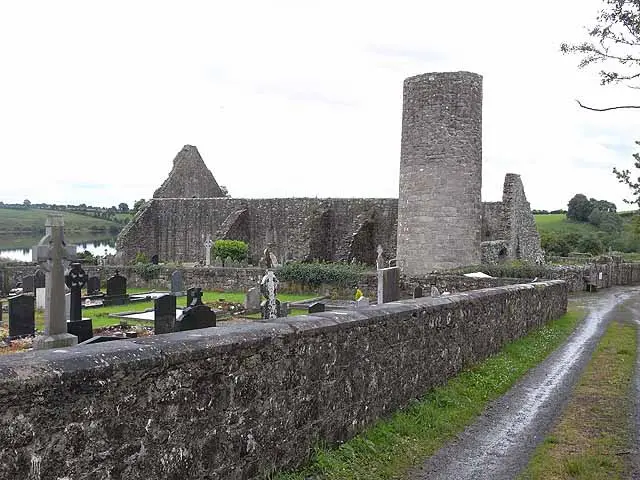
Two indistinct carvings of birds can be identified 2 m up on the north side of the tower.
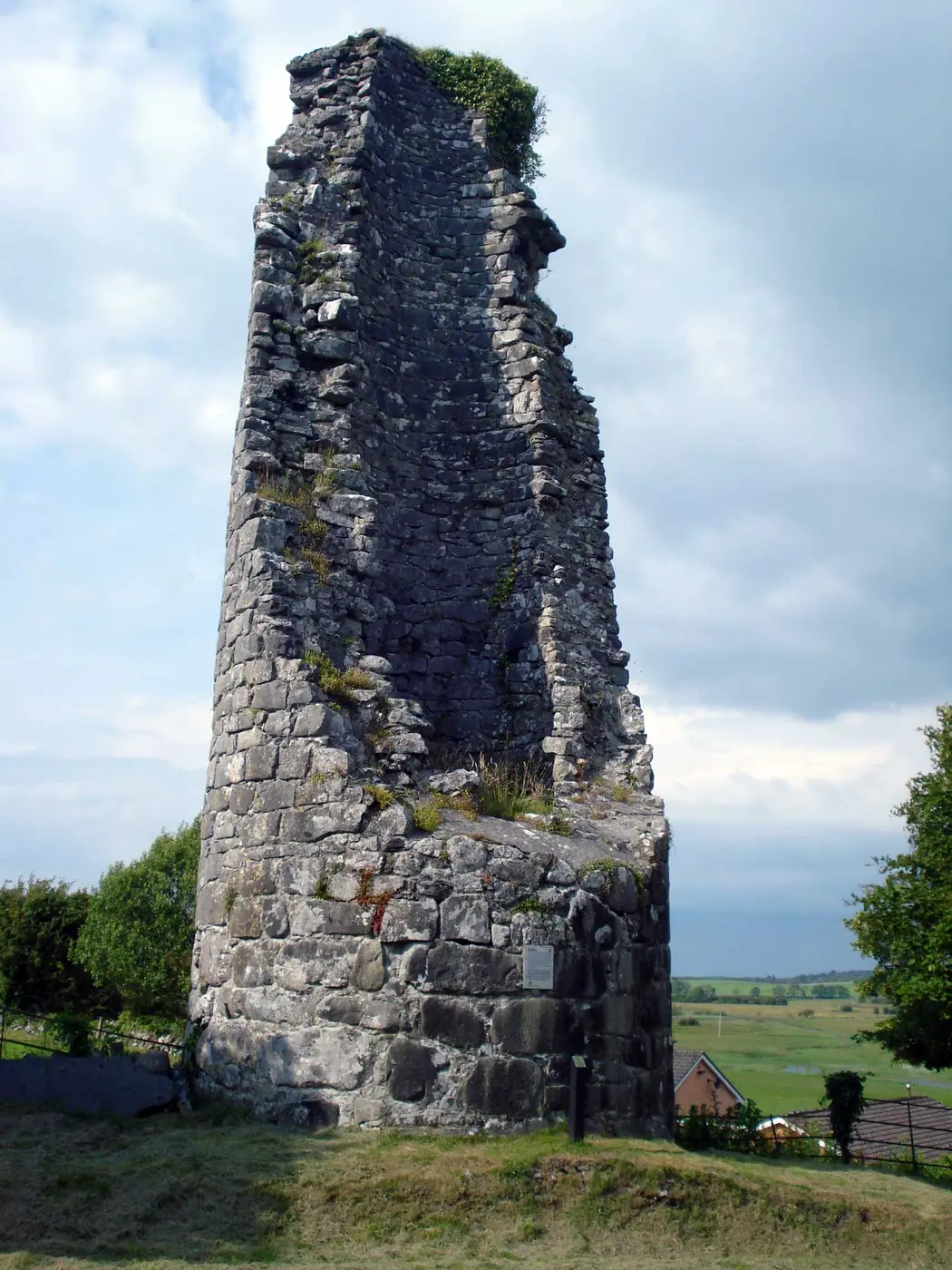
Round tower at Drumcliffe, County Clare — incomplete, 11 metres.
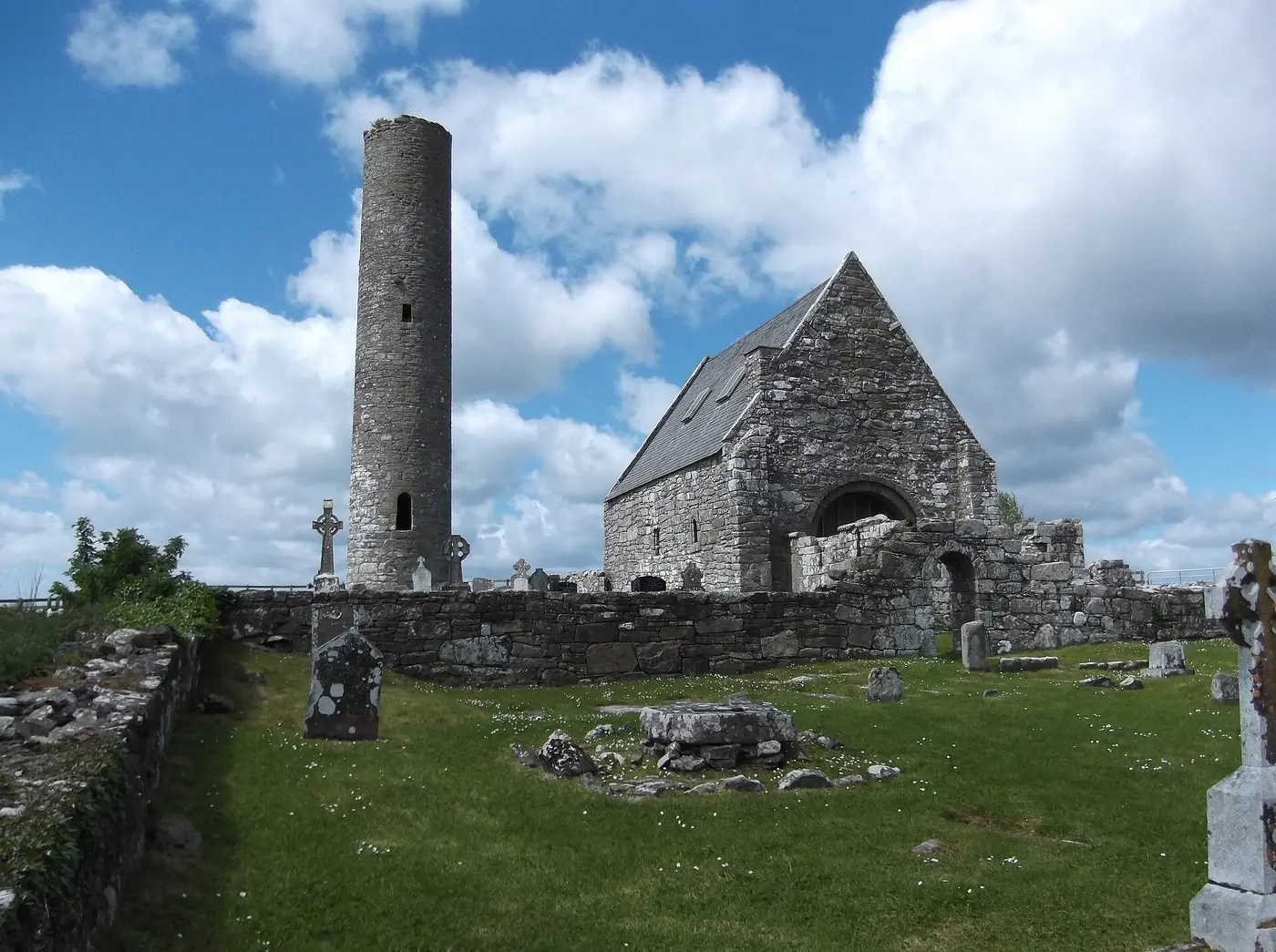
Round tower at Inish Cealtra, County Clare — incomplete, 22.3 metres.
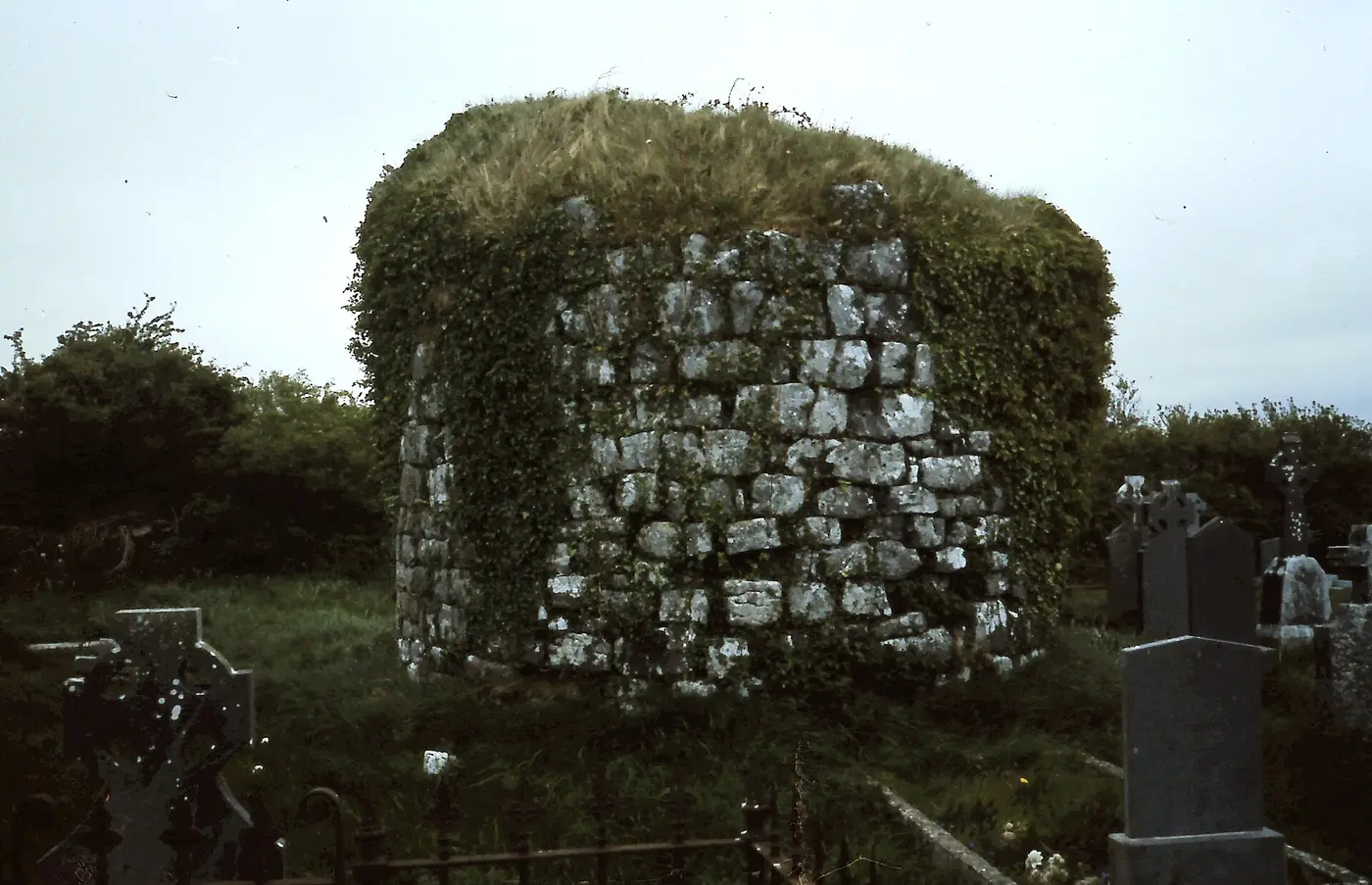
Round tower at Killinaboy, County Clare — incomplete, 3.5 metres.
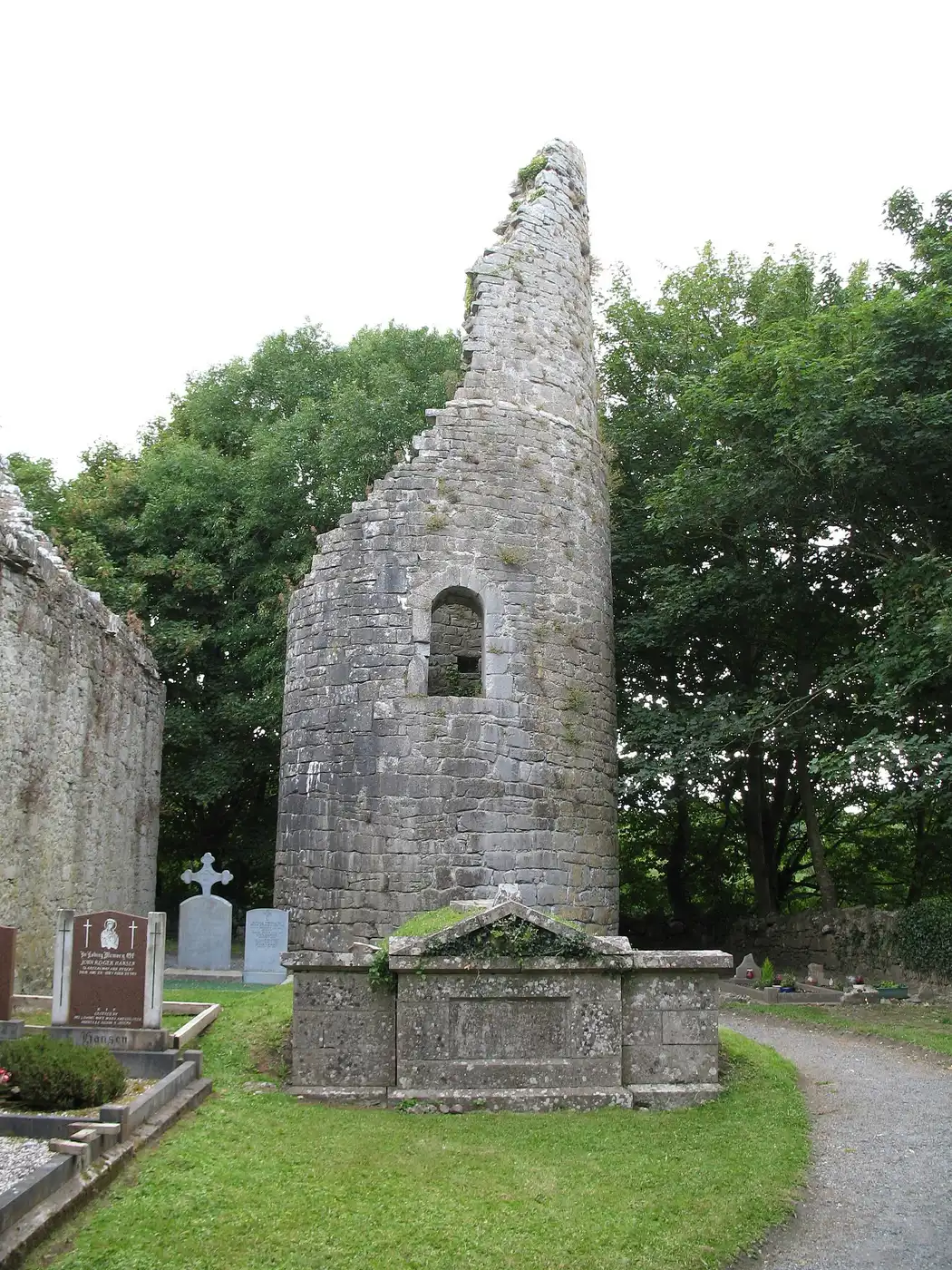
Round tower at Mollaneen, County Clare — incomplete, 15 metres.
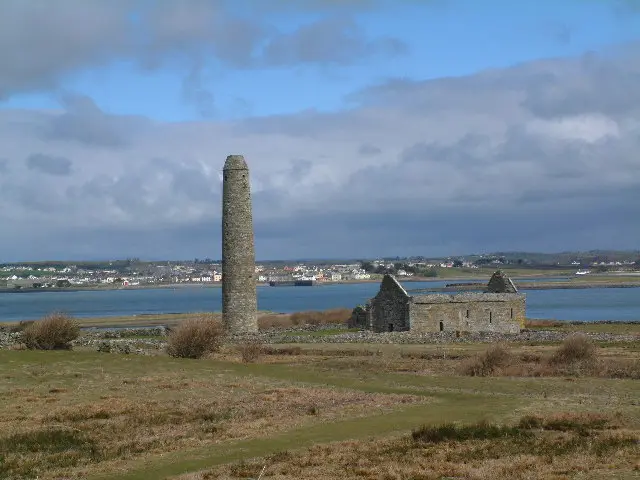
Doorway is at ground level
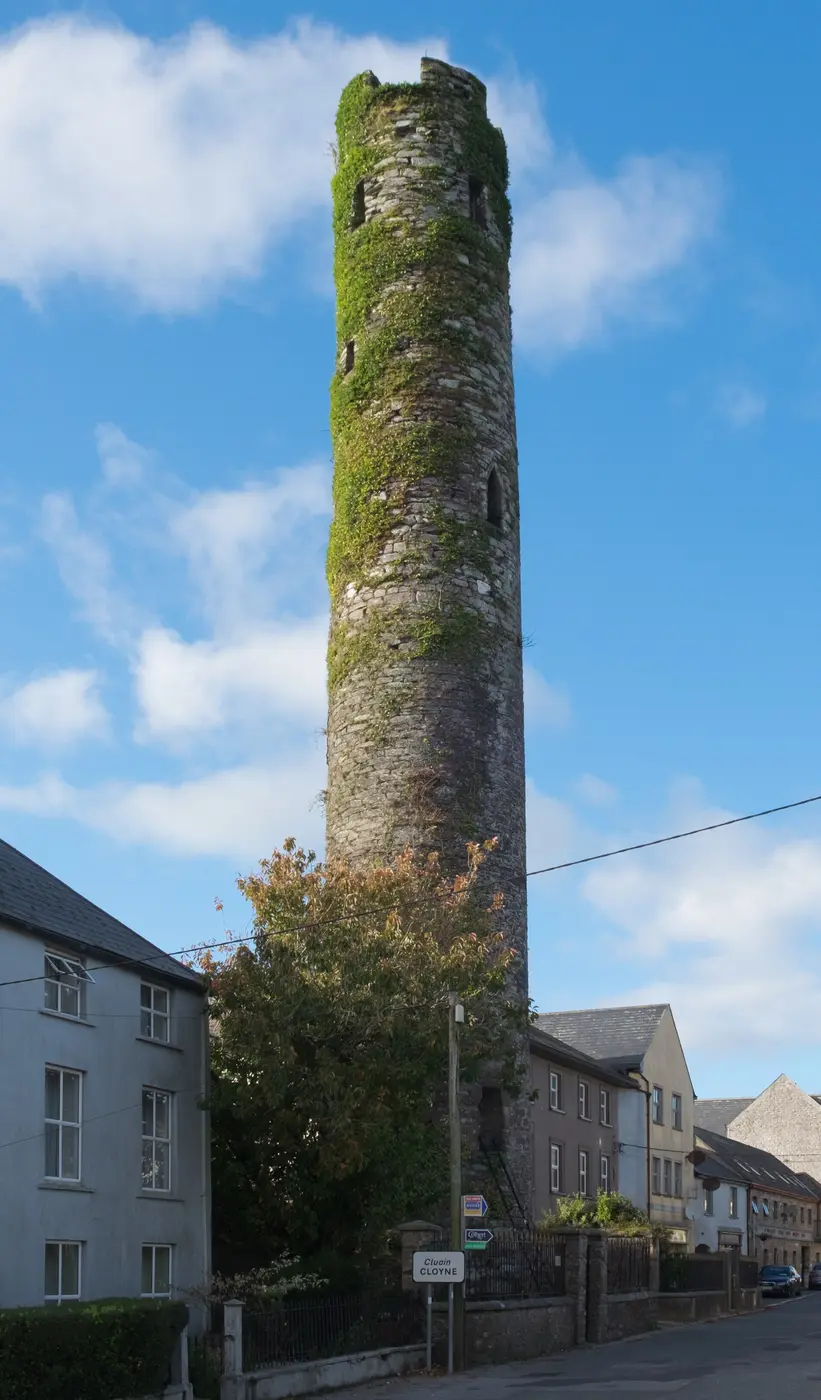
The conical cap has been replaced with battlements.
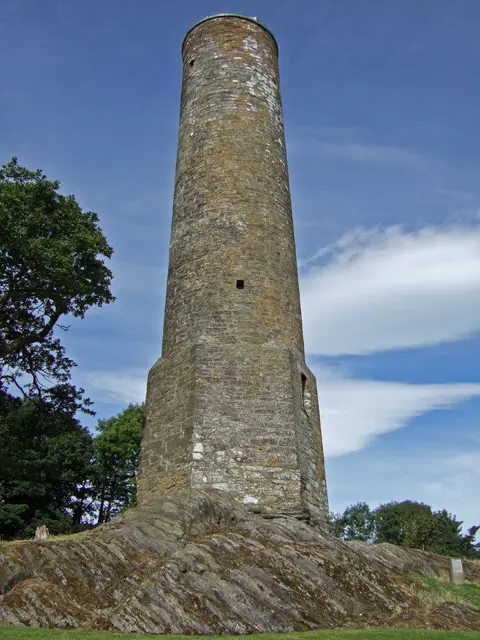
Has a hexagonal base and a sealed top
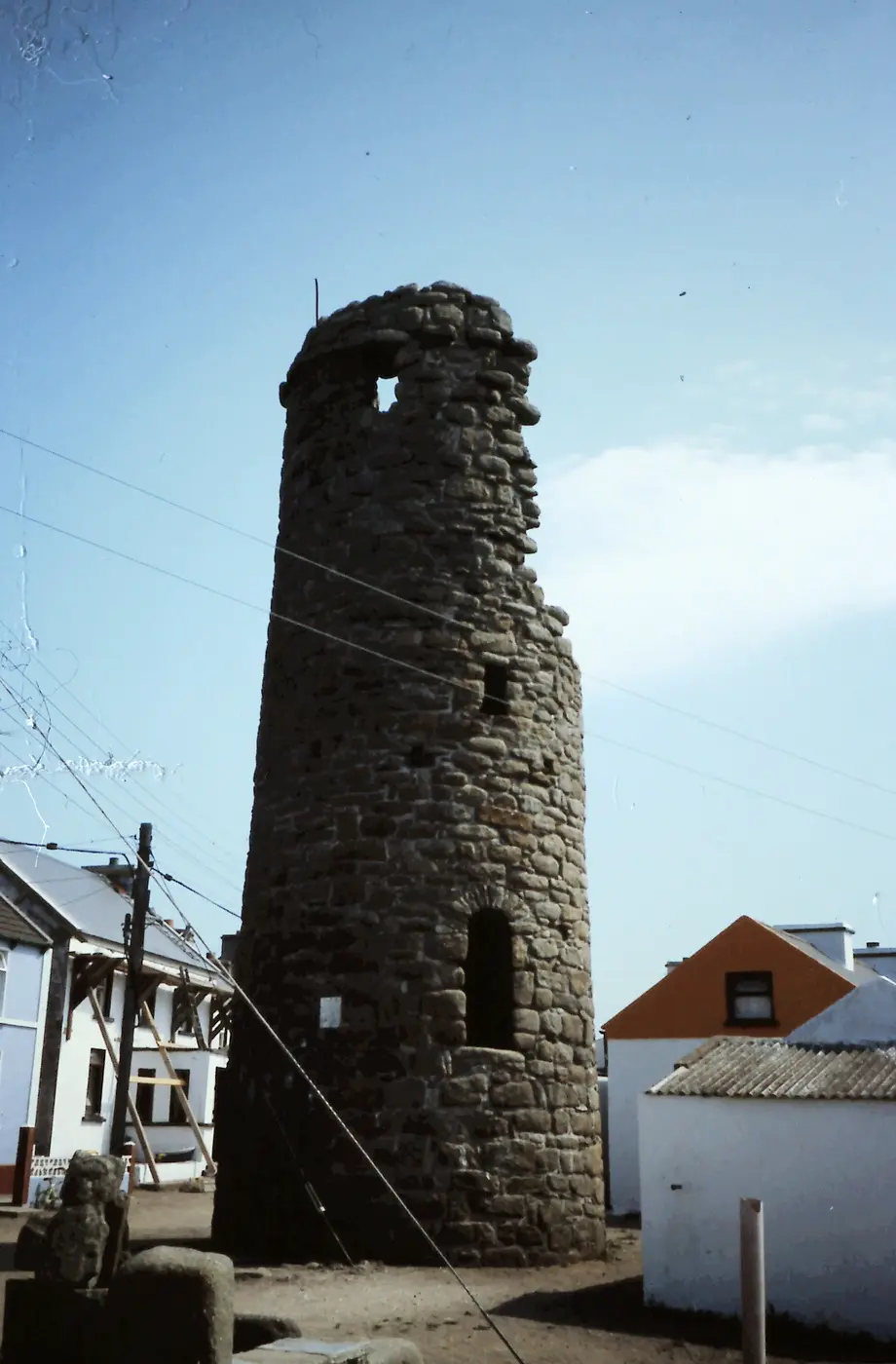
Round tower at Tory Island, County Donegal — incomplete, 12.8 metres.
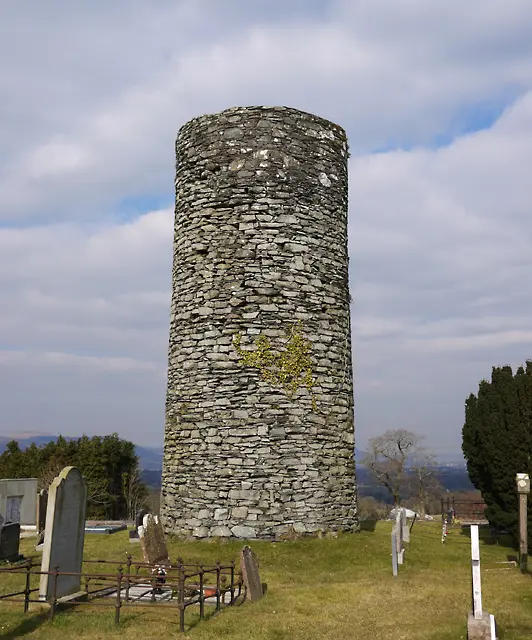
Round tower at Drumbo, County Down — incomplete, 10.25 metres.
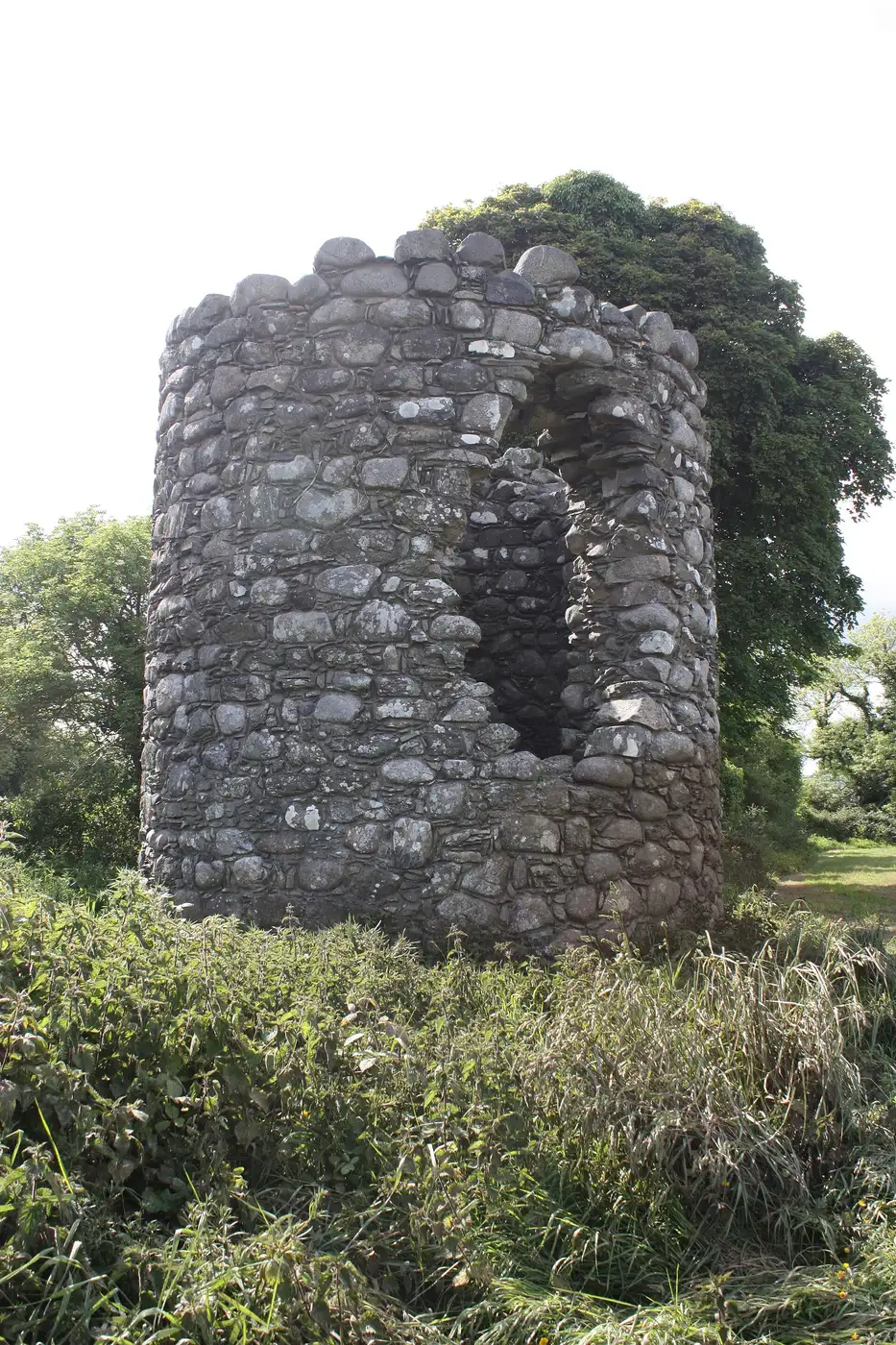
Stump with a large hole in the side
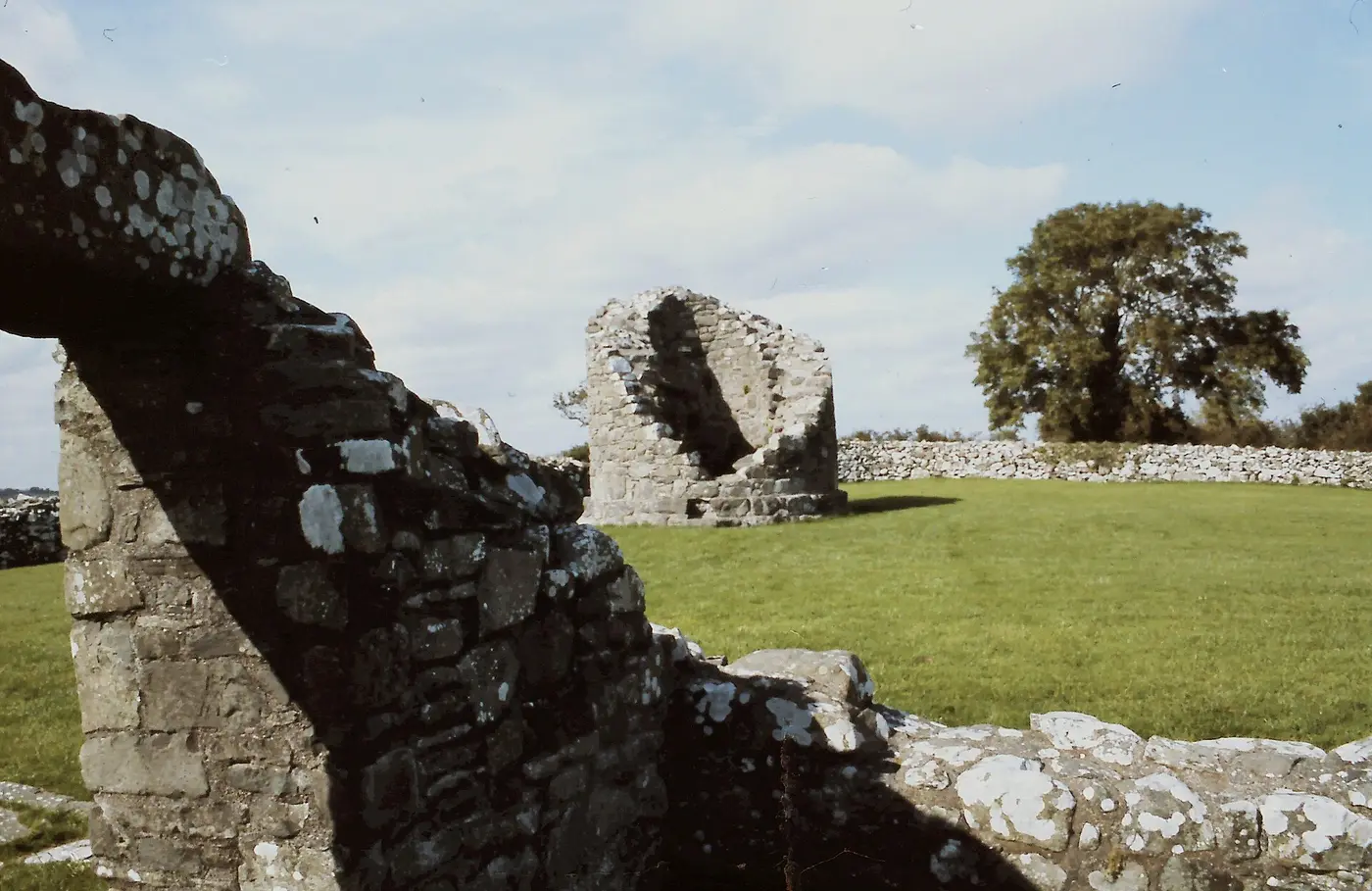
Round tower at Nendrum, County Down — incomplete, 4.4 metres.
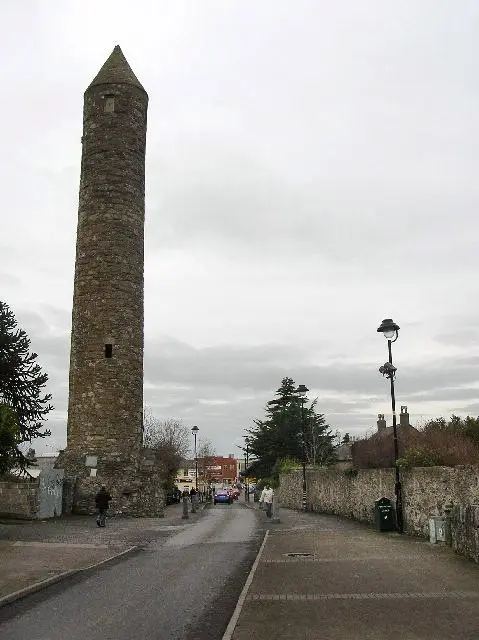
Strengthened by a stone buttress, has a stone staircase to the doorway. It is the narrowest known tower with a base diameter of 4.04 m
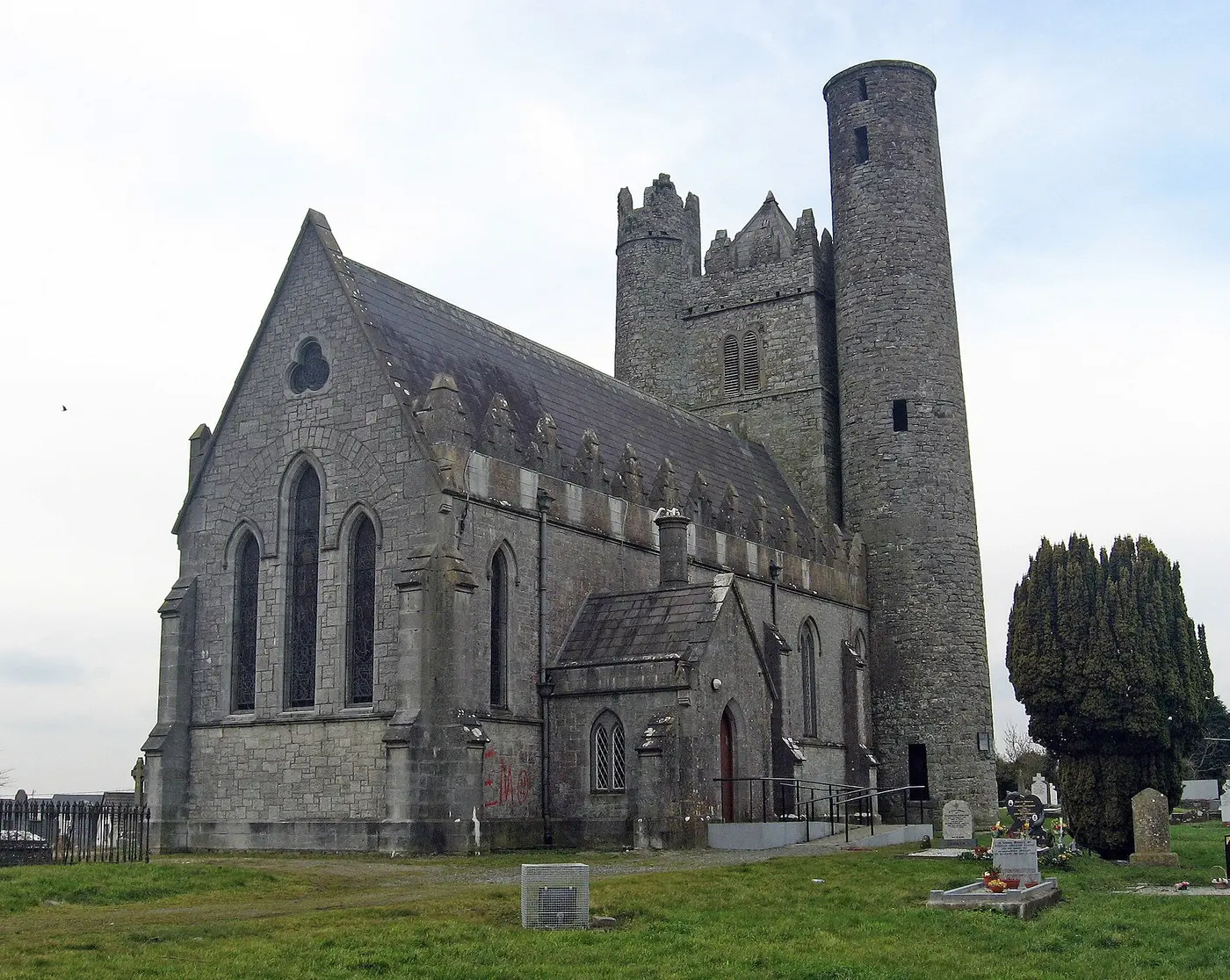
Full height but without cap; is attached to a later-built church
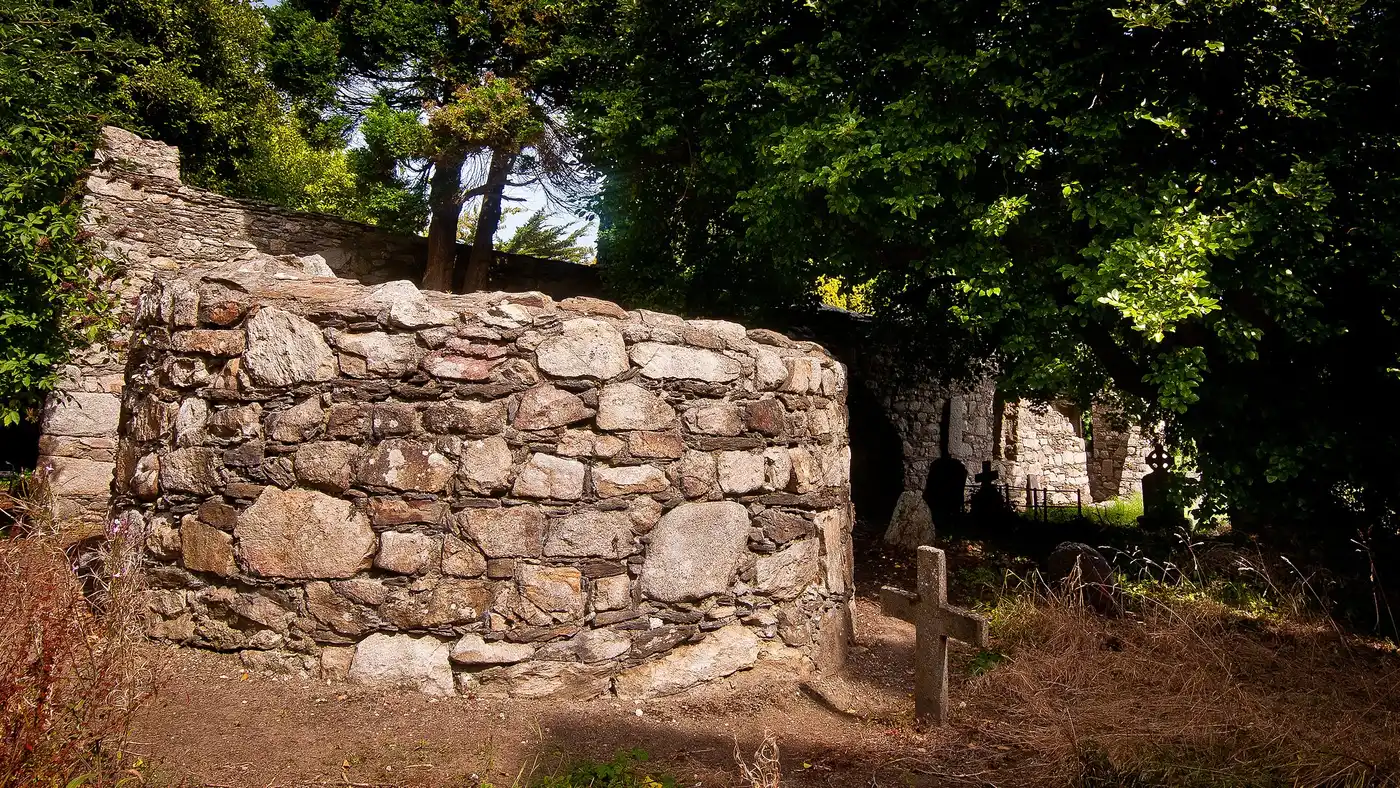
Said to have been used to place bodies after being buried in the graveyard for a number of years.
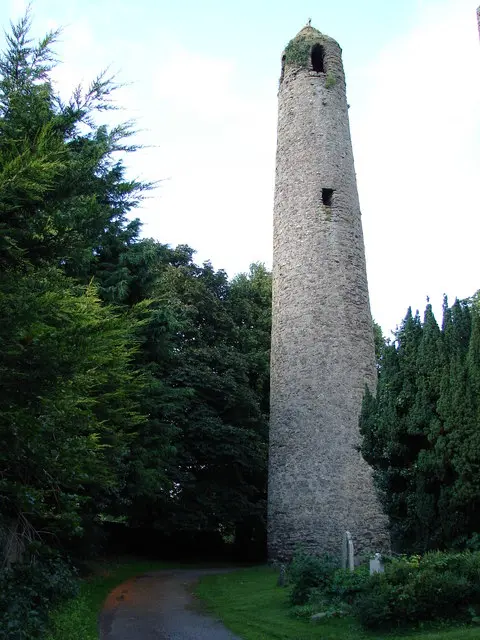
Has a deformed top floor, which is topped by a stone cross
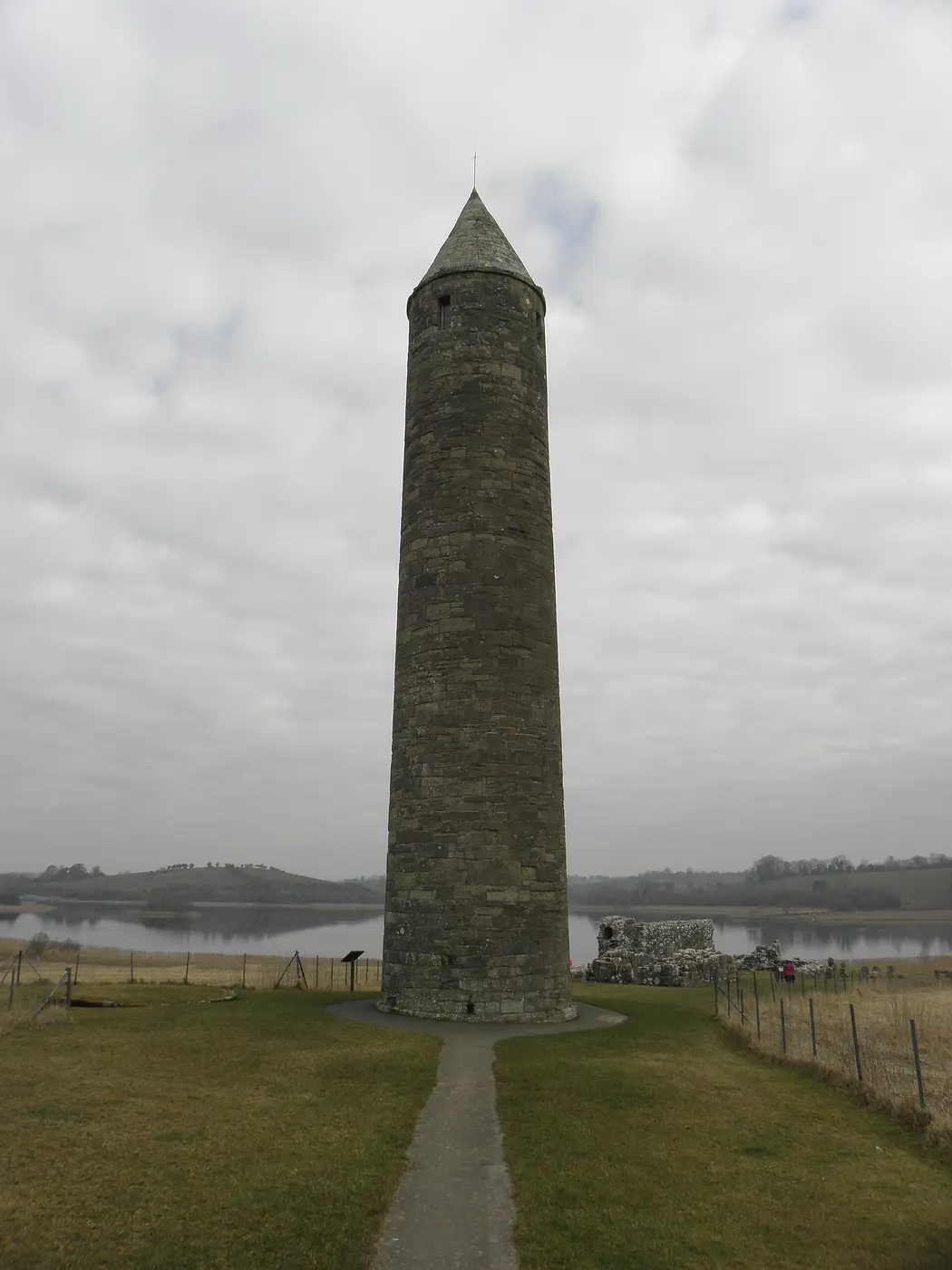
Climbable. Romanesque corbel heads below cap
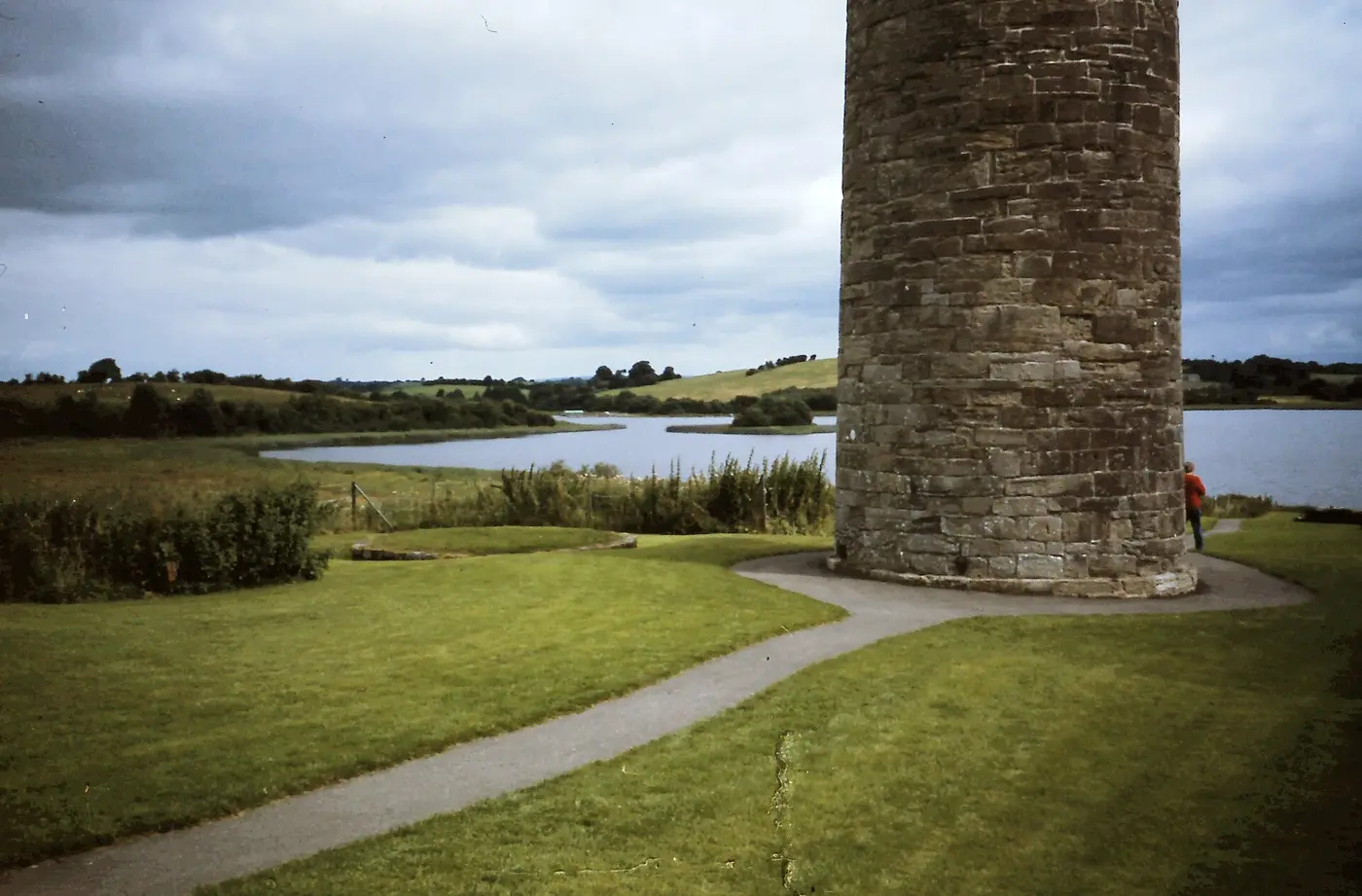
Foundation of tower directly adjacent to Devenish I
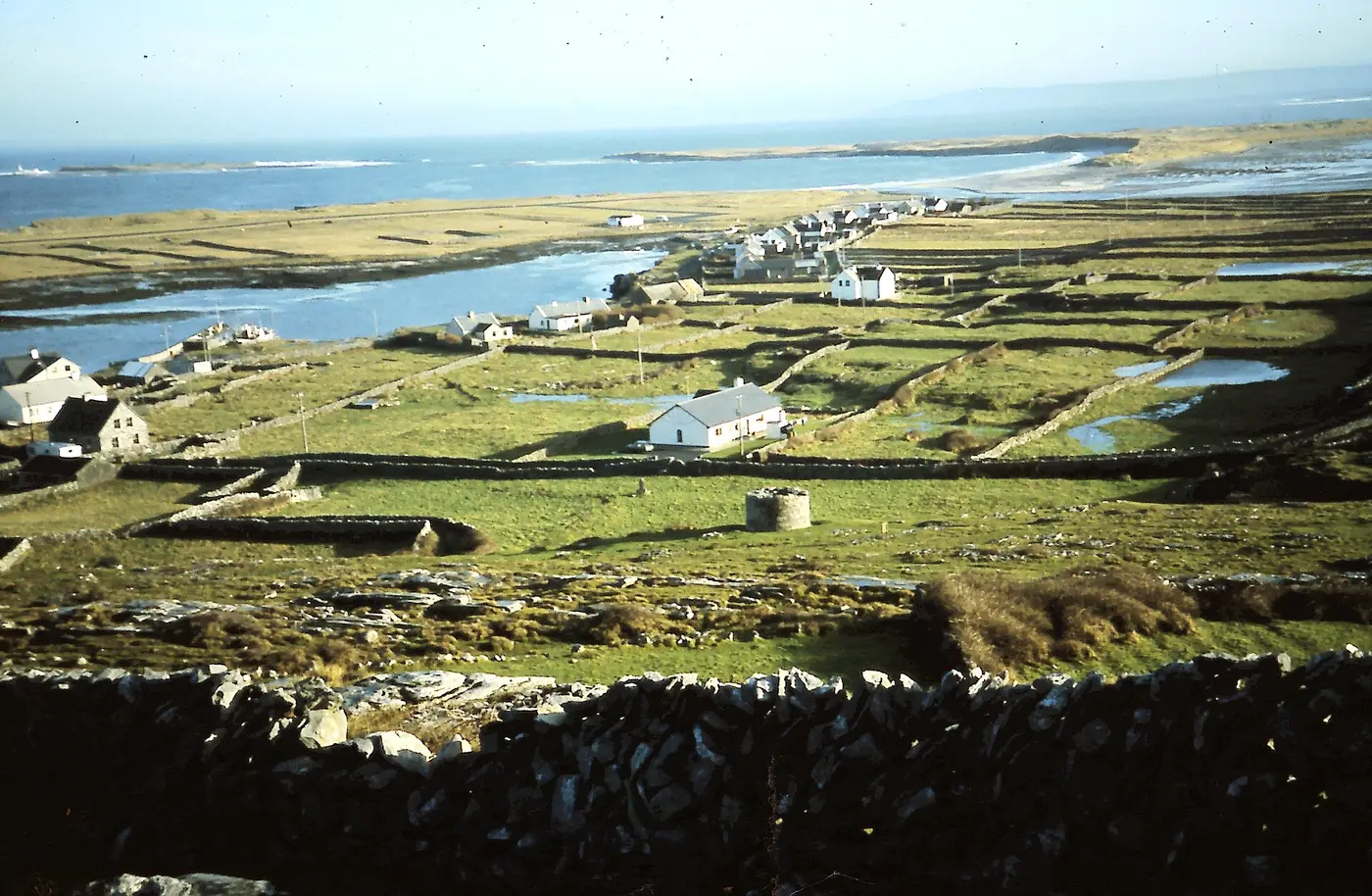
Round tower at Aran Islands, County Galway — incomplete, 3.02 metres.
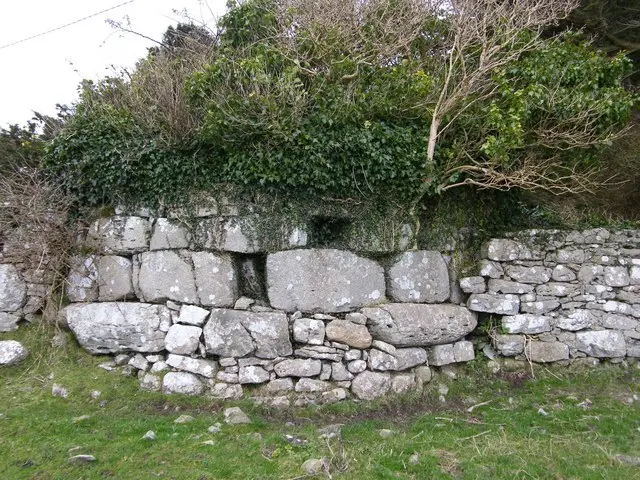
Round tower at Ardrahan, County Galway — incomplete, 3 metres.
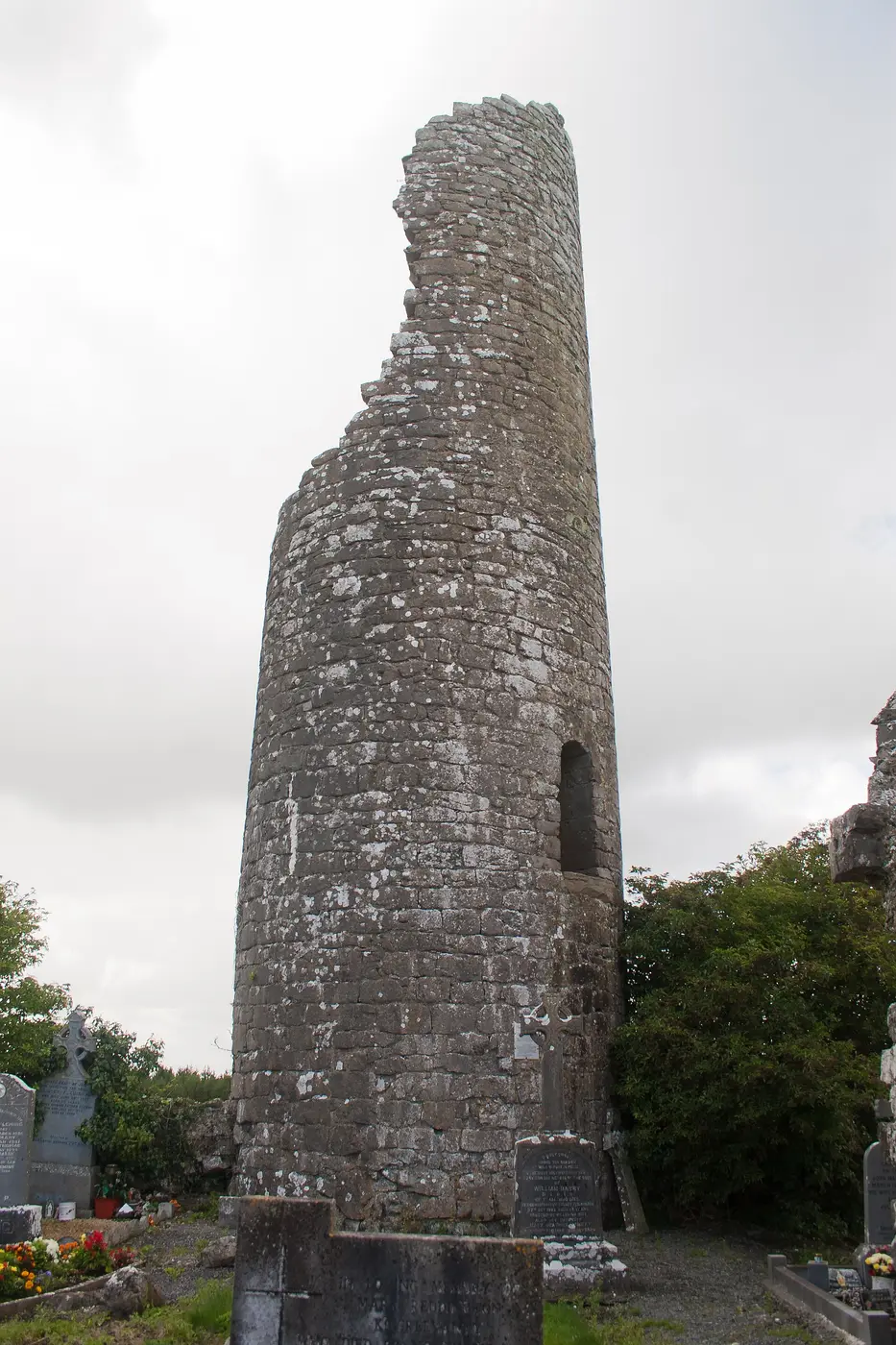
Round tower at Kilbennan, County Galway — incomplete, 16.5 metres.
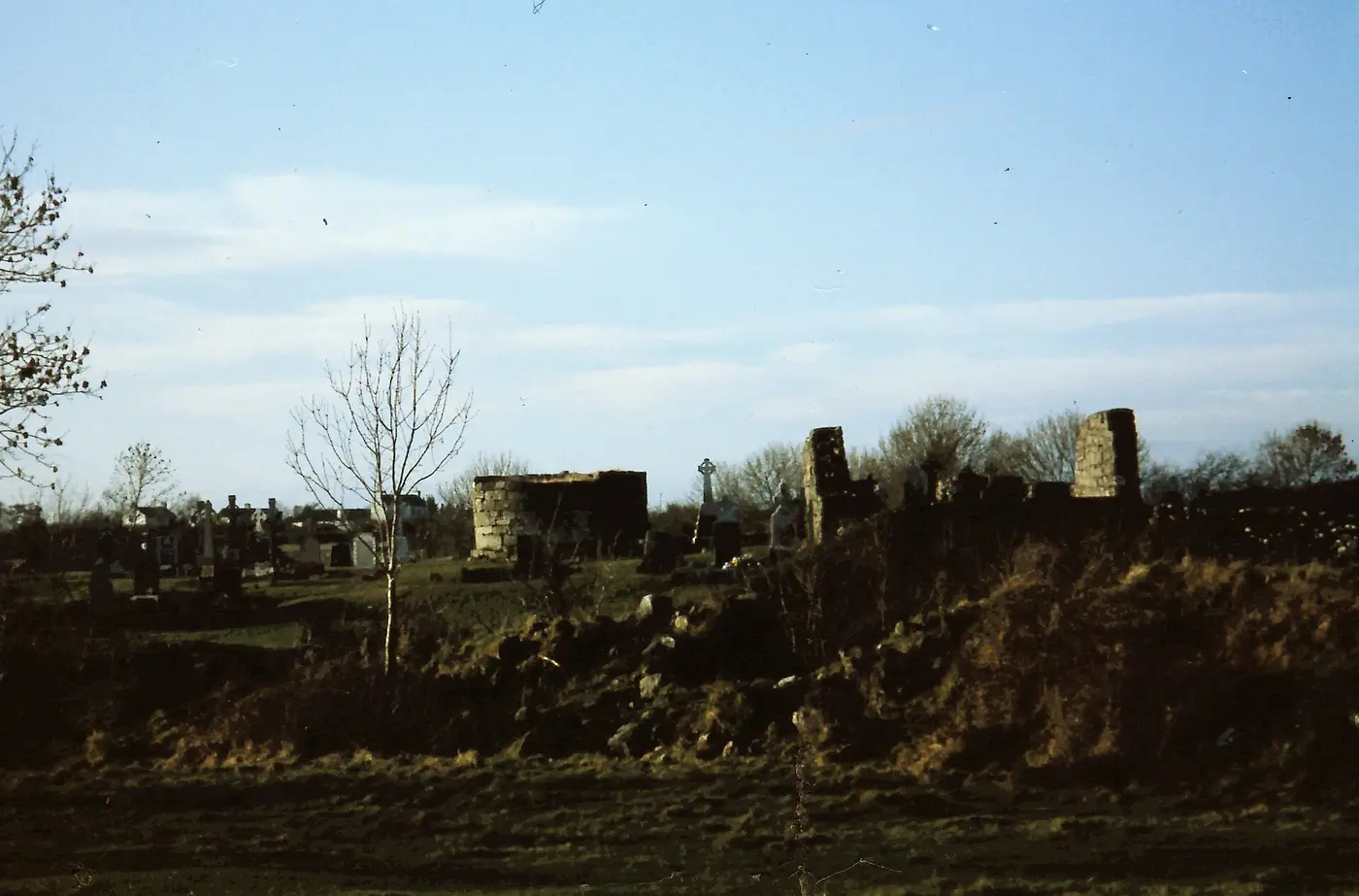
Round tower at Kilcoona, County Galway — incomplete, 3 metres.
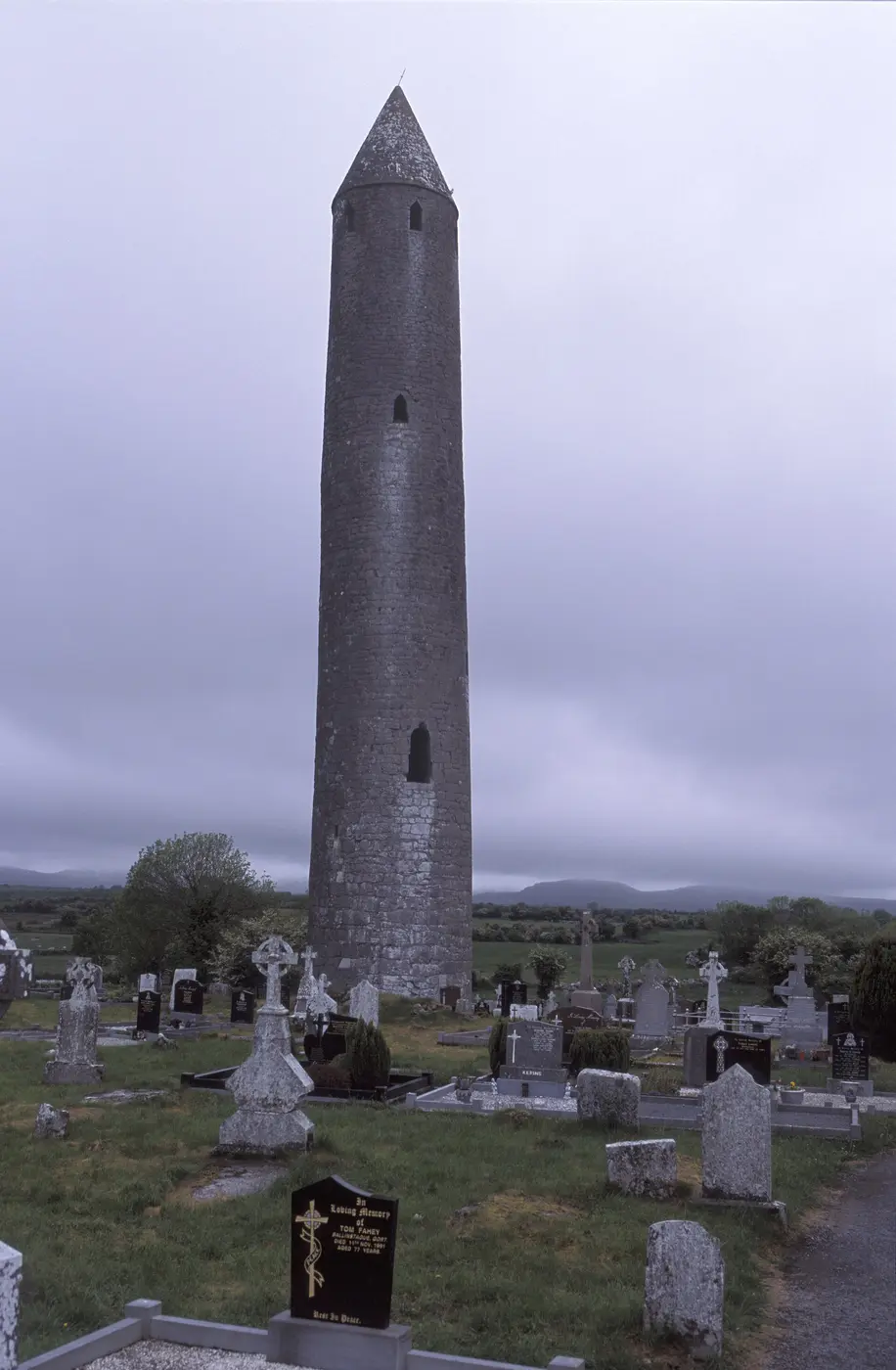
The tallest standing of the ancient round towers. It has 11 windows (more than any other tower) and the door is 8 m from the ground (higher than any other tower). Leans 1.02 m from the vertical.
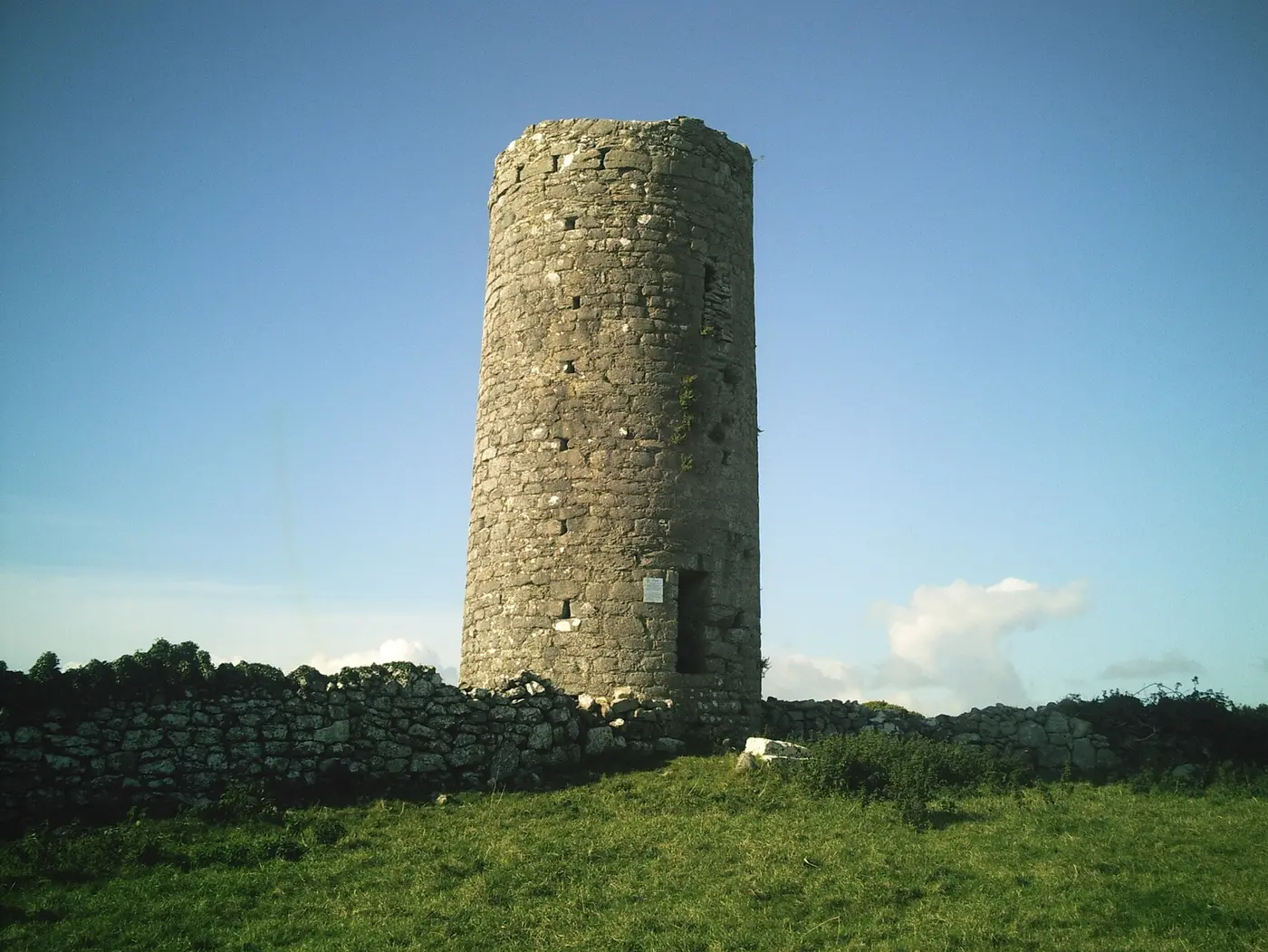
7 levels of putlog holes clearly visible
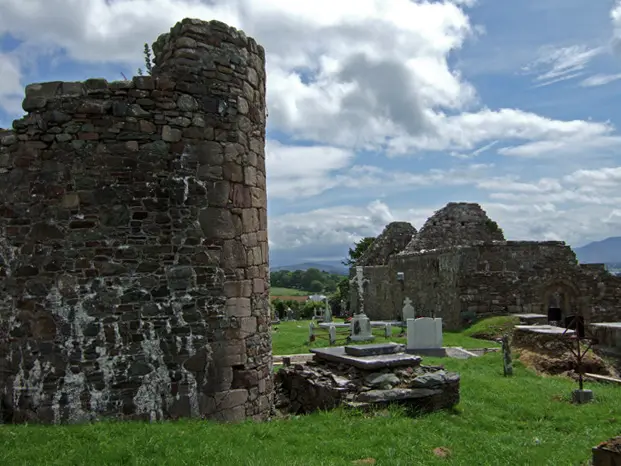
Round tower at Aghadoe, County Kerry — incomplete, 5.4 metres.
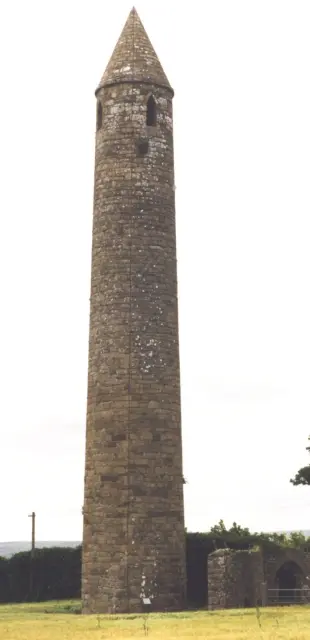
Includes a Sheela na Gig
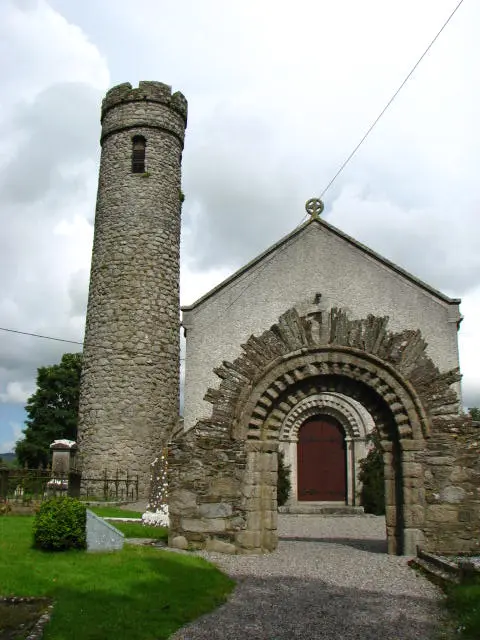
The conical cap has been replaced with battlements and the tower has been attached to a church (which was built later).
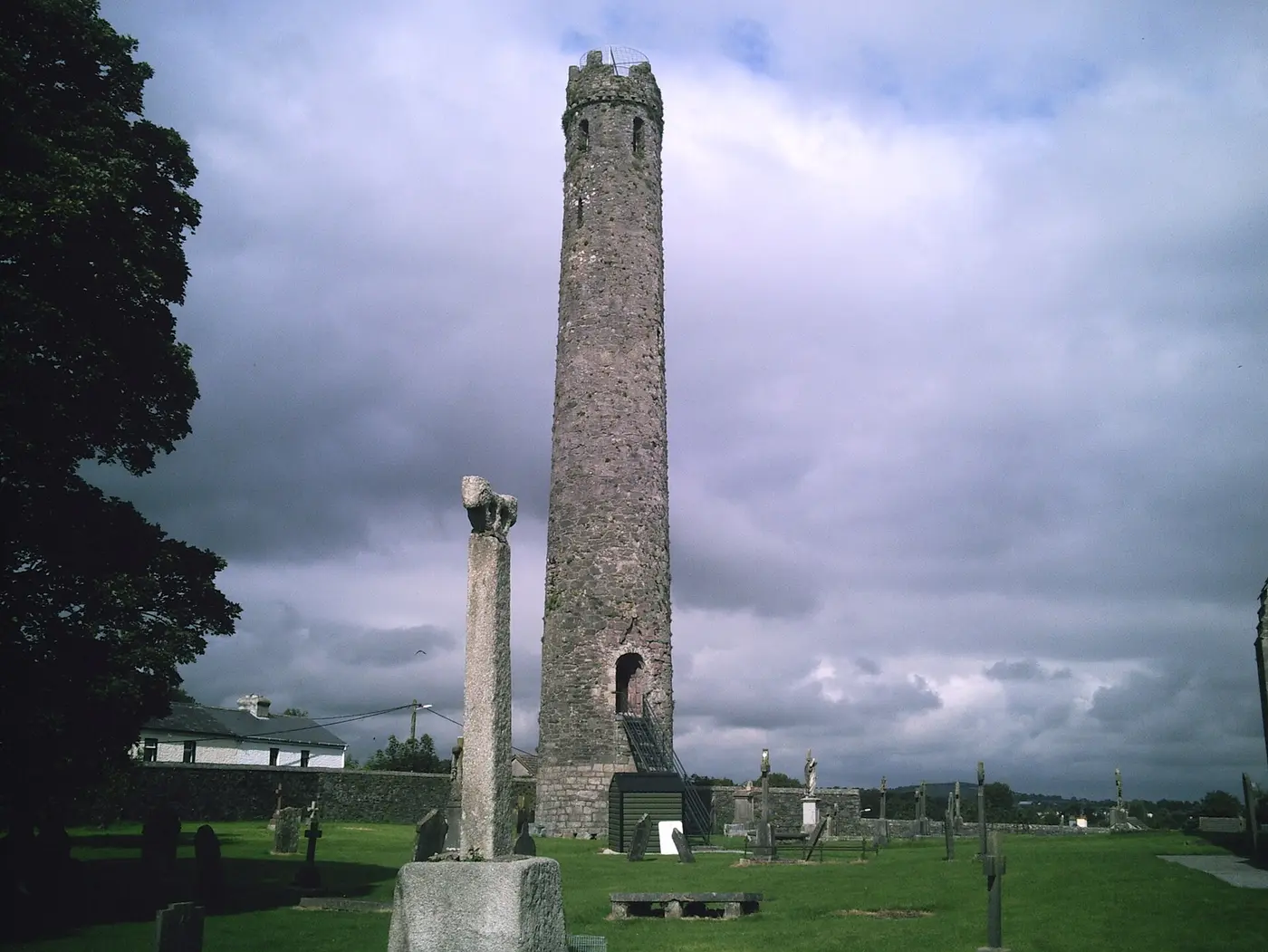
Climbable; the conical cap has been replaced with battlements; Romanesque decoration around doorway
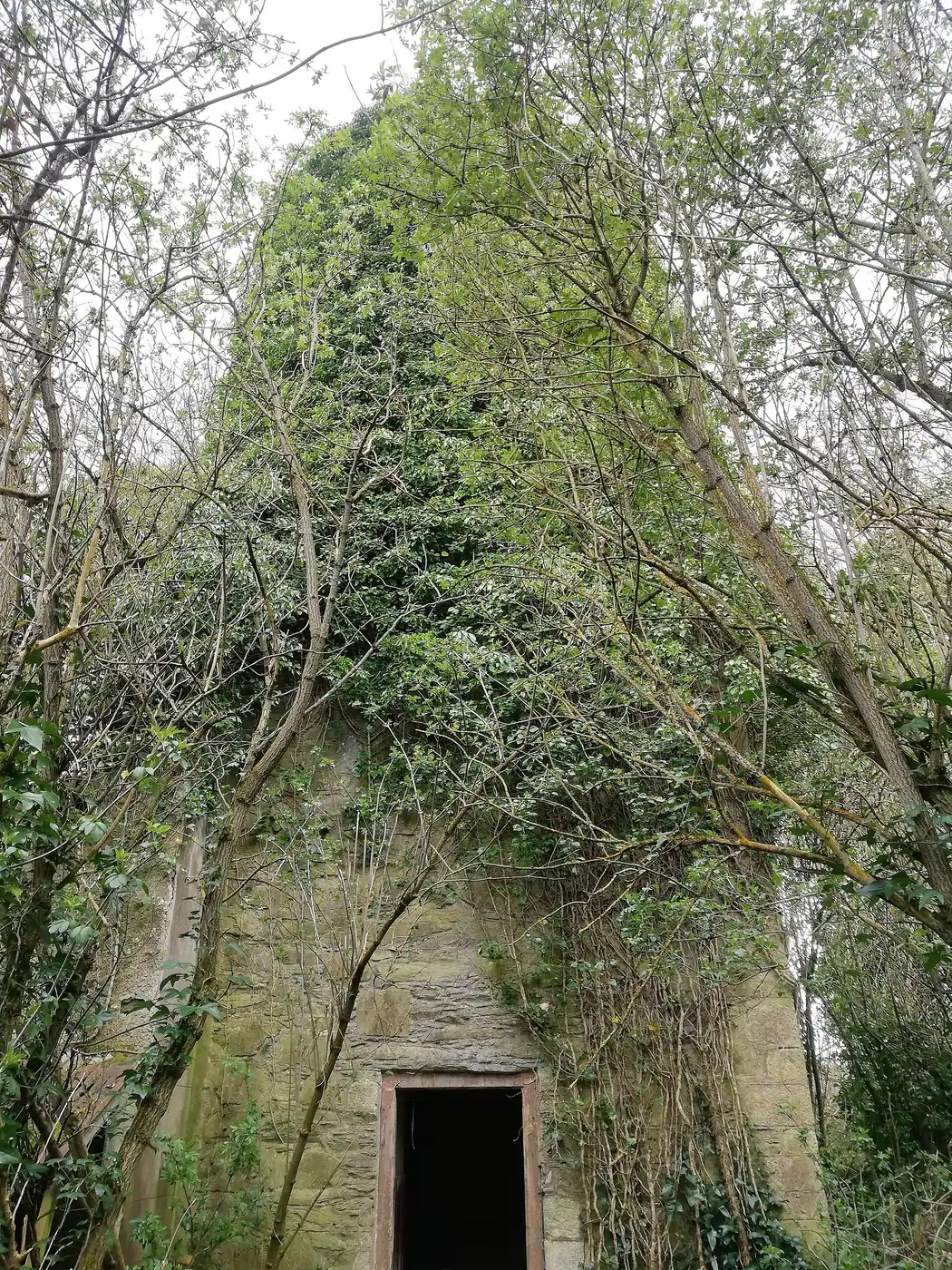
Has a square base, only becoming round about halfway up. Incorporated into the fabric of a church.
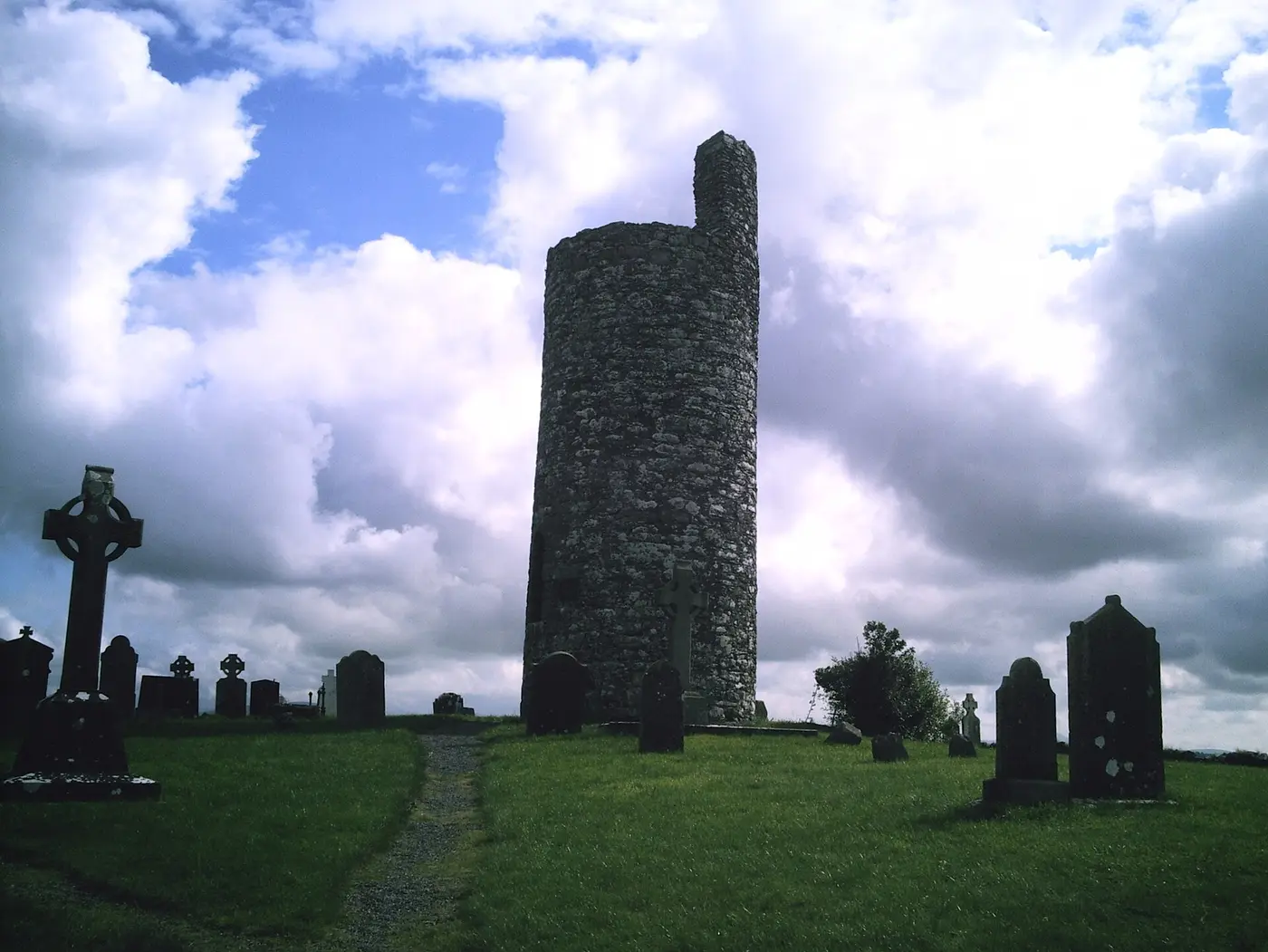
Round tower at Old Kilcullen, County Kildare — incomplete, 11 metres.
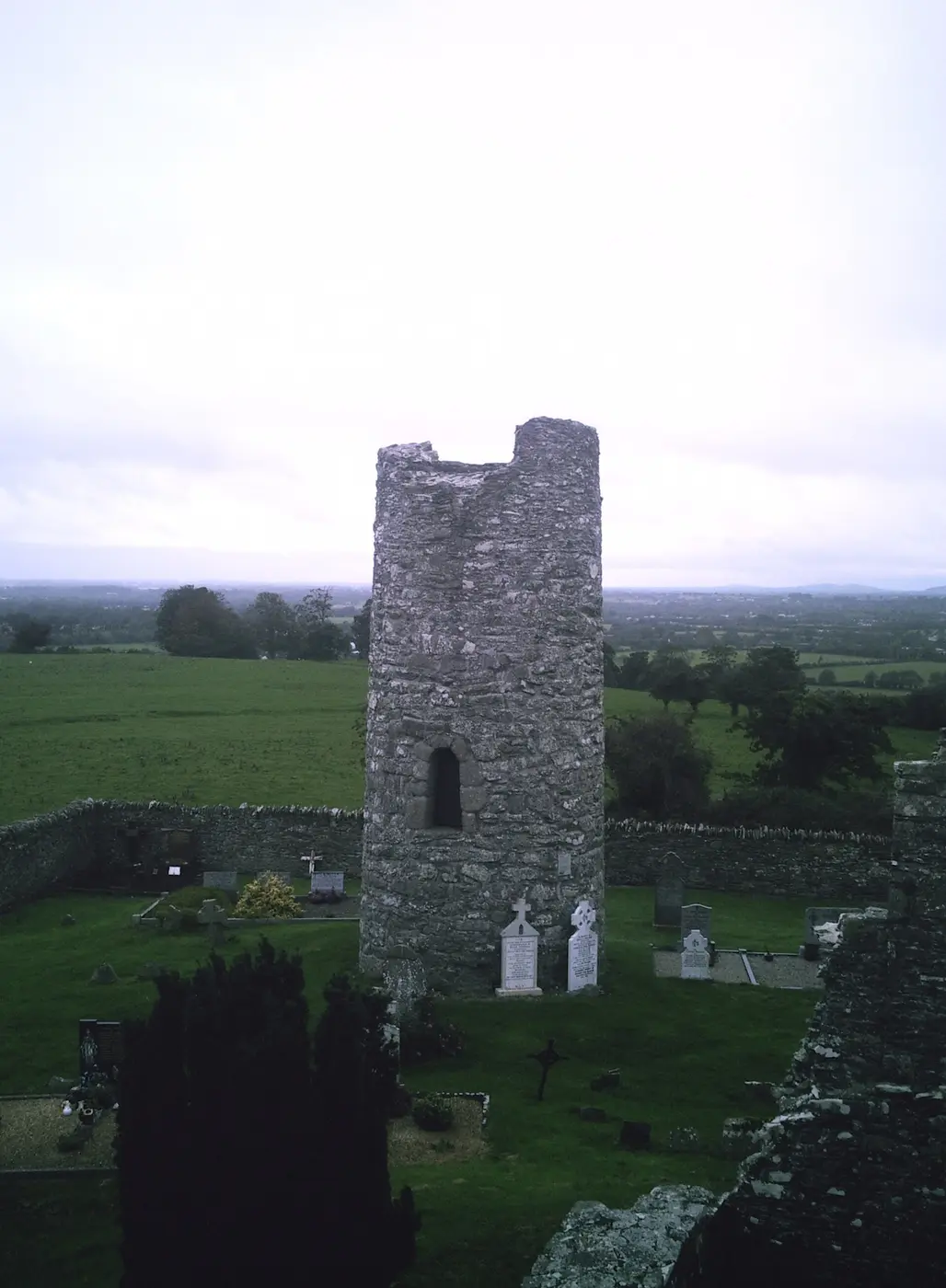
Round tower at Oughter Ard, County Kildare — incomplete, 9.5 metres.
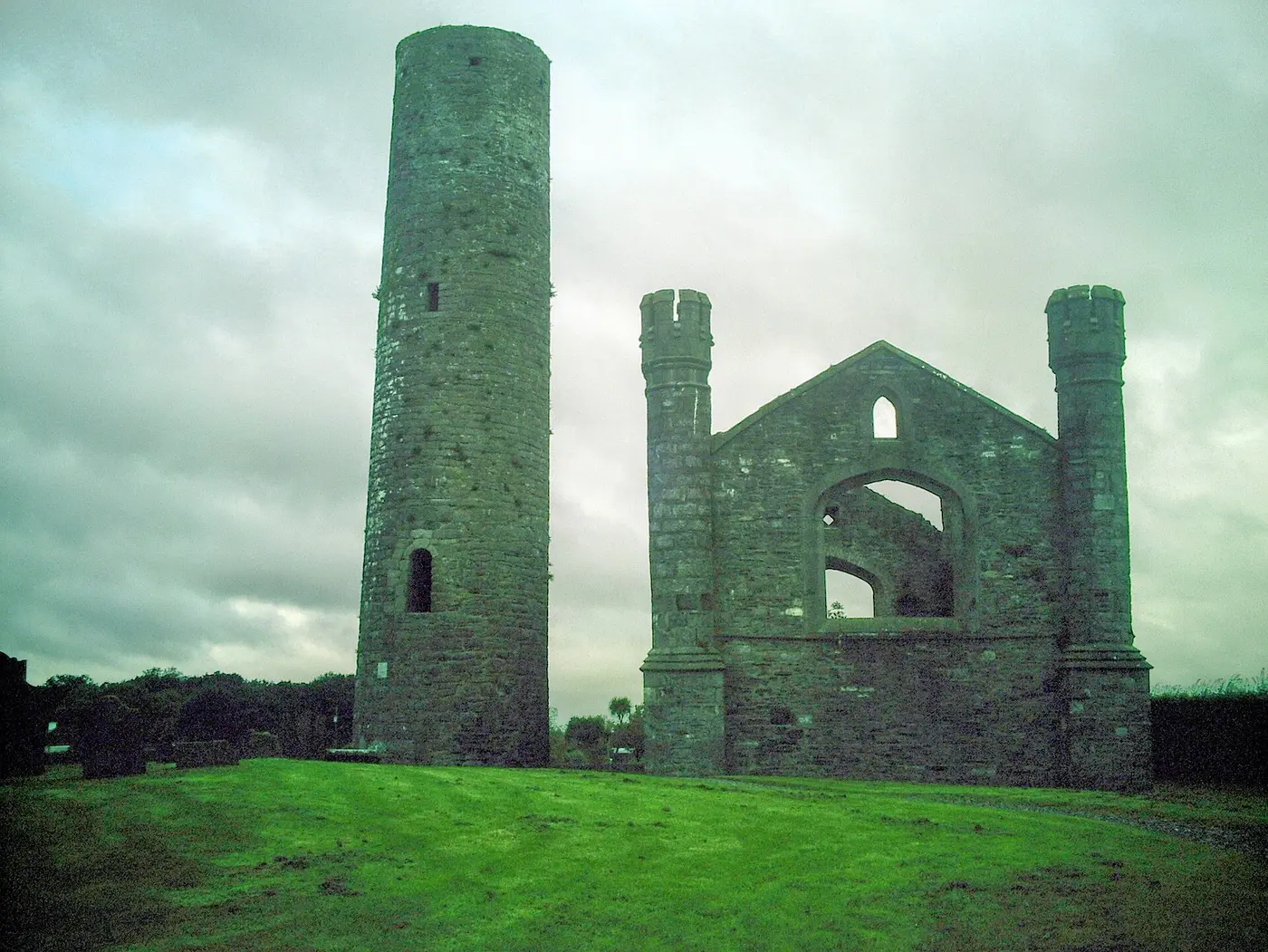
Round tower at Taghadoe, County Kildare — incomplete, 19.8 metres.
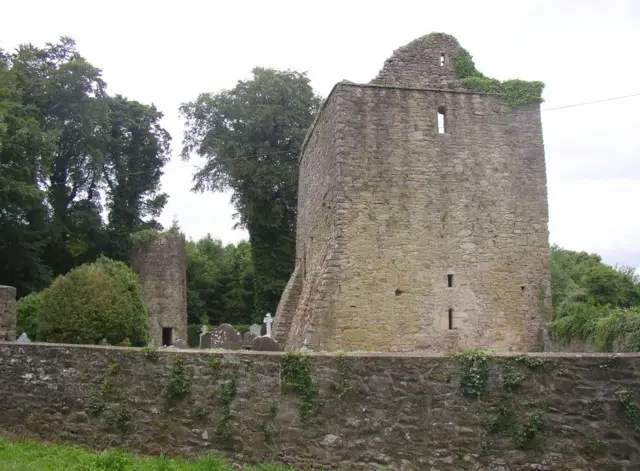
Second doorway inserted later at ground level
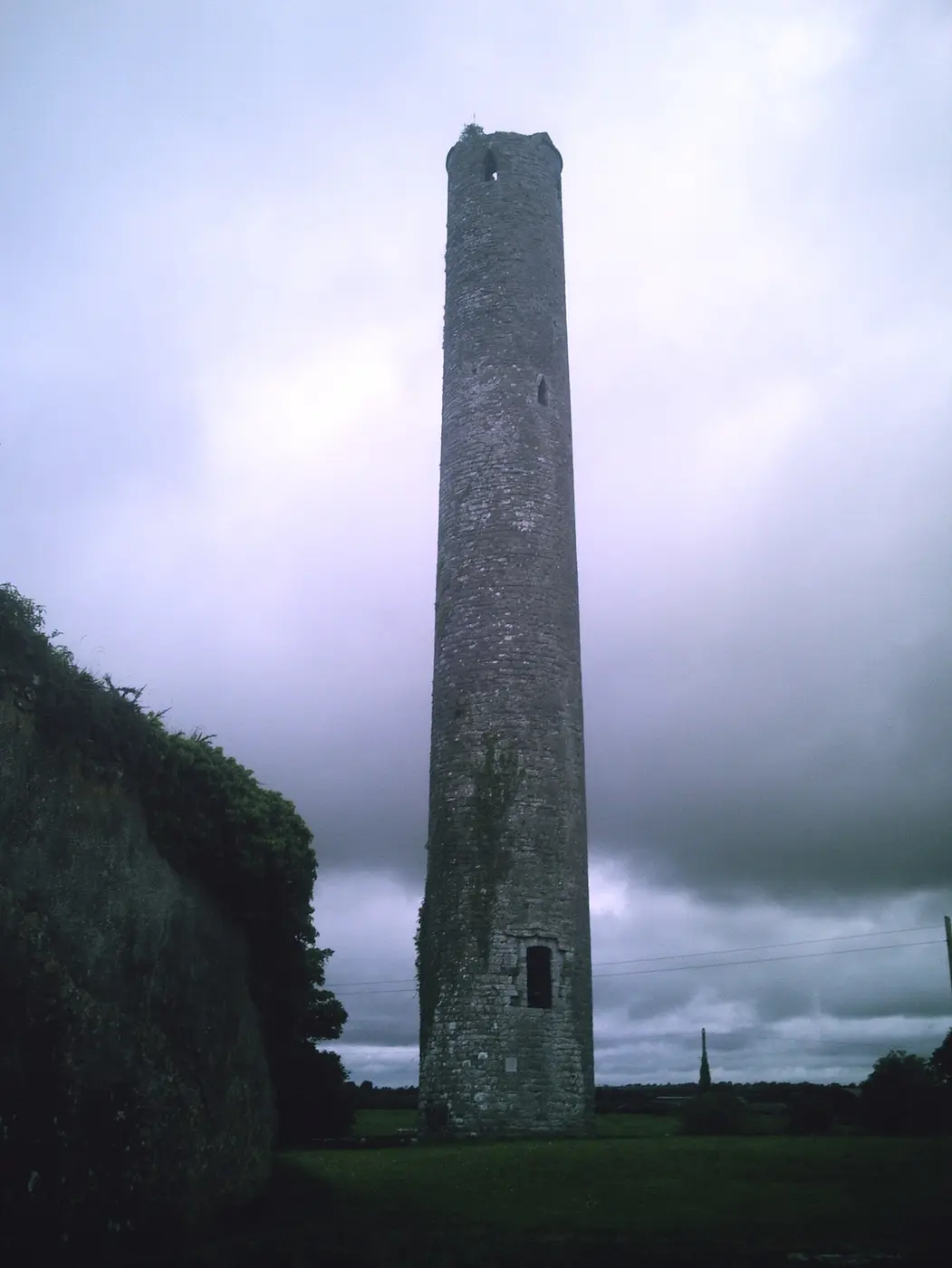
Full height but without cap, located in the parish of Johnstown
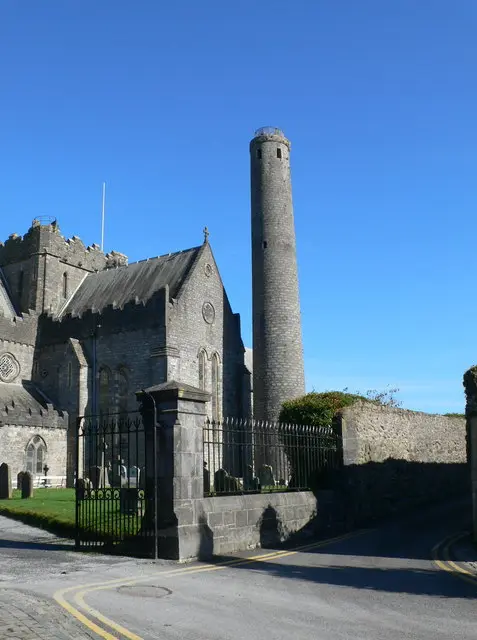
Climbable; the conical cap has been replaced with battlements.
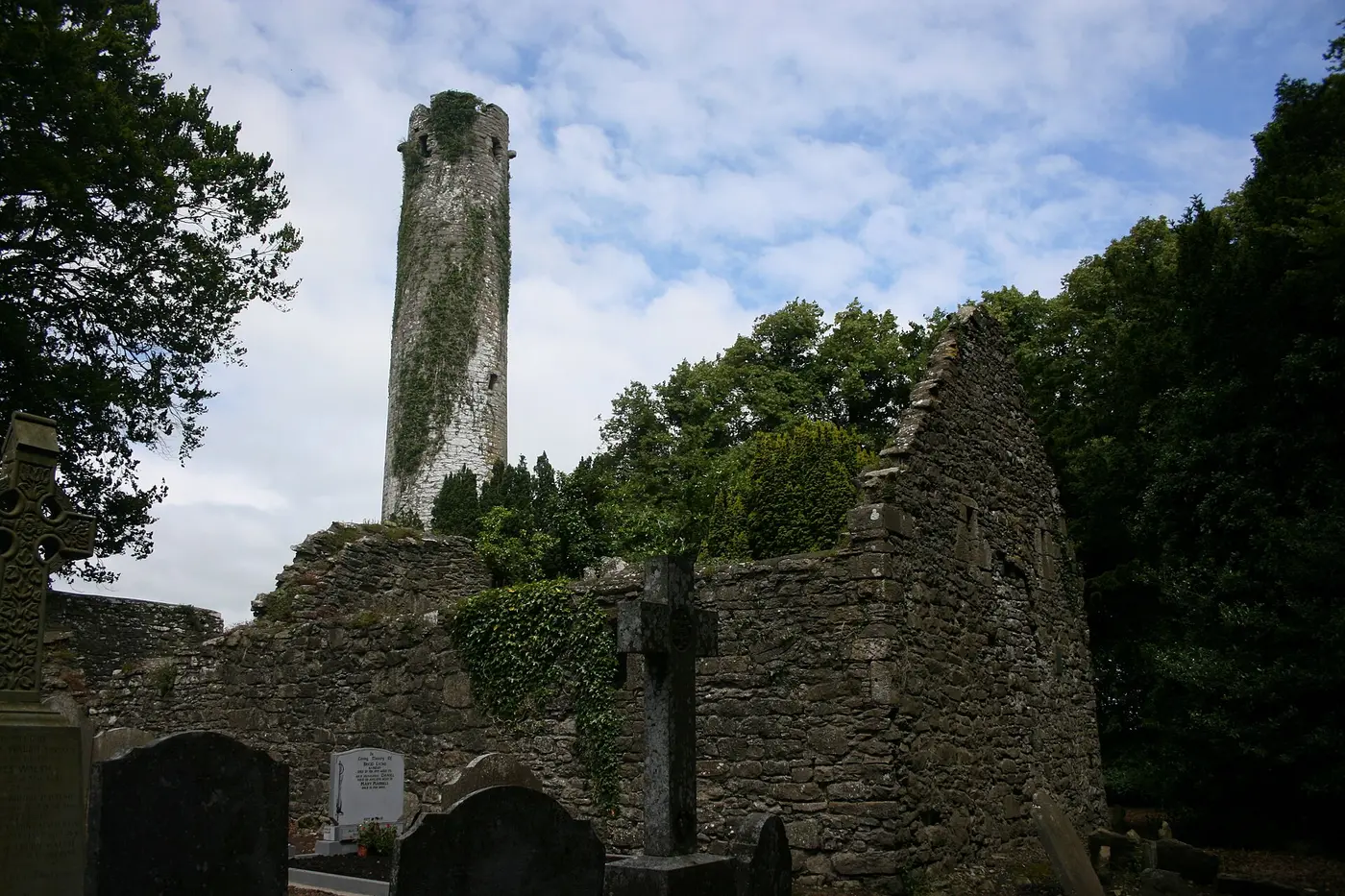
The conical cap has been replaced with battlements.
Round tower at Tullaherin, County Kilkenny — incomplete, 22.5 metres.
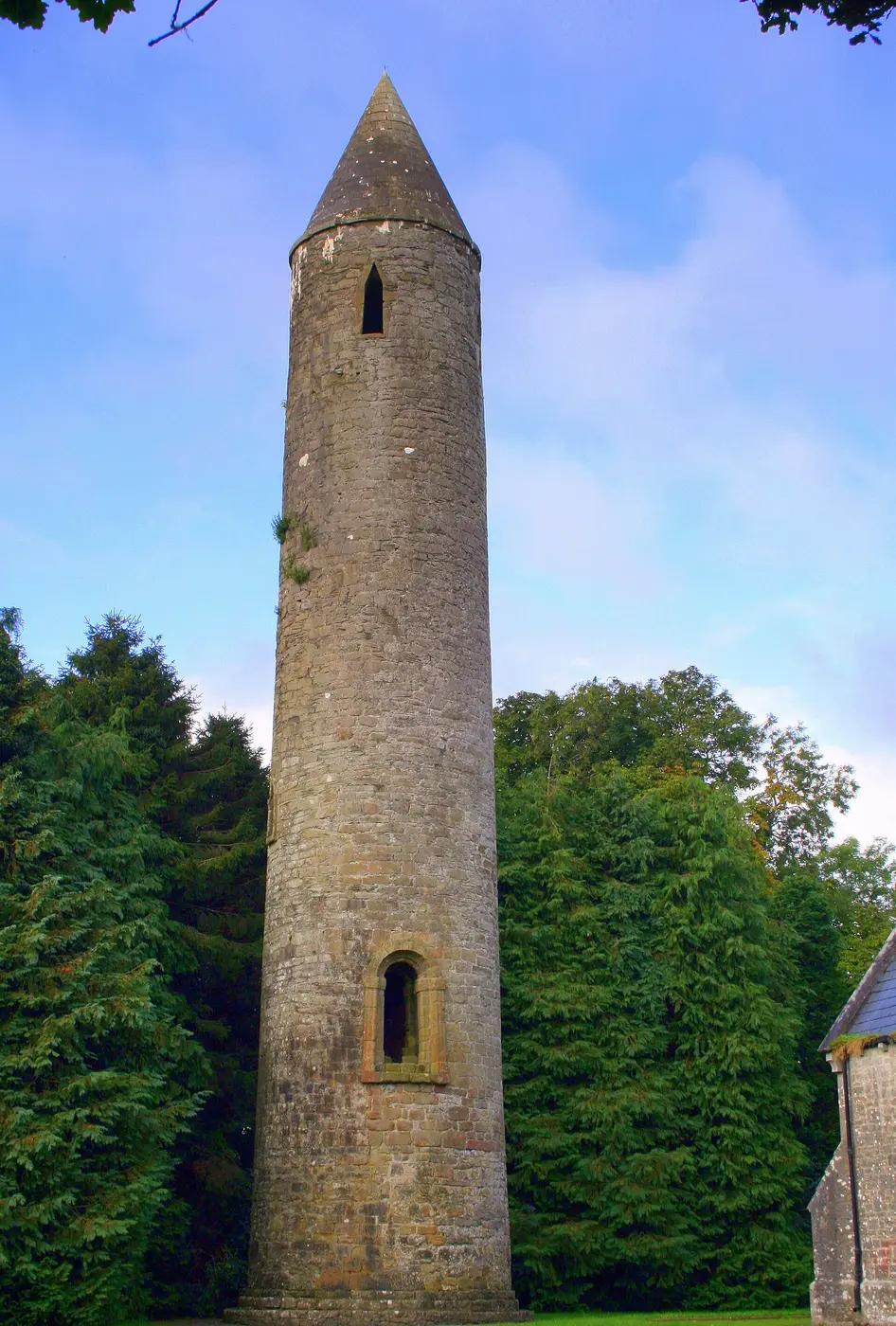
Romanesque decoration around doorway
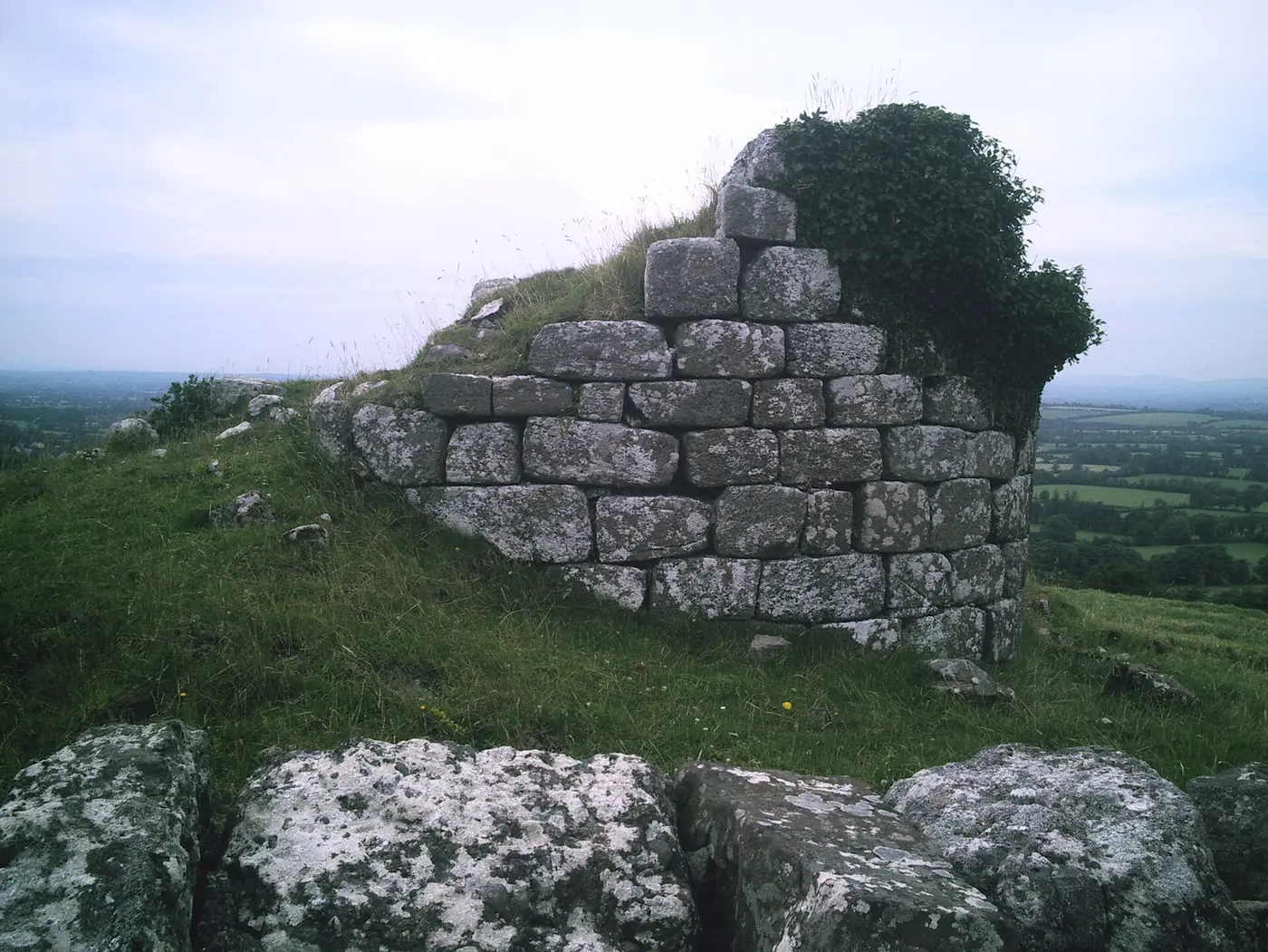
Barrow states that the Down Survey of 1655 marks the site with a tower of 3 stories with a broken top. Fitzgerald and McGreggor writing in 1826 state that it was a fine tower that "fell a few years since". A 3 m stump surrounded by rubble from its collapse is all that remains. Barrow speculates that some of the stones from the tower were used to build the nearby wall surrounding the cemetery, including one 1.07 m long with a raised moulding at the top of the entrance that may have been the sill stone from the tower's doorway.
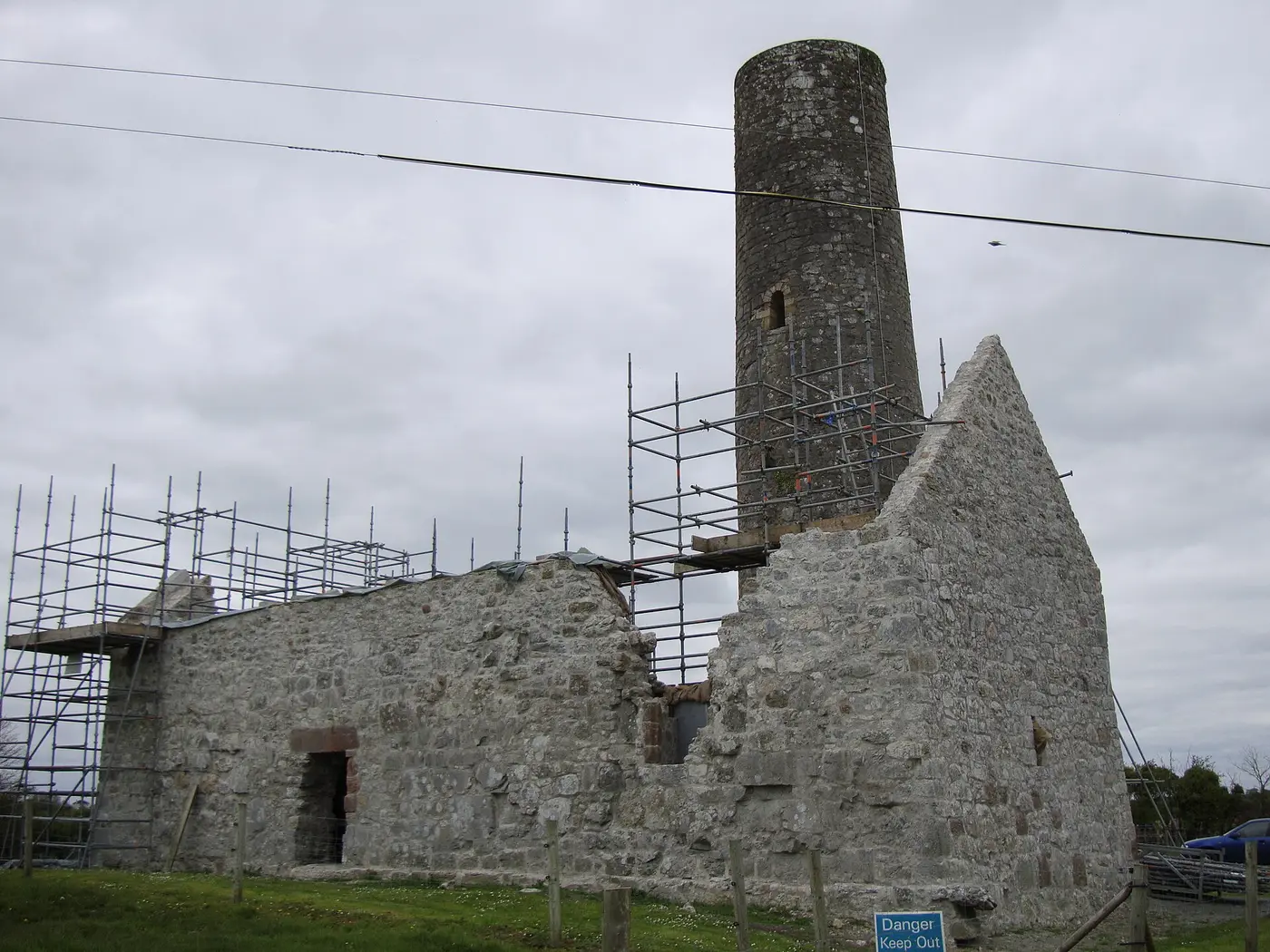
Romanesque decoration around doorway
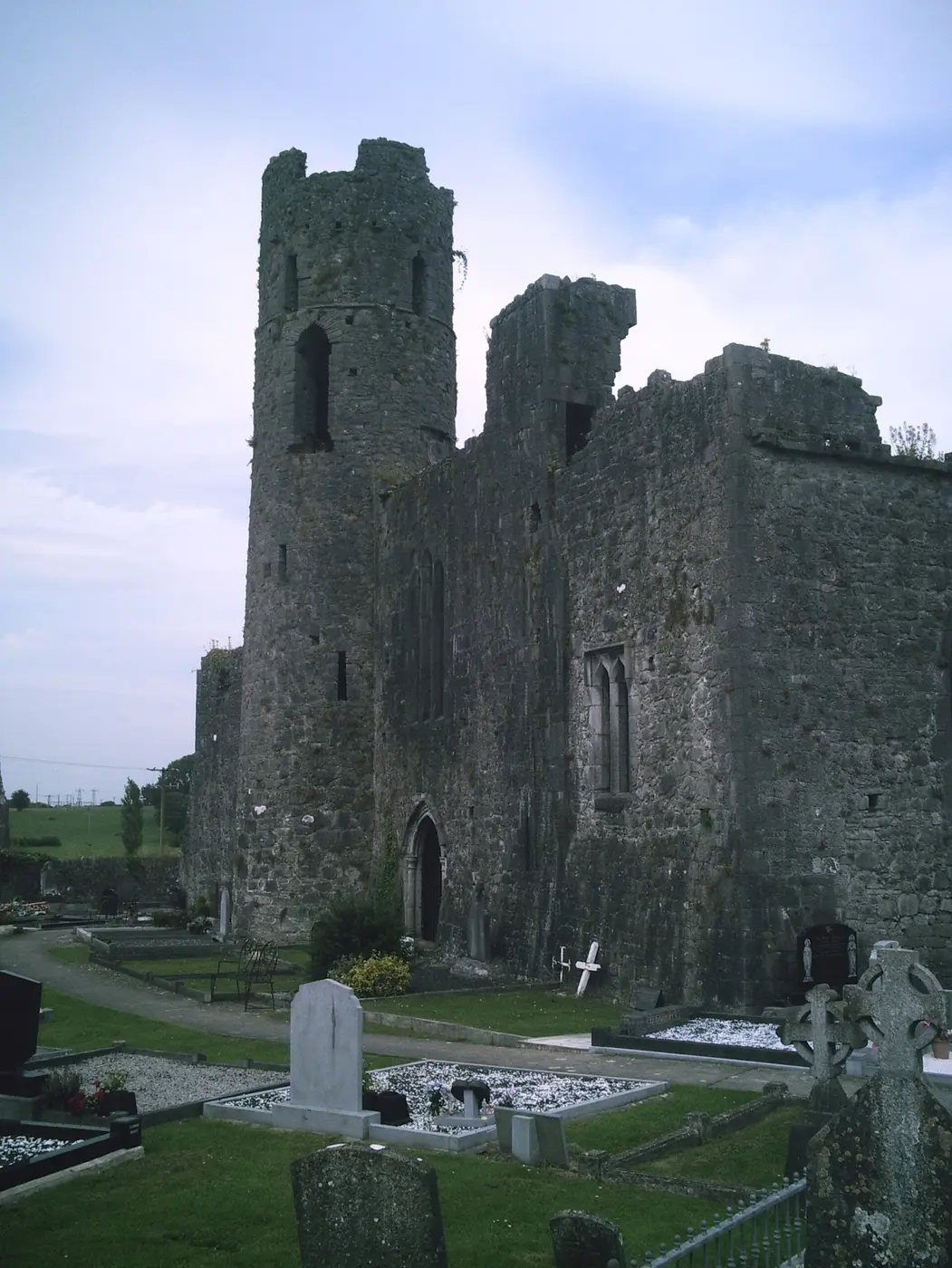
Only the lower 3 m of the tower is original, what stands above (tower of the Collegiate church) is a late medieval addition/reconstruction.
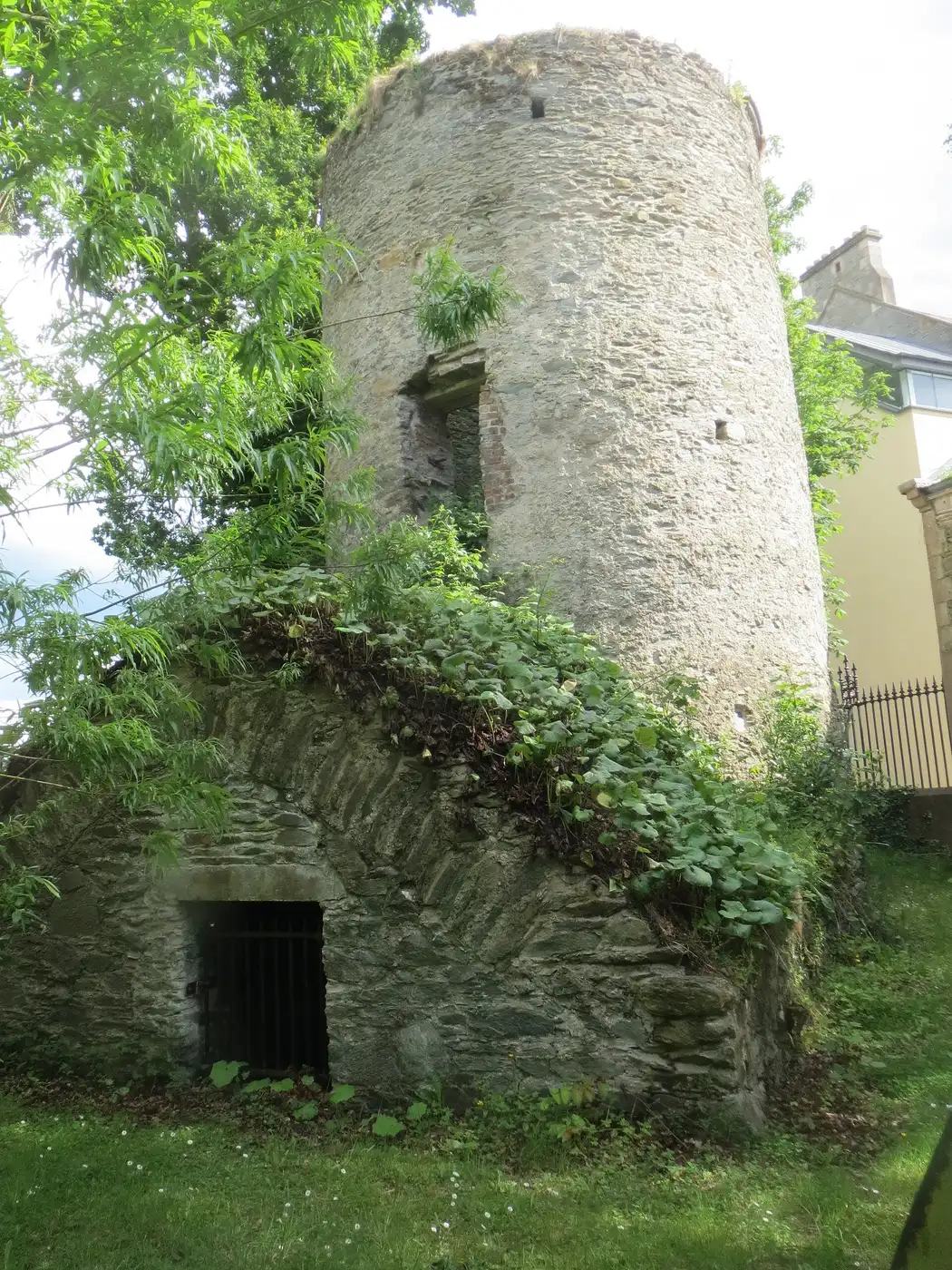
Barrow states that a tower known as "The Long Tower" once stood in the city of Derry at the site occupied since 1784–1786 by St Columba's Church, Long Tower The Long Tower was said to have survived the siege of 1689 but seemed to have disappeared. In 2018, the remains of the missing tower were identified in the grounds of Lumen Christi College, as a ruin previously believed to have been a windmill. The OS of County Londonderry of 1837 Has the following: "In the charter of Derry it is called Columb kille's Tower in Raven's plan of the city in 1621 it appears as a very high and slender belfry....In the popular traditions of Derry and its vicinity this tower is still invariably spoken of as a lofty round tower built by St Columb himself and many legends are current of its miracle working silver bell"
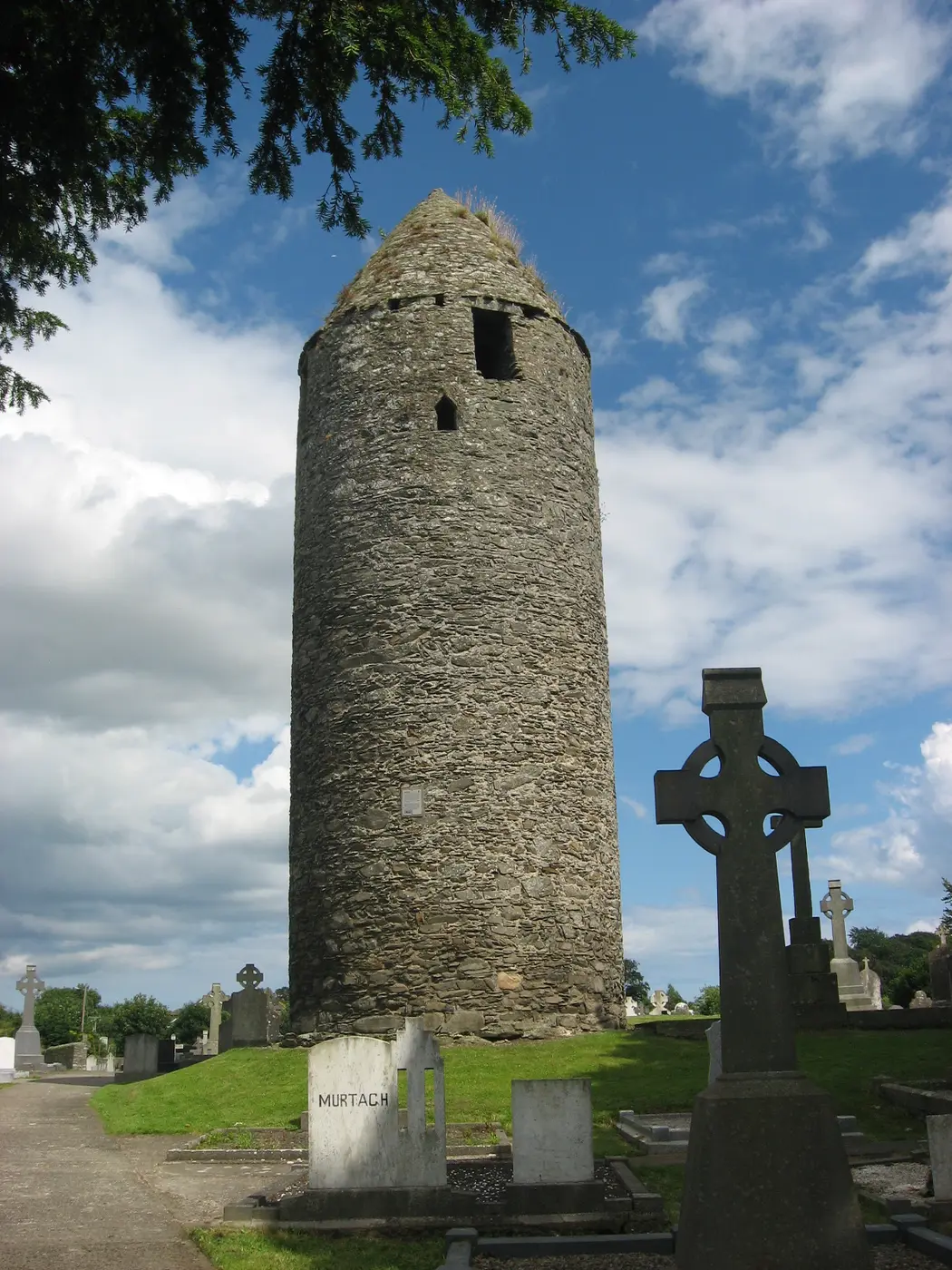
A conical cap was added to what remains of the tower.
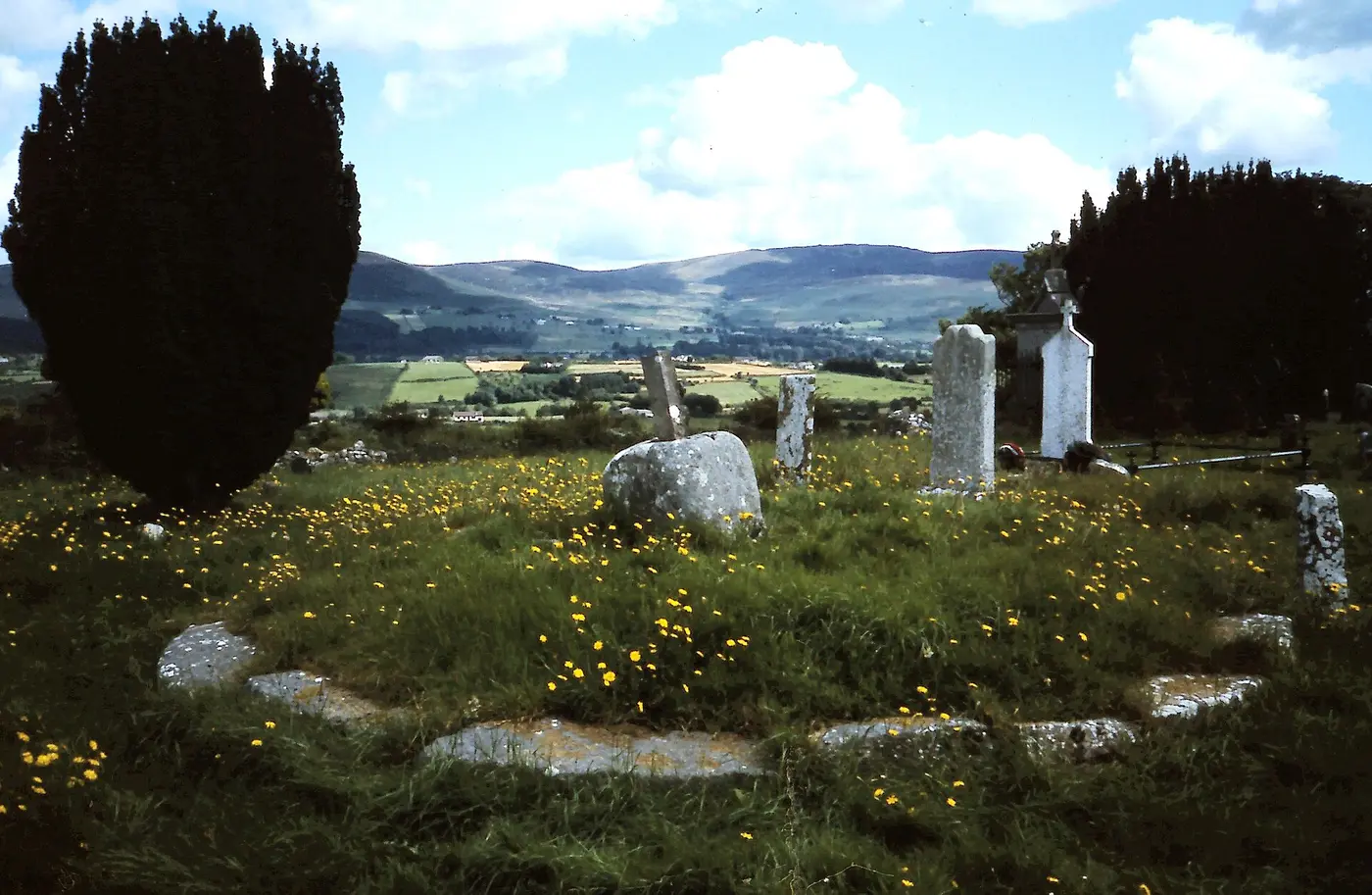
Only a single circular course of large stones remain.
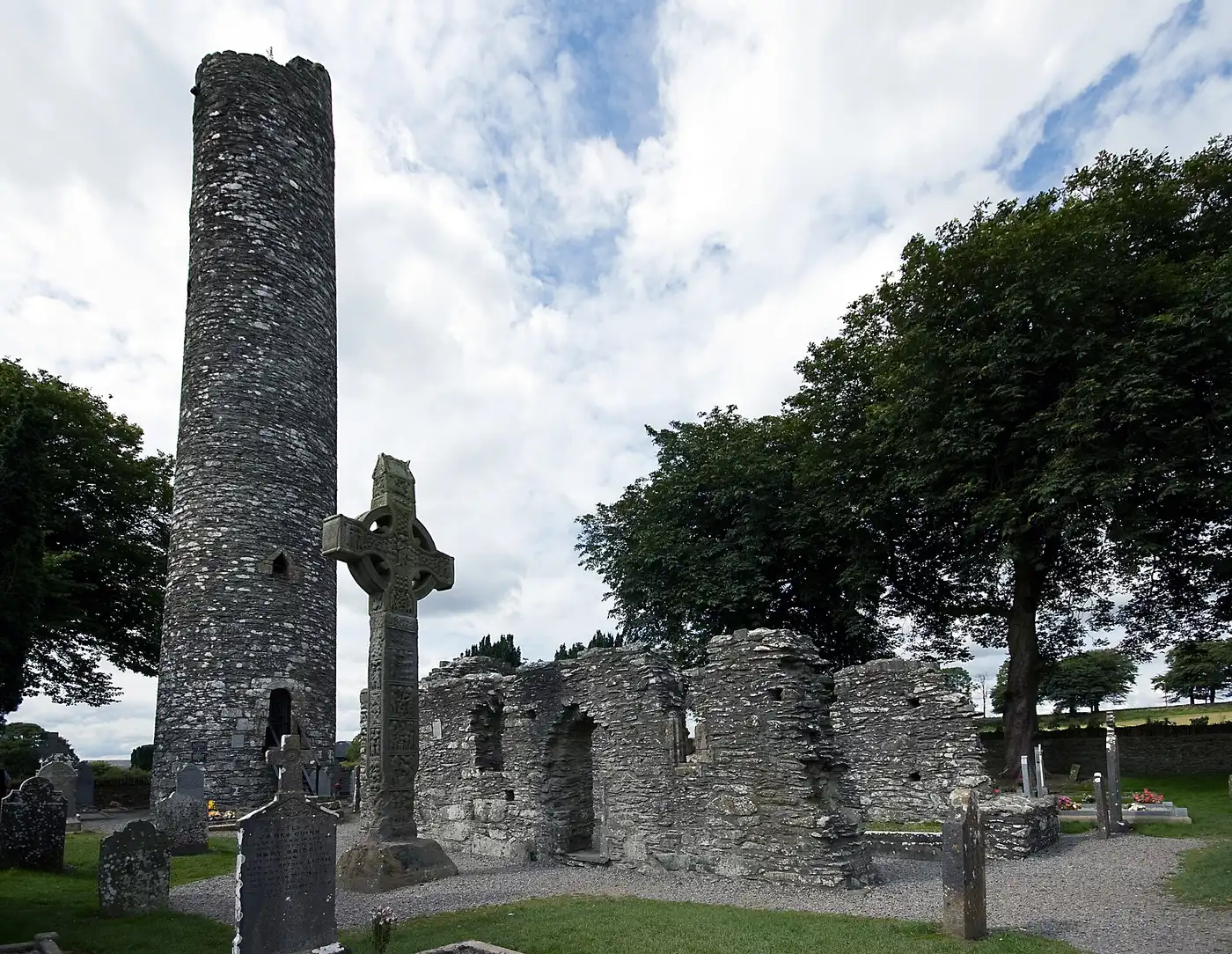
Round tower at Monasterboice, County Louth — incomplete, 28 metres.
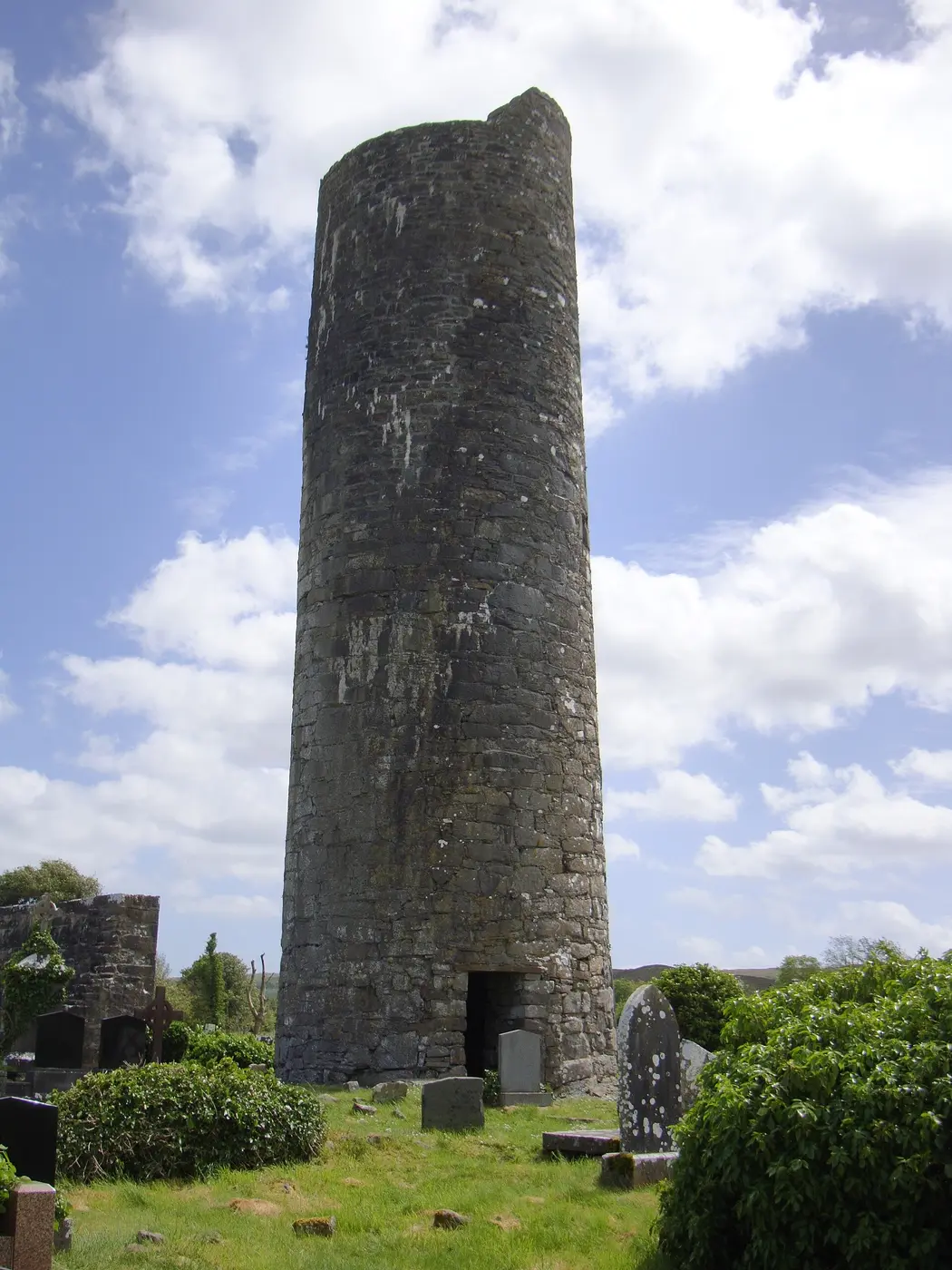
Second doorway inserted later at ground level
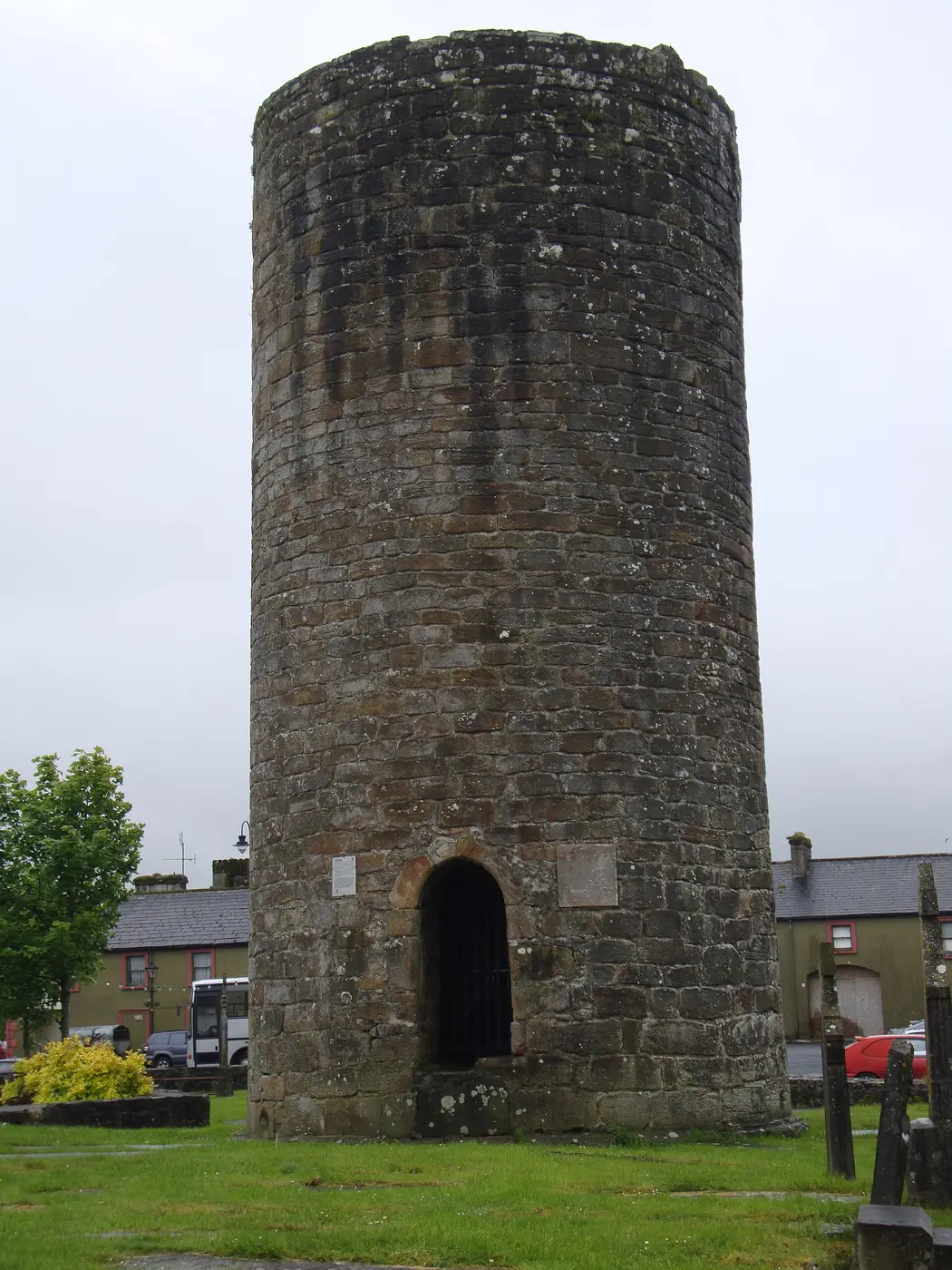
Second doorway inserted probably later at ground level
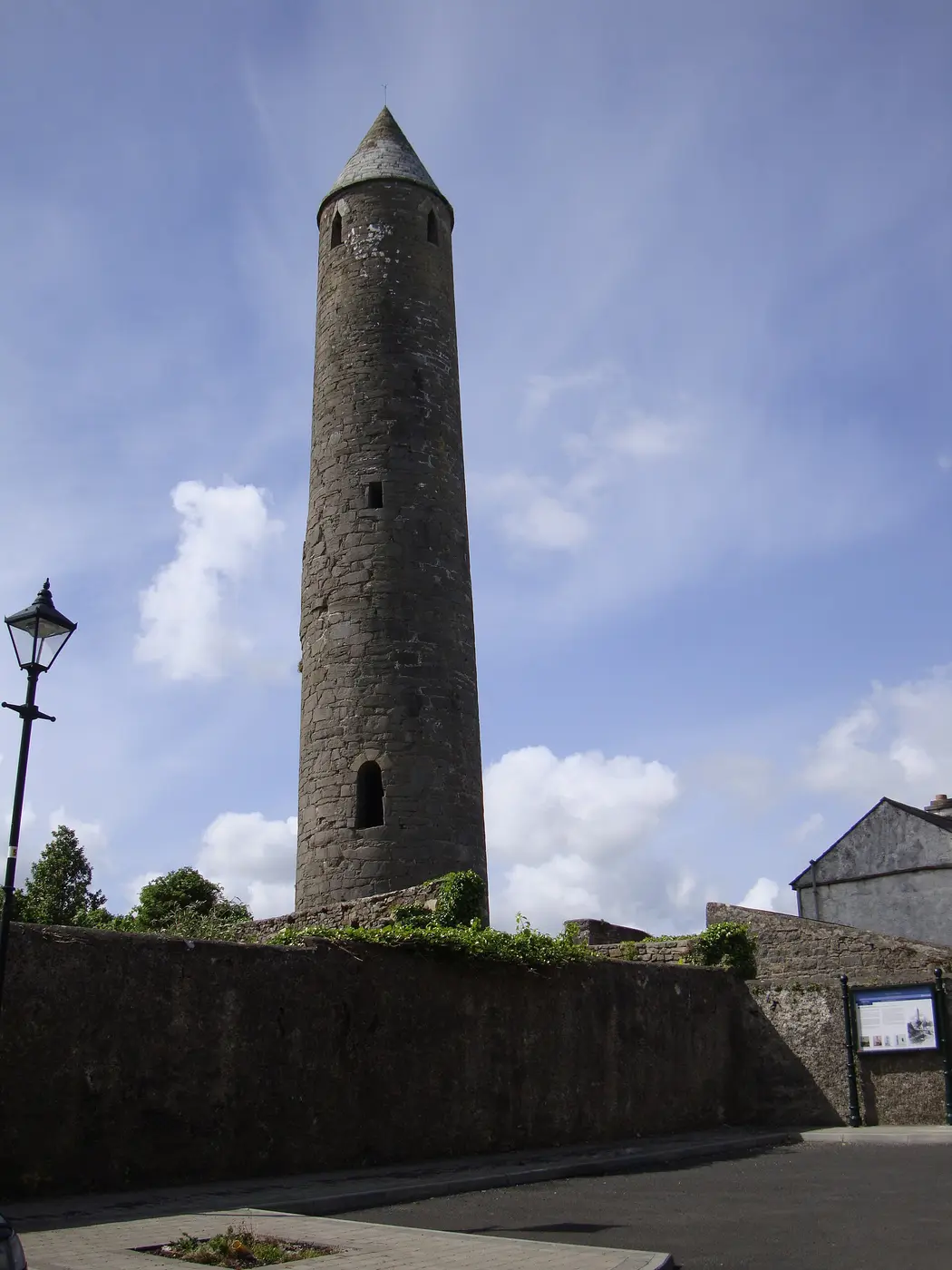
There is a noticeable bulge about halfway up the tower.
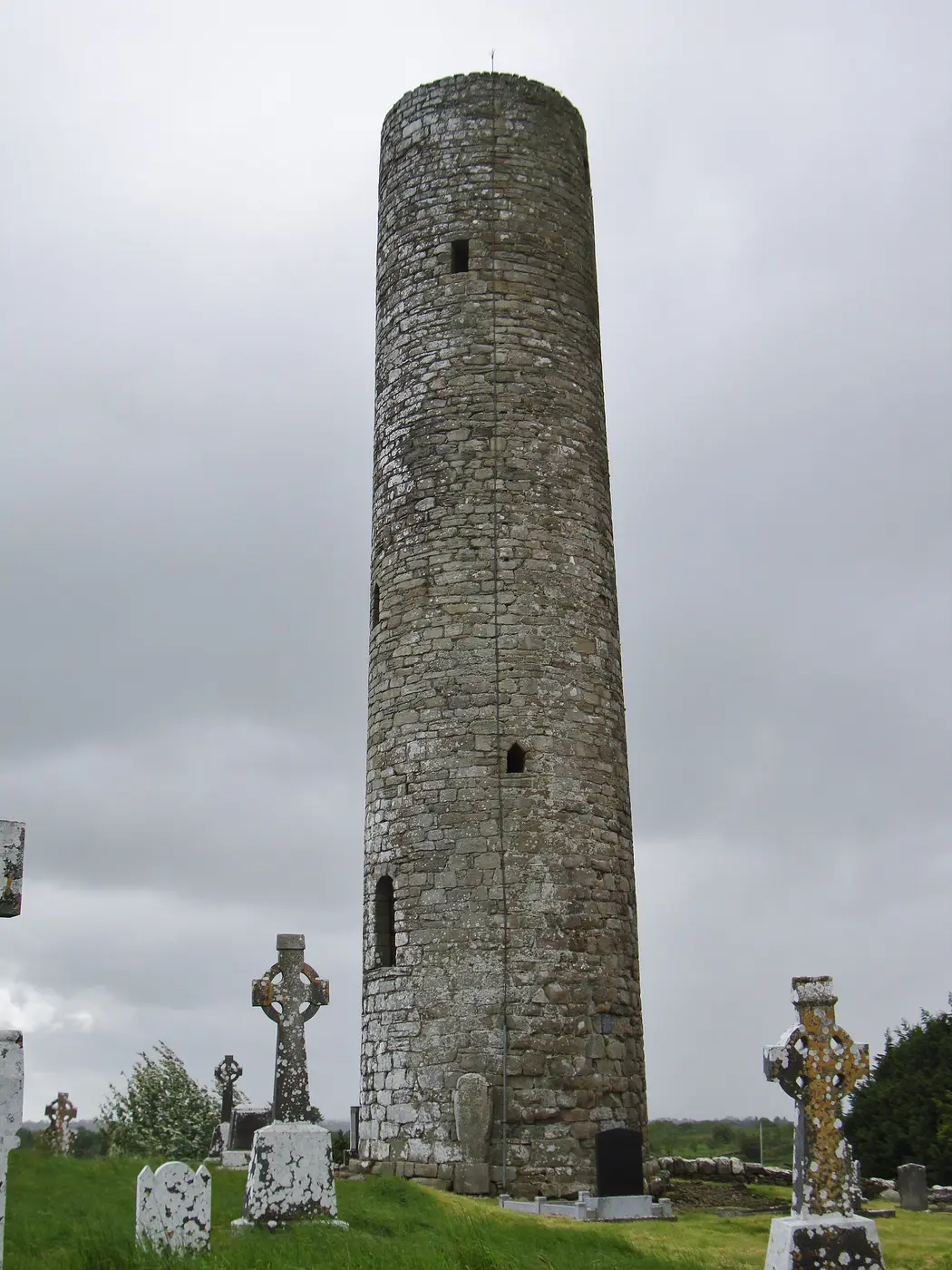
Round tower at Meelick, County Mayo — incomplete, 21 metres.
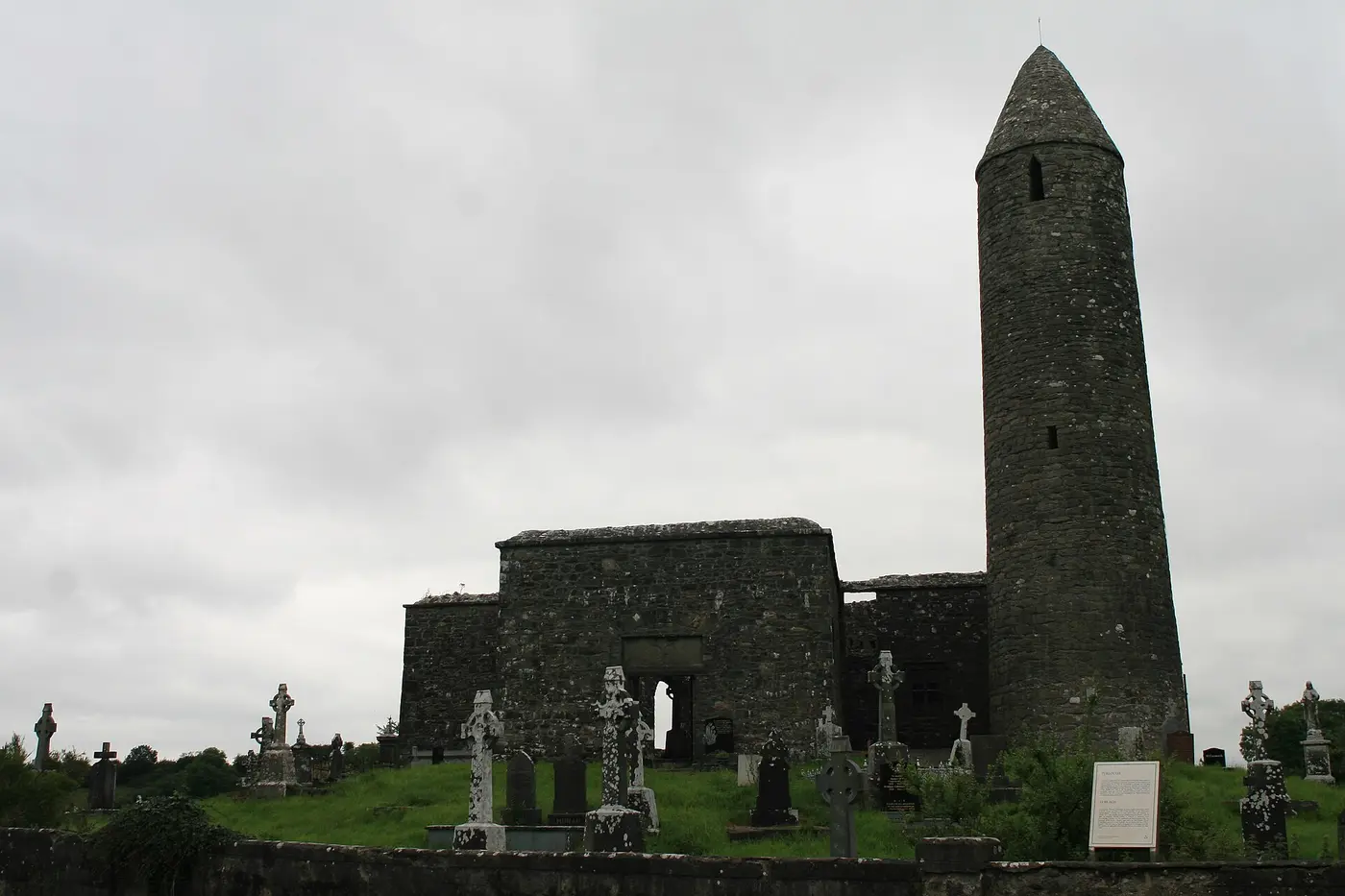
Round tower at Turlough Abbey, County Mayo — complete, 22.9 metres.
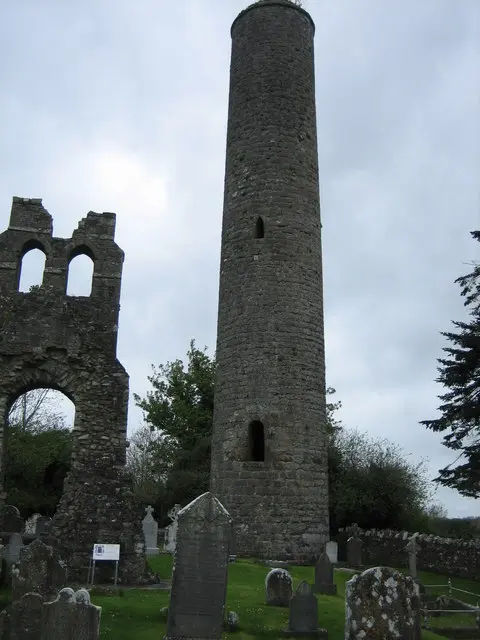
Full height but without cap
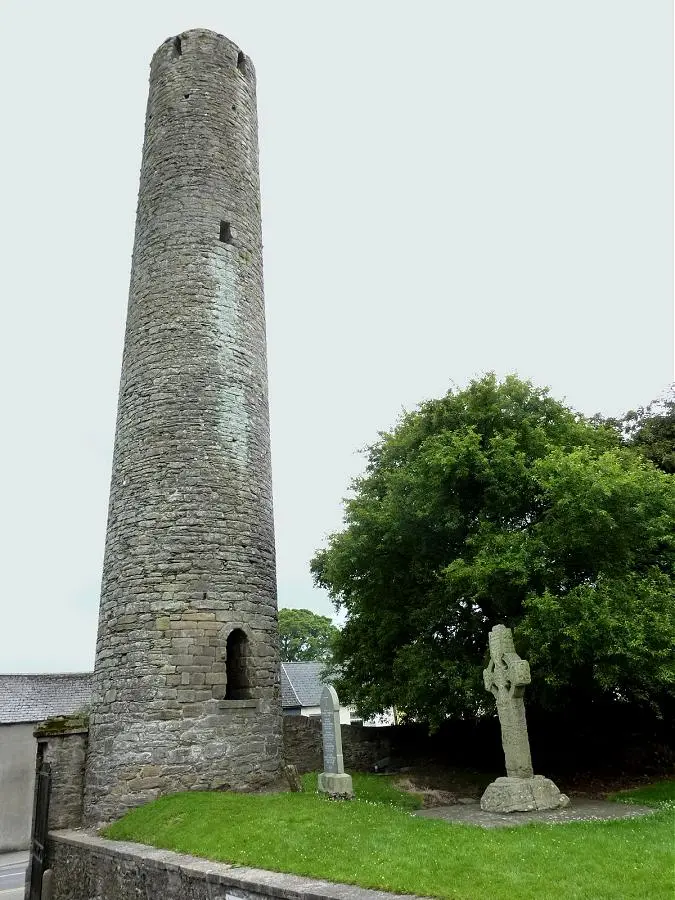
Full height but without cap
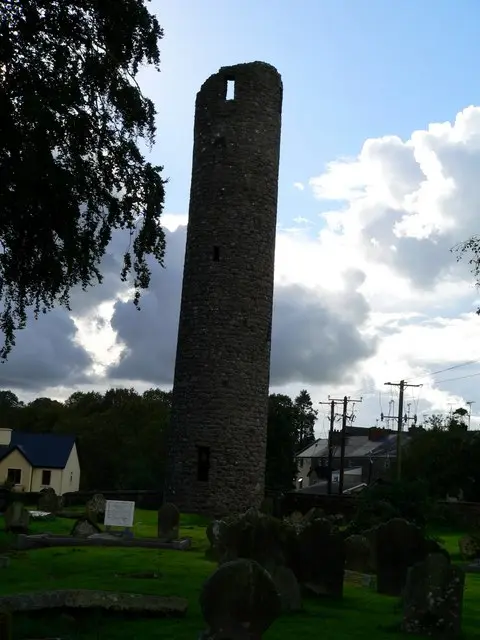
Round tower at Clones, County Monaghan — complete to cornice, 22.9 metres.
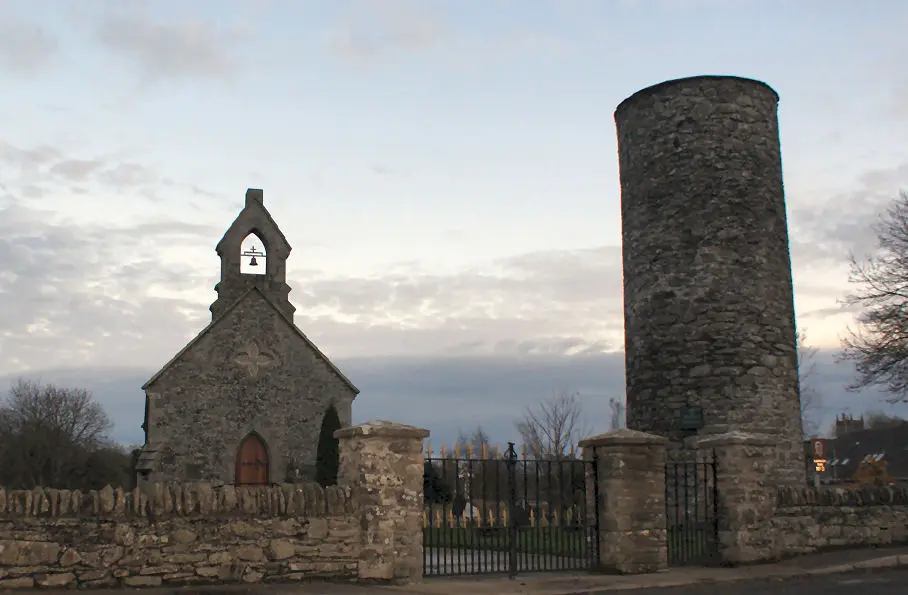
The top has been sealed with brick and cement.
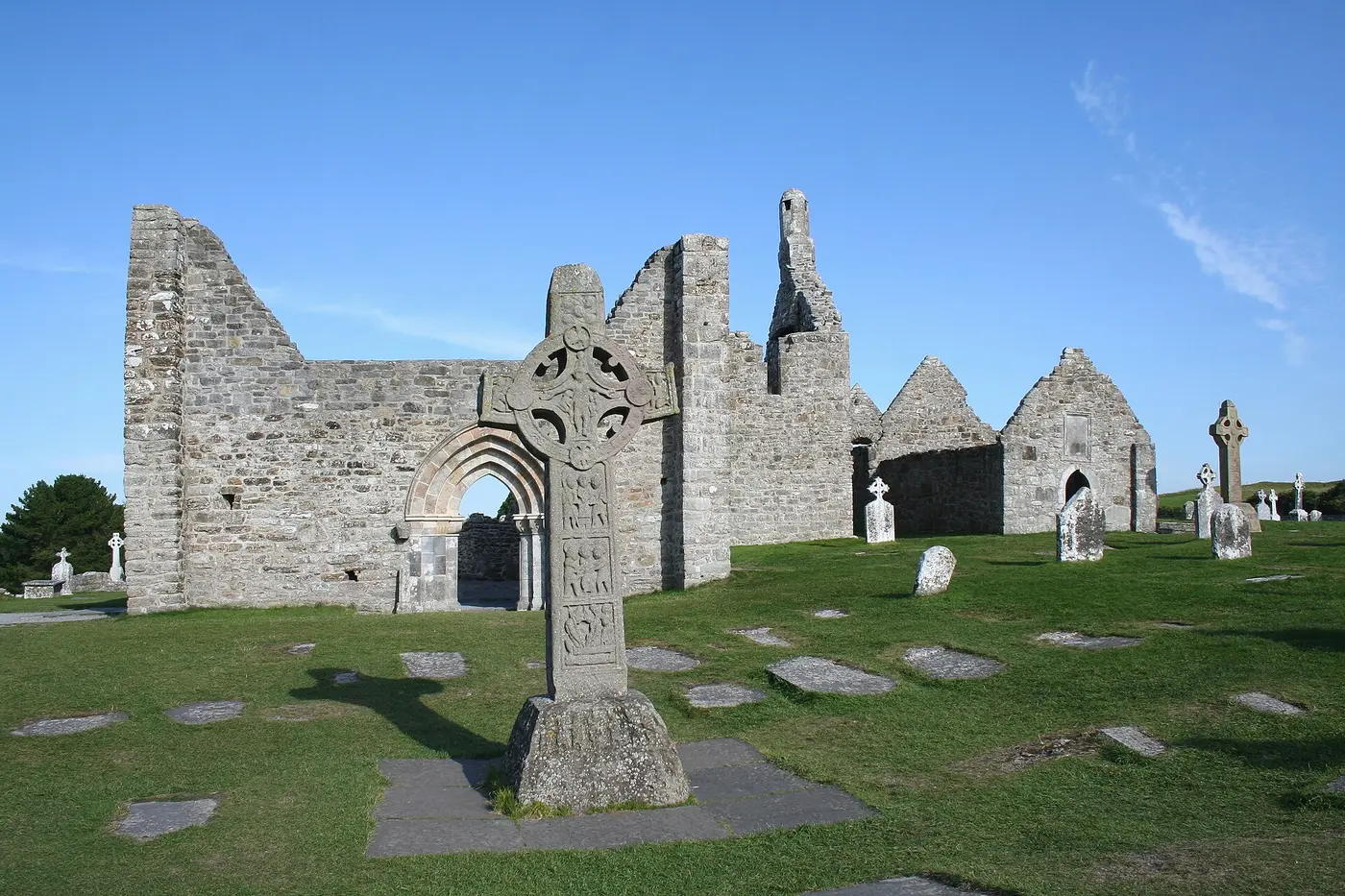
Two towers a short distance from each otherO'Rourke: full height but capless; has 8 windows at topMcCarthy: attached to a church
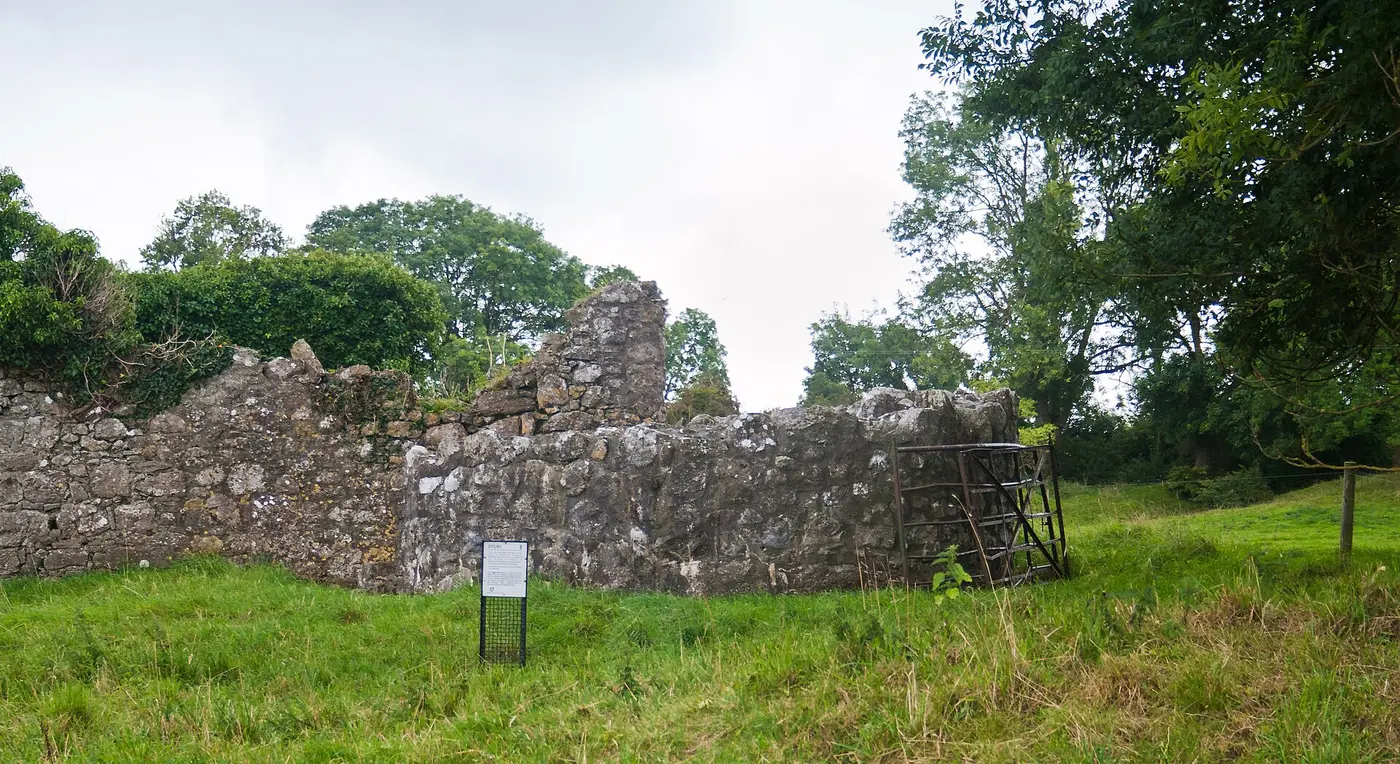
Round tower at Seir Kieran, County Offaly — incomplete, 2.6 metres.
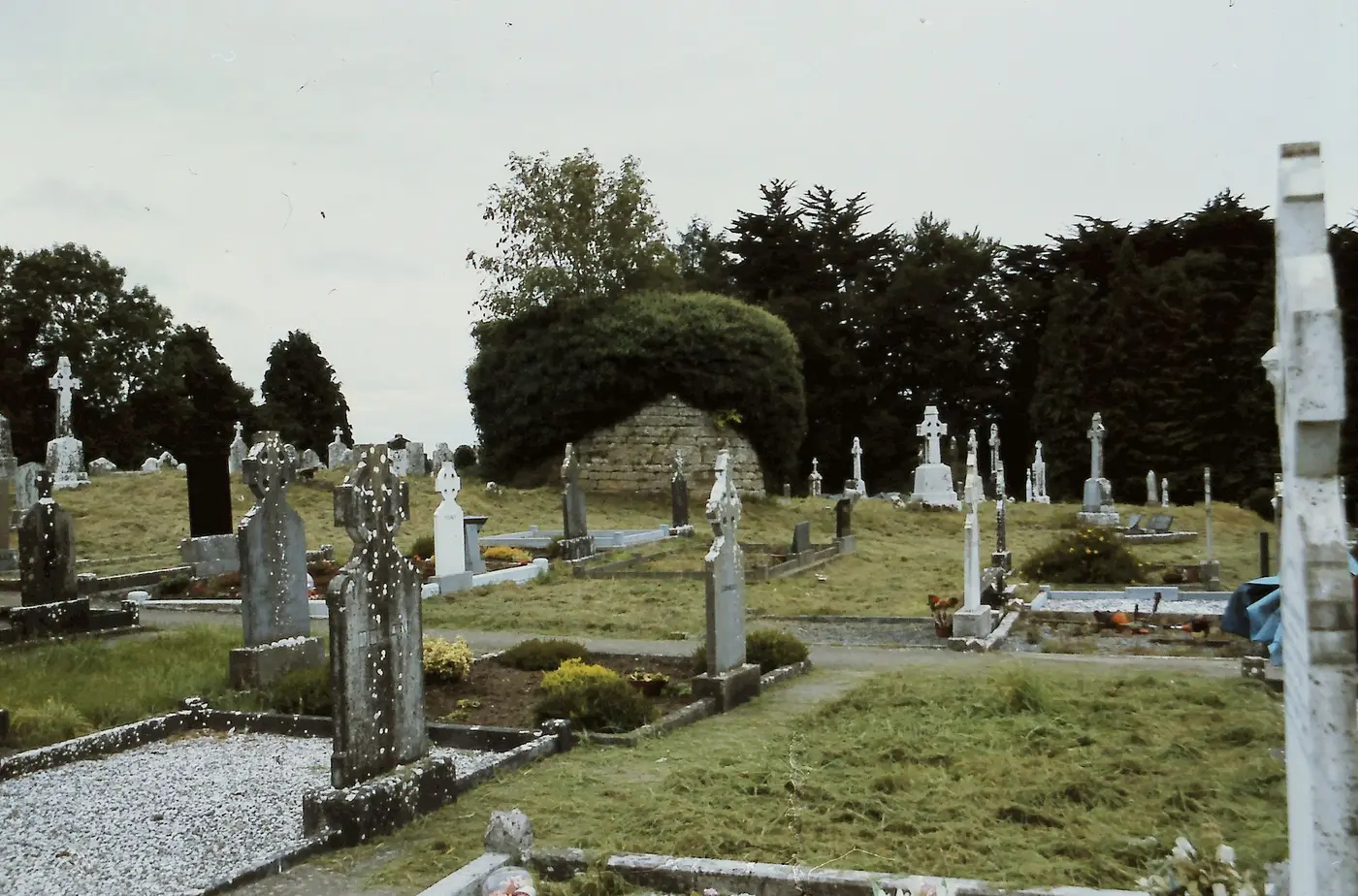
Largest base diameter of any known original Irish round tower at 6 m
Round tower at Drumcliff, County Sligo — incomplete, 9 metres.
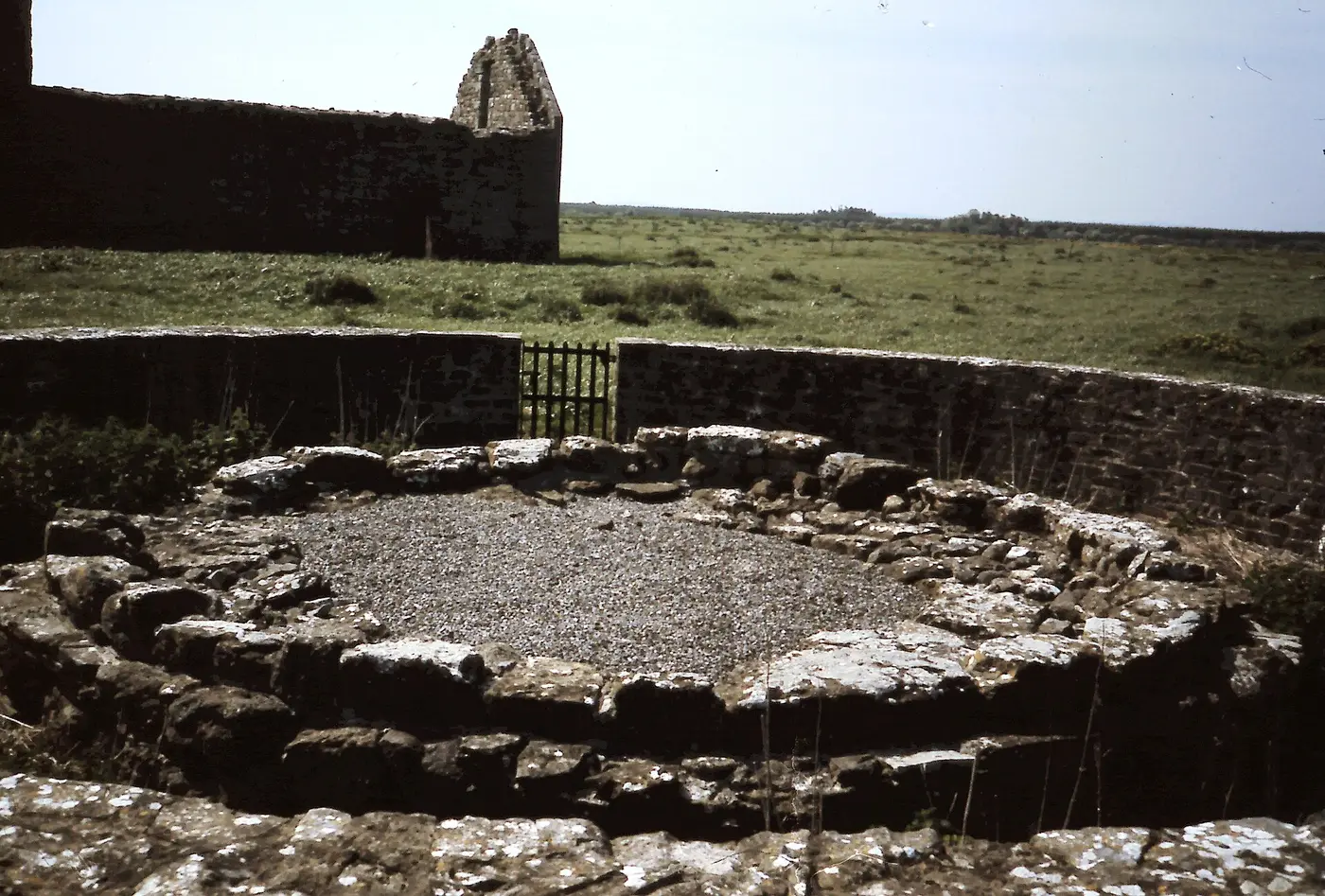
Discovered in 1969; only the 2.6 m foundations remain (unusually deep for an Irish round tower)
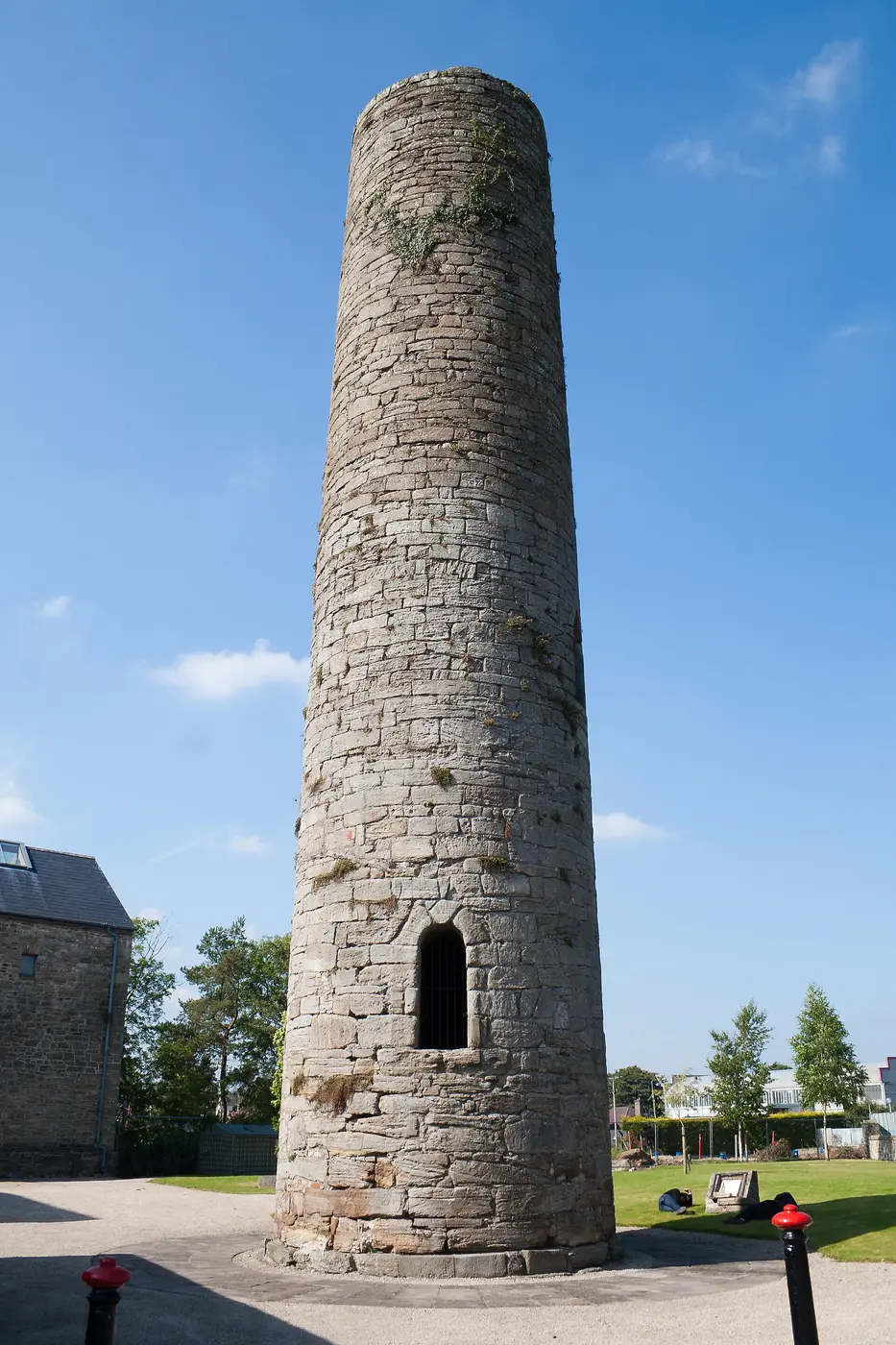
Round tower at Roscrea, County Tipperary — incomplete, 20 metres.
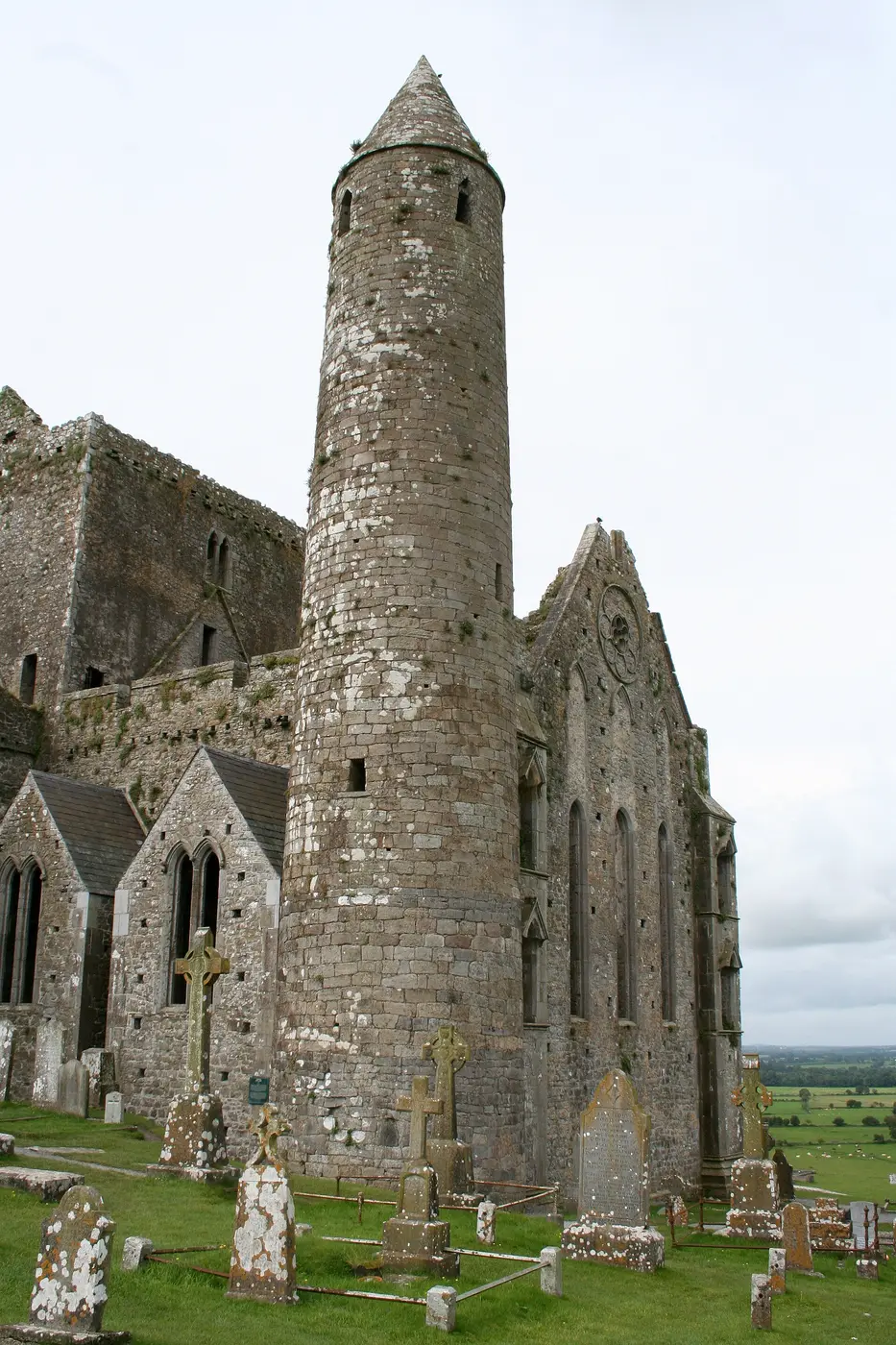
Attached to a later-built church
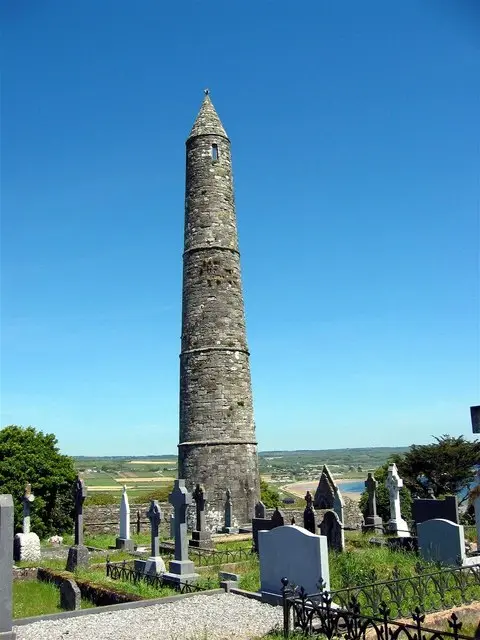
Has three string courses and a noticeable lean
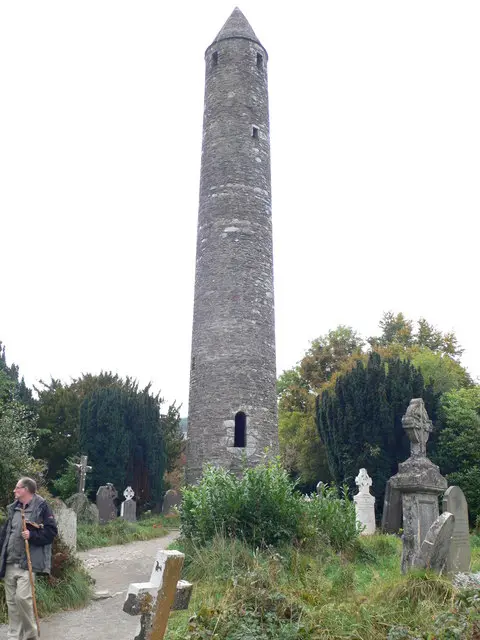
Nearby Saint Kevin's Church includes a miniature round tower
The list, with each tower's condition and height, follows the survey table in Wikipedia's Irish round tower article after Barrow (1979); pins are Wikipedia's coordinates for each place. Nothing here is a guide to access — many of these stand on private land.
Bell towers. The Irish word cloigtheach means bell house, and every one stands beside a church or monastery with its door facing the church. They also stored valuables and may have served as refuges, the raised doors suggest it, but they were built as bell towers first.
67 survive in some form on this list, following Barrow's 1979 survey — 24 of them complete or complete to the cornice, the rest stumps and partial towers. Two more stand in Scotland and one on the Isle of Man.
Kilmacduagh in County Galway, at 34.5 metres, is the tallest on this list.
Nobody is certain. Defence is the traditional answer (climb in, pull up the ladder) and it may be right; a raised door also protects whatever was stored inside, and helps the structure, since a doorway at the base weakens a tall tower where it bears the most weight.
Mostly between the tenth and twelfth centuries, in the great age of the Irish monasteries, before the Normans arrived in 1169 and brought the castle with them.
Know one that is missing? Thousands of round towers have no article and no pin — a townland name and a rough location is enough to start.
Suggest a site →