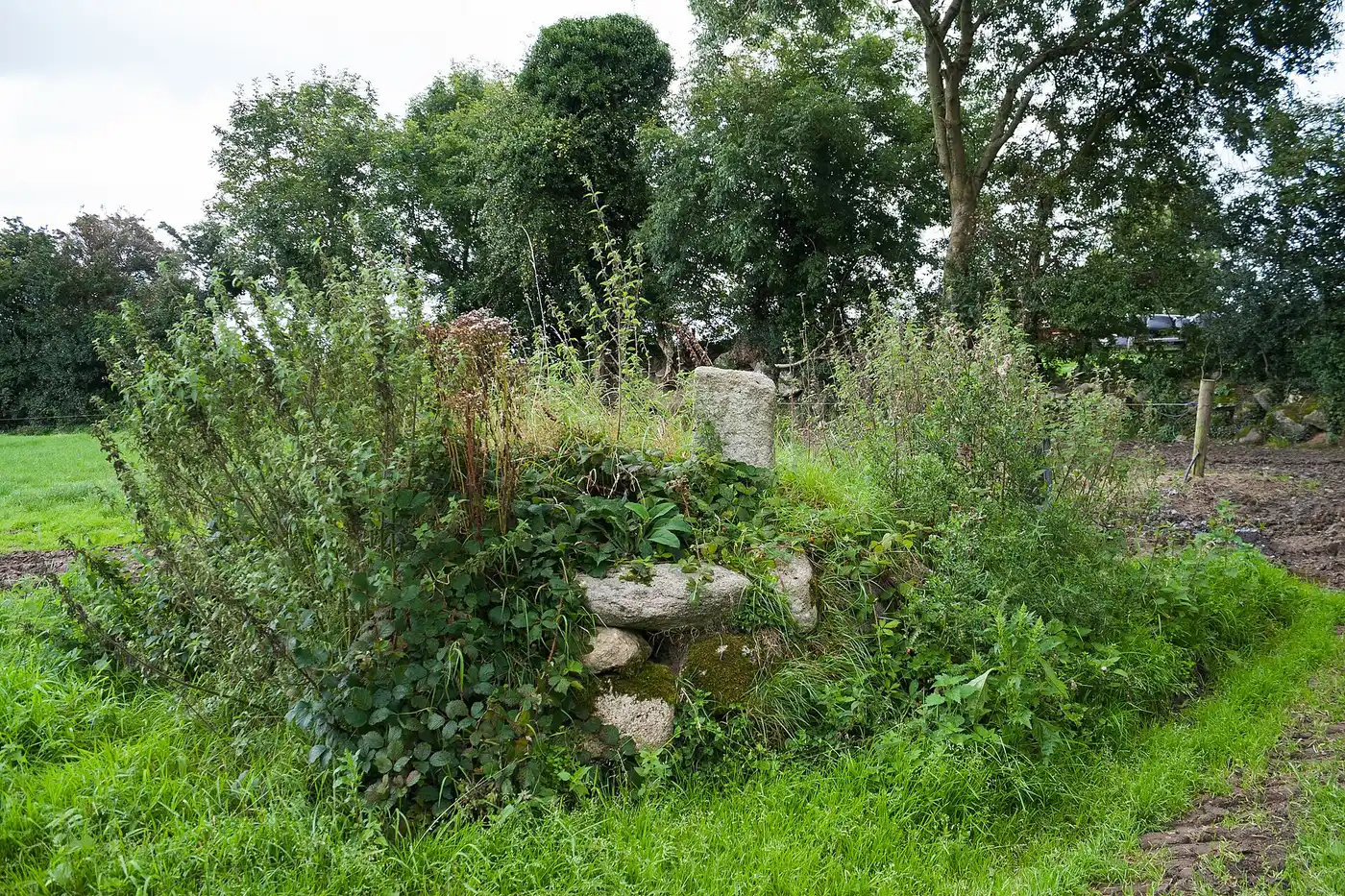
Lorum High Cross
Lorum High Cross is a high cross fragment and National Monument located in Lorum, County Carlow, Ireland The cross belongs to an early monastic site which is associated with Molaise of Leighlin.
Free-standing stone crosses, carved on every face with scripture and knotwork and once, almost certainly, painted. Ireland and Britain made them for a few centuries and nobody else ever did.
The high cross is a free-standing Christian cross of stone, usually outdoors, usually richly carved. The tradition belongs to early medieval Ireland and Britain alone: it probably grew from earlier wooden crosses, perhaps with metal fittings, and from pagan memorial stones, and it is still unclear whether the form was first raised in Ireland or in Northumbria, which Irish missionaries had converted.
The carving mixes scenes from scripture with panels of interlace and knotwork — the same vocabulary as the Book of Kells and the great metalwork, in stone. They were probably painted over a layer of plaster, which is why the crowded little scenes are so hard to read now: weather has taken the paint and softened the relief. The earlier crosses stood about two metres; the Irish ones grew to three times that while keeping their thick proportions, which gave the sculptors more surface to fill. The tallest, the Tall Cross at Monasterboice in Louth, stands seven metres.
The ring around the crossing, the Celtic cross of a million pendants, is the Irish form's signature, and the crosses below are where it came from. They stand where they were raised, mostly at the sites of the monasteries that made them.
Sources: Wikipedia — High cross ↗
Lorum High Cross is a high cross fragment and National Monument located in Lorum, County Carlow, Ireland The cross belongs to an early monastic site which is associated with Molaise of Leighlin.
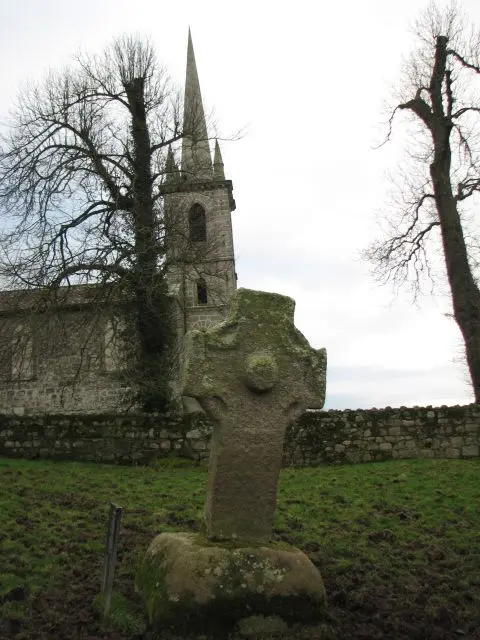
Nurney Cross is a stone cross located in Nurney, County Carlow, Ireland, and is an early example of a high cross. The site was a monastic site founded by Abbán in the 5th century AD and the cross is believed to date from that time.
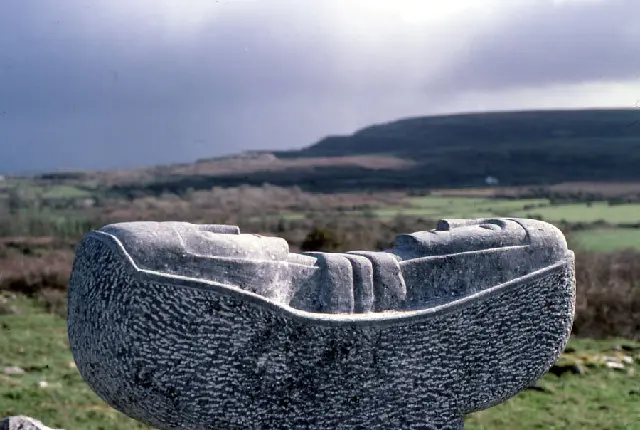
The Inneenboy cross (Irish: Cros Iníne Baoith "cross of the daughter of Baoth") or the Roughan Hill Tau Cross is a stone tau cross located in County Clare, Ireland. It is a National Monument.
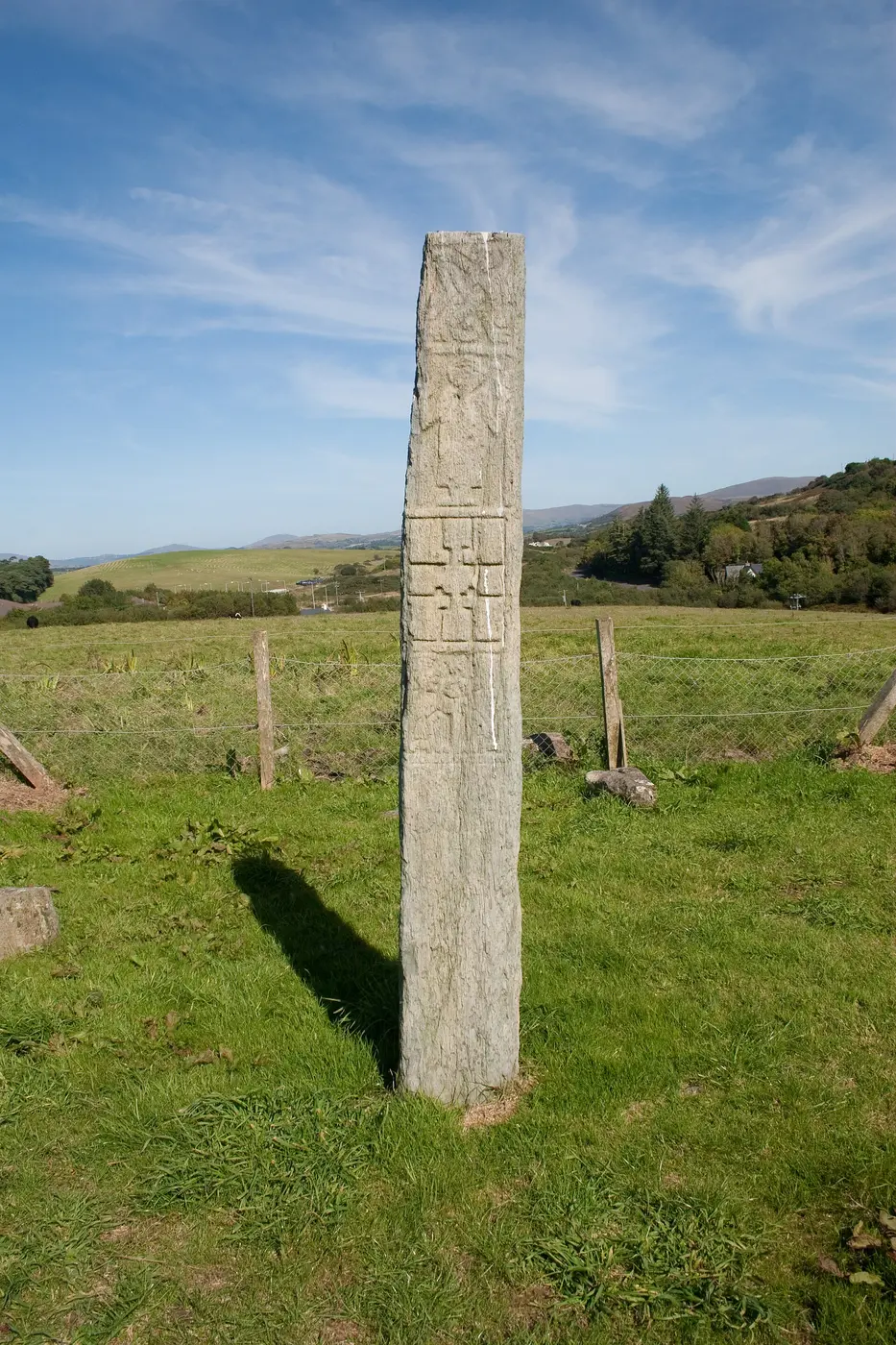
The Kilnaruane Pillar Stone is a carved monolith and National Monument located in County Cork, Ireland.
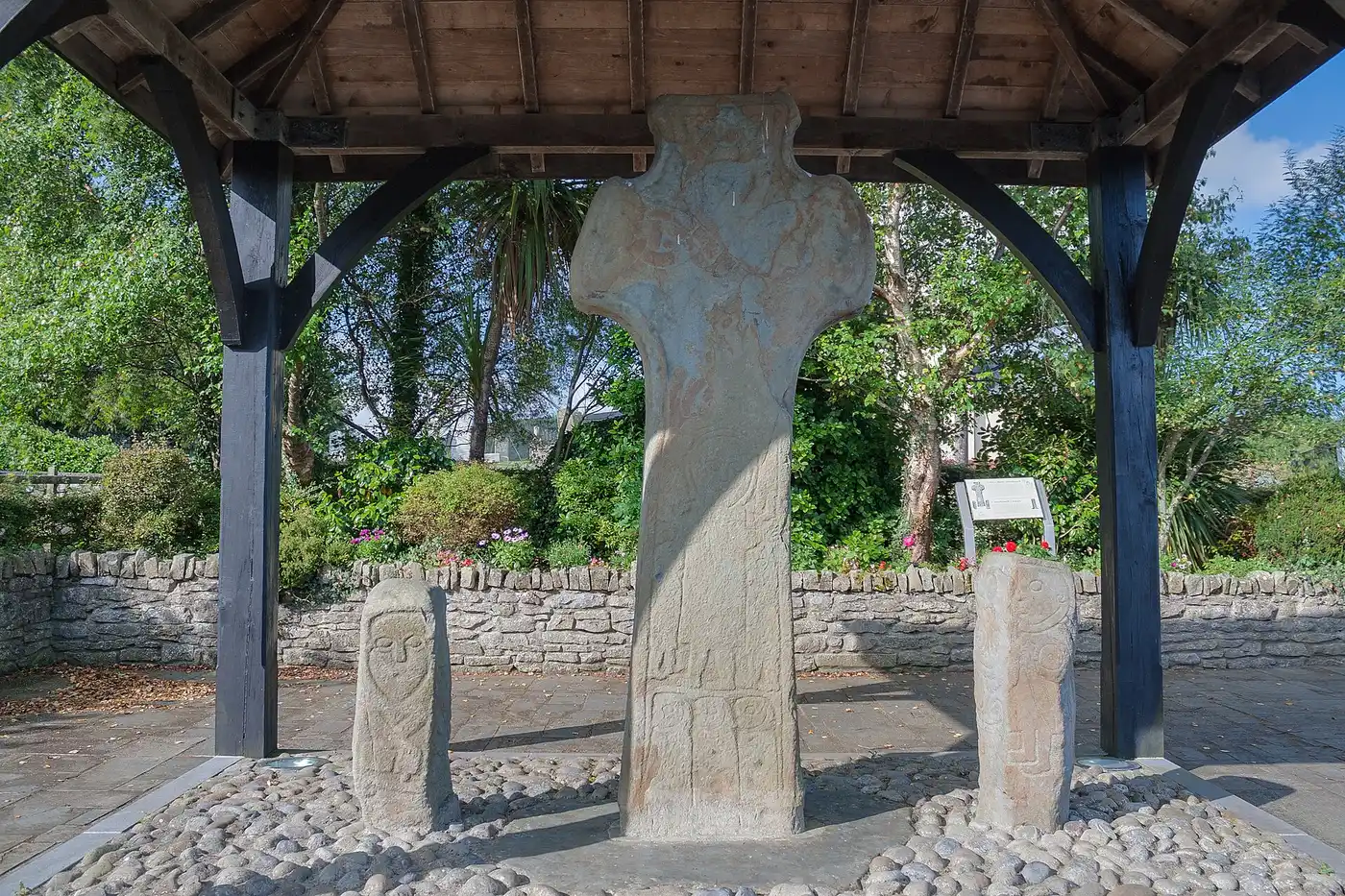
The Carndonagh stones are a set of five sculpted stones in the town of Carndonagh, County Donegal. All five stones are on the grounds of Donagh Church. The group consists of one free-standing high cross with two smaller, attendant pillars; a free-standing pillar known as the "Marigold Stone"; and a decorated door lintel.
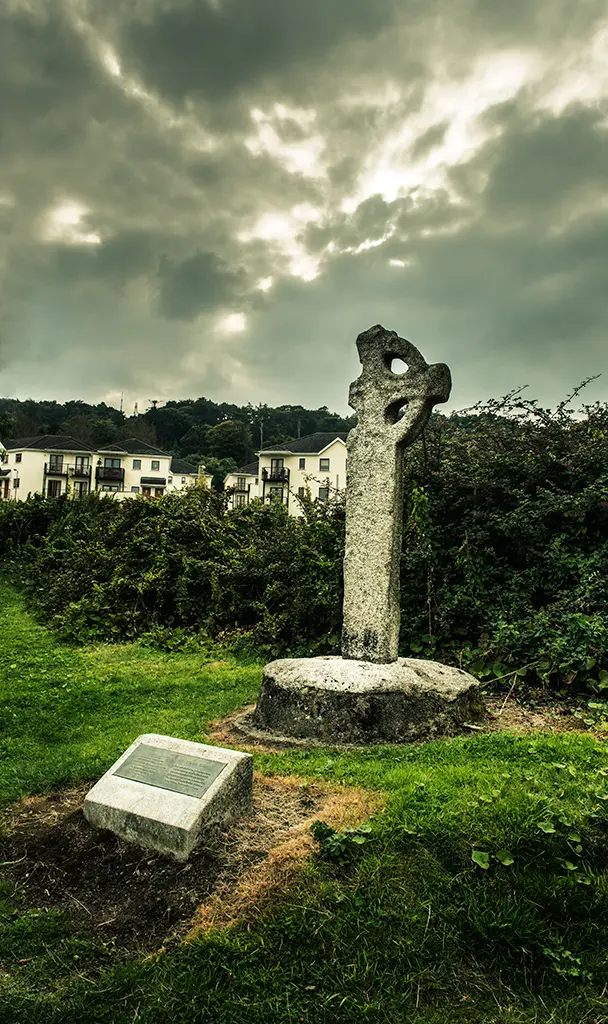
Kilgobbin Cross is a high cross and National Monument located in Stepaside, County Dublin, Ireland.
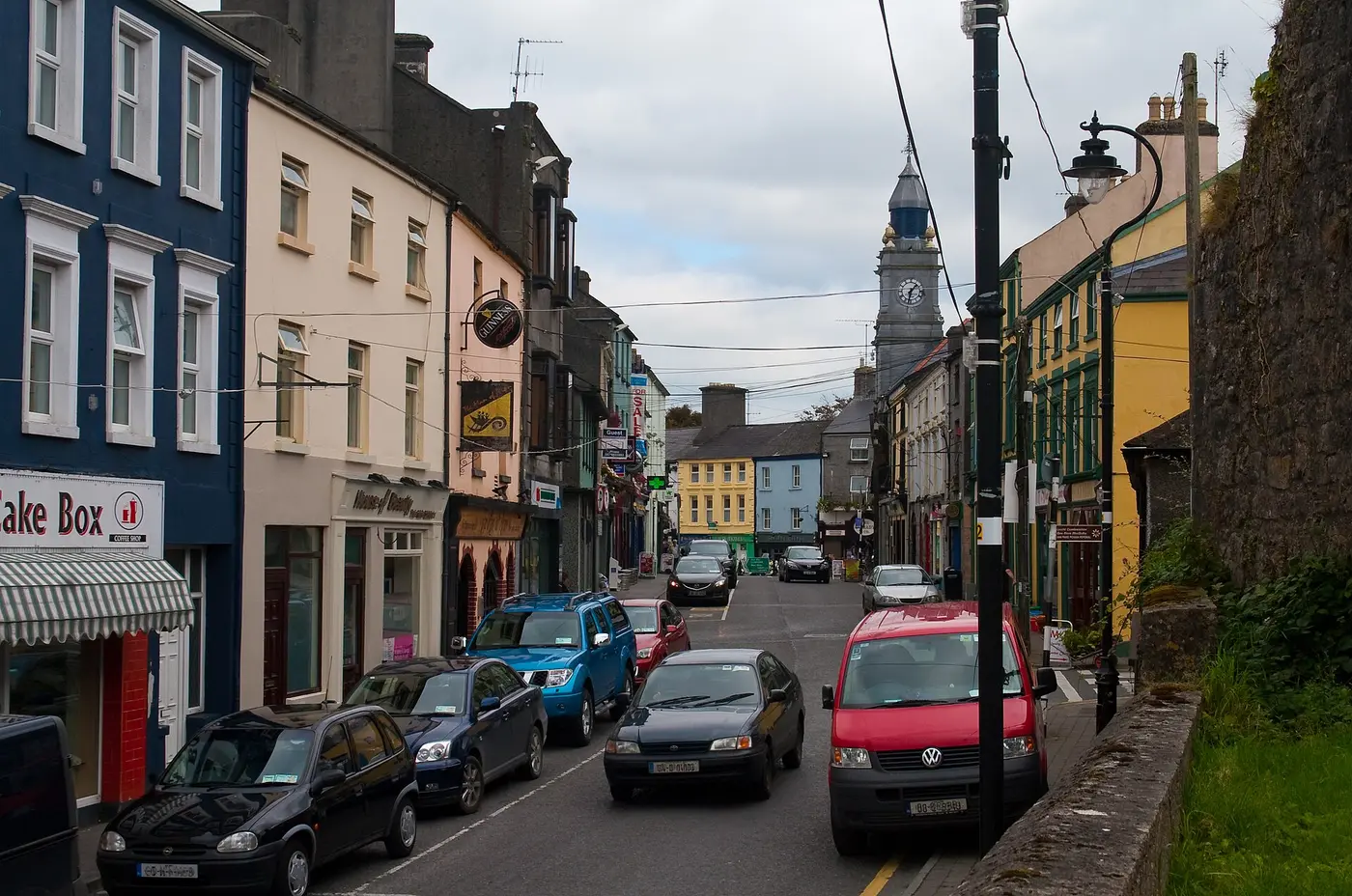
Tuam (; Irish: Tuaim [ˈt̪ˠuəmʲ], meaning 'mound' or 'burial-place') is a town in Ireland and the second-largest settlement in County Galway. It is west of the midlands of Ireland, about 35 km (22 mi) north of Galway city. The town is in a civil parish of the same name.
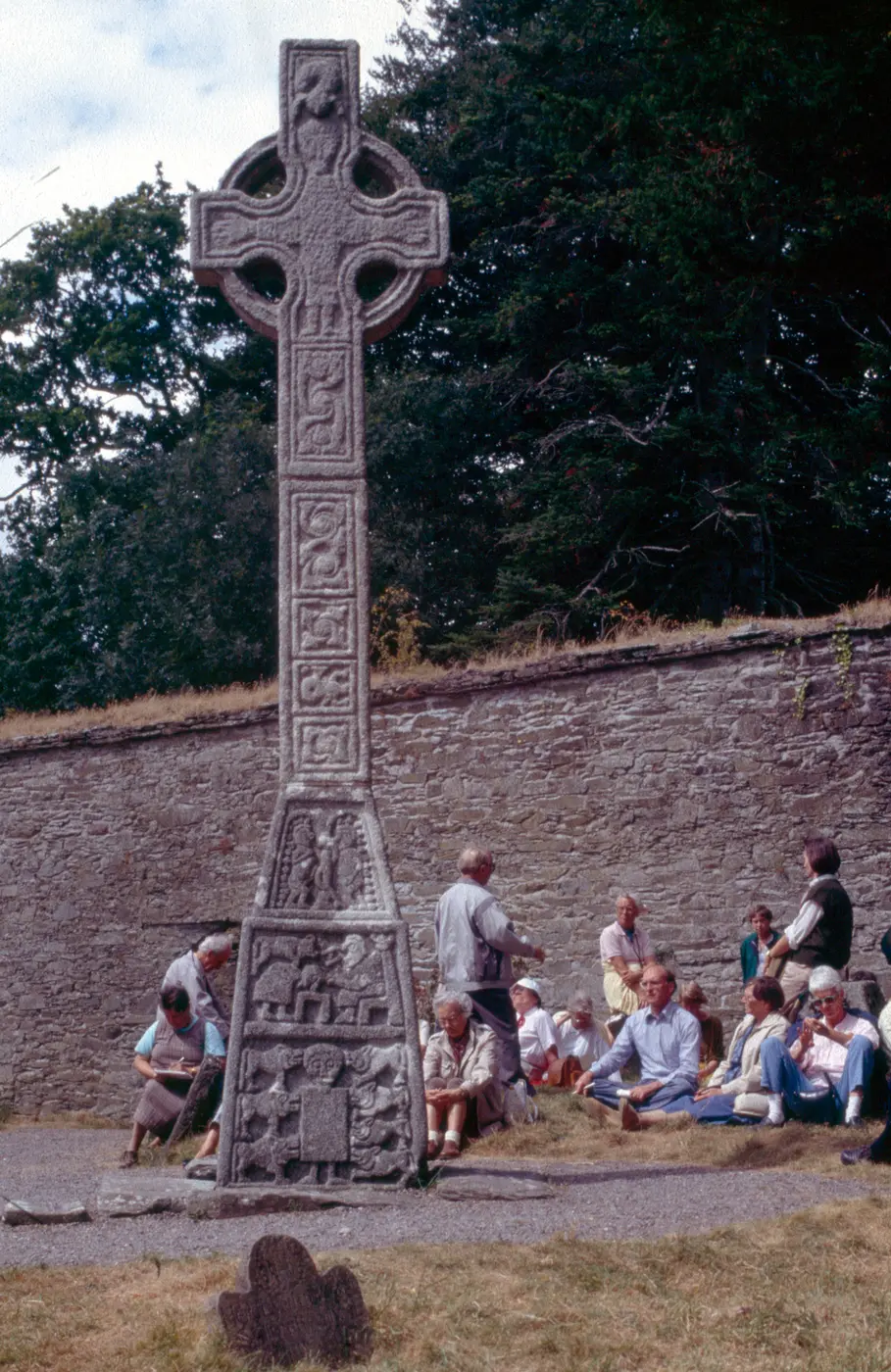
Moone High Cross (Irish: Ardchros Maoin) is a high cross and national monument reputedly dating from the eighth century located in Moone, County Kildare, Ireland. At 17.5 feet high (including the base) it is the second tallest high cross in Ireland, and also one of the best preserved of its kind.
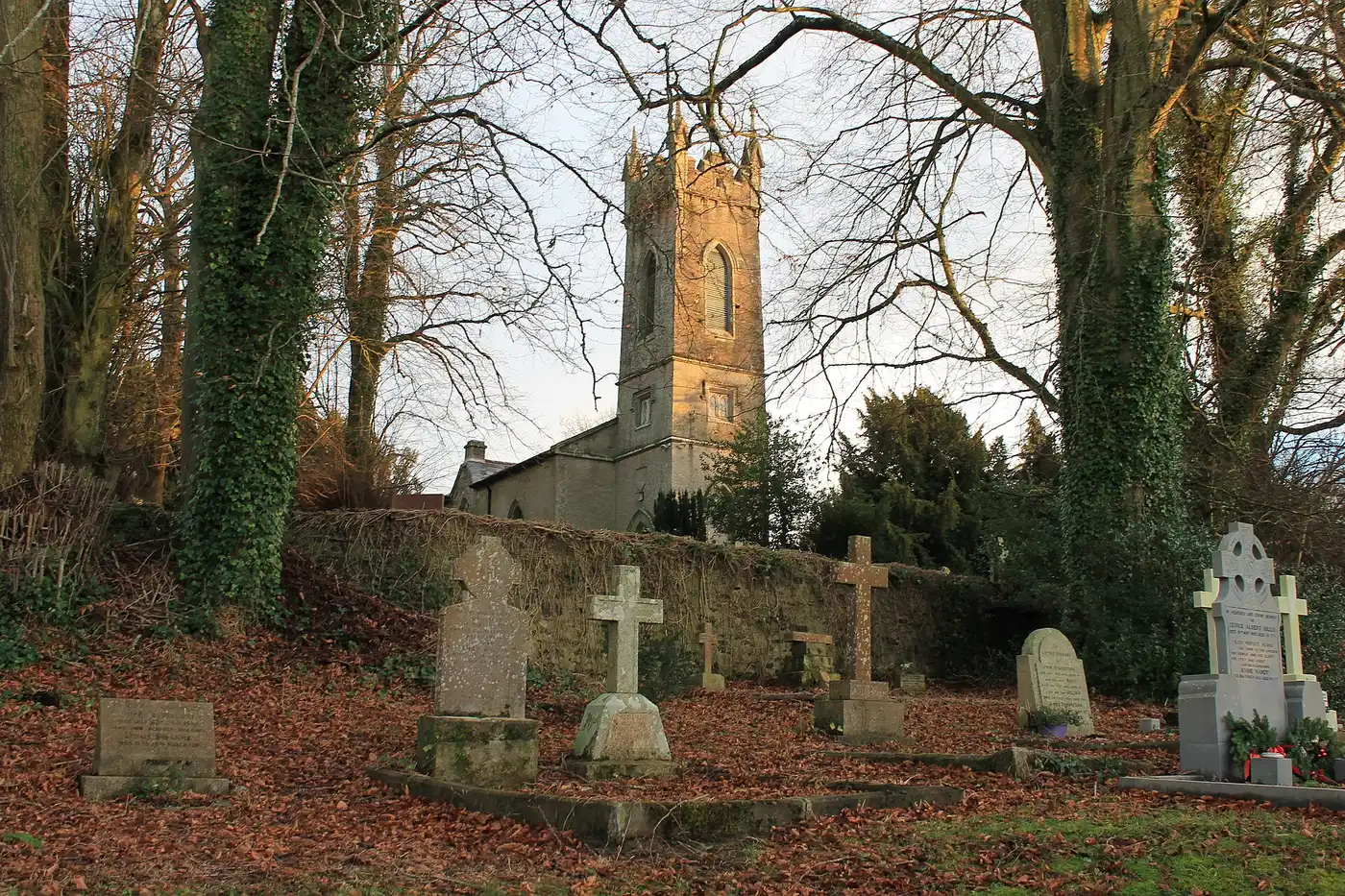
St. John's Church (officially "The Church of Saint John the Evangelist") is a Church of Ireland church located in Ballymore Eustace, County Kildare, Ireland. The current church, built in 1820, consecrated in 1822 and extended in 1894, stands close to the site of a medieval church first mentioned in 1192.
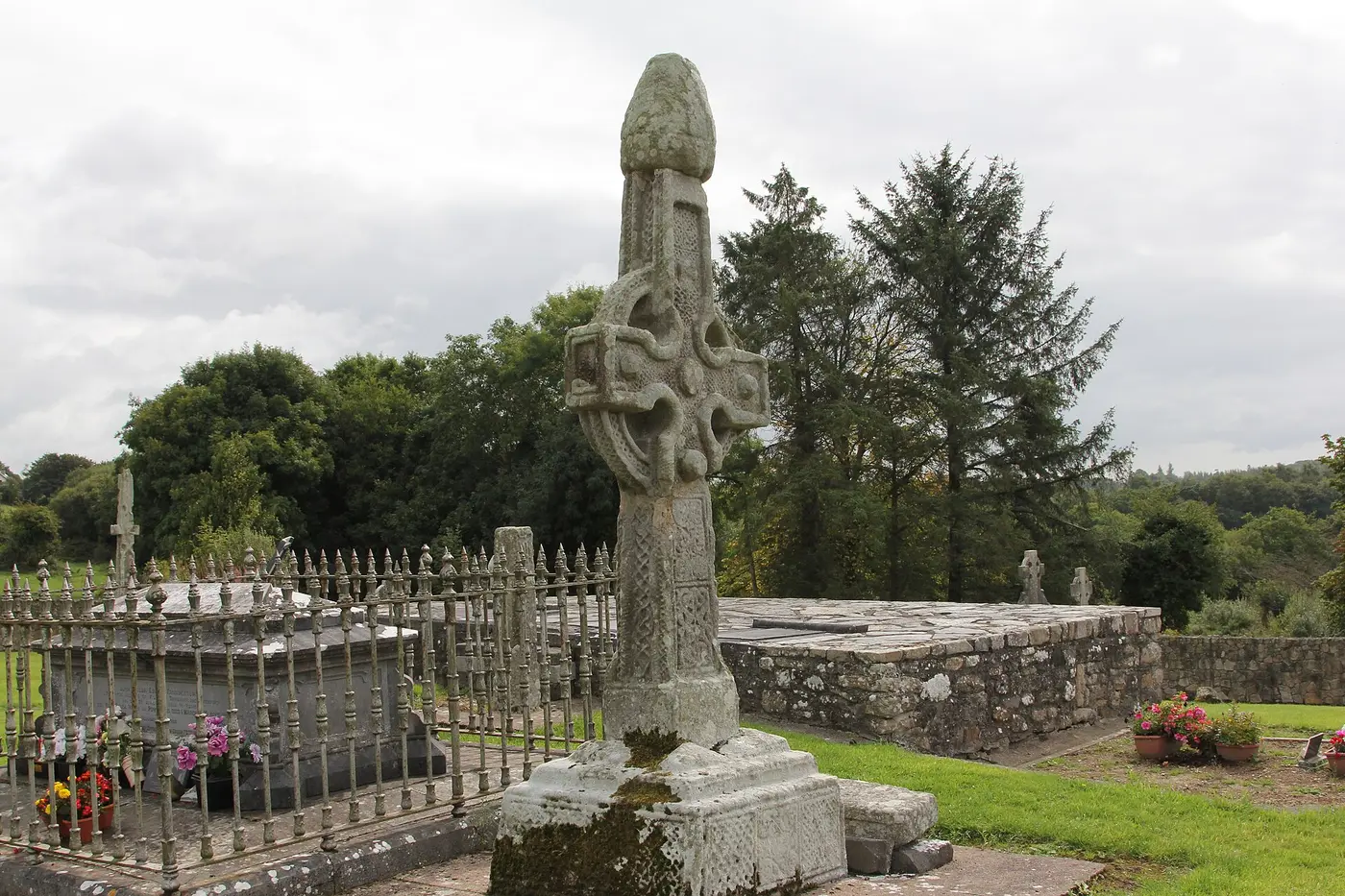
Kilkieran High Crosses are a group of high crosses which form a National Monument in County Kilkenny, Ireland.
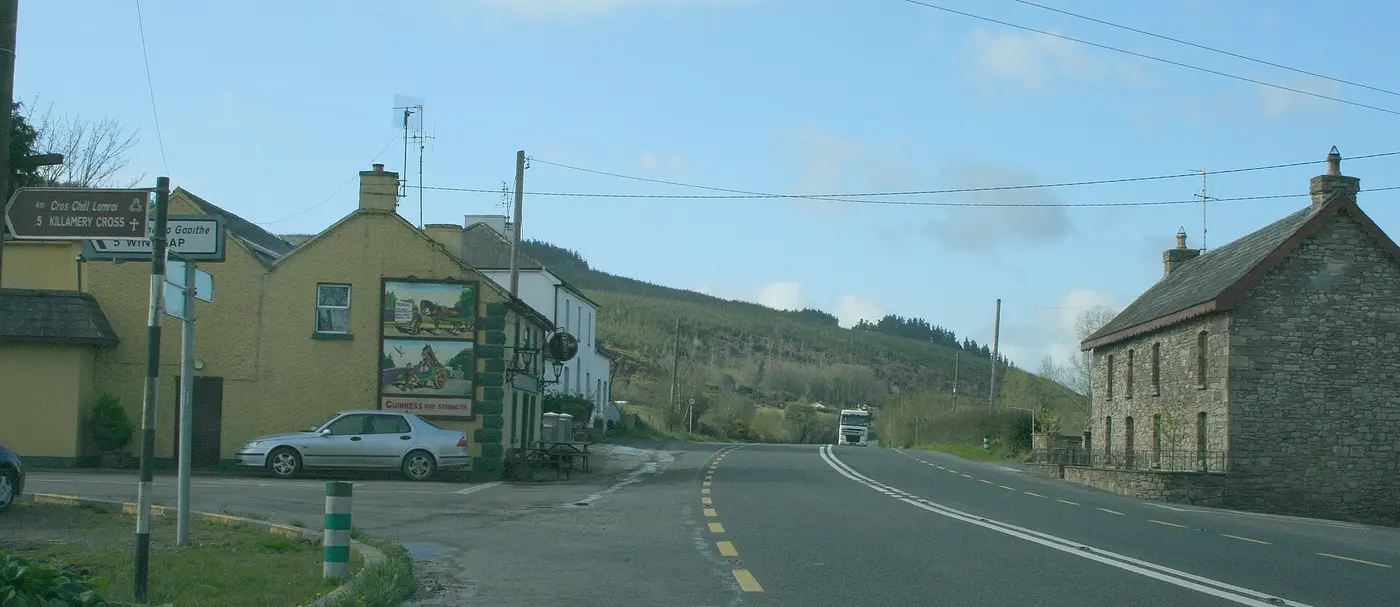
Killamery (Irish: Cill Lamraí) is a village in County Kilkenny, Ireland. Located near the County Tipperary border, it is in a townland and civil parish of the same name. Killamery lies on the N76 national secondary road, halfway between Kilkenny to the northeast and Clonmel to the southwest.
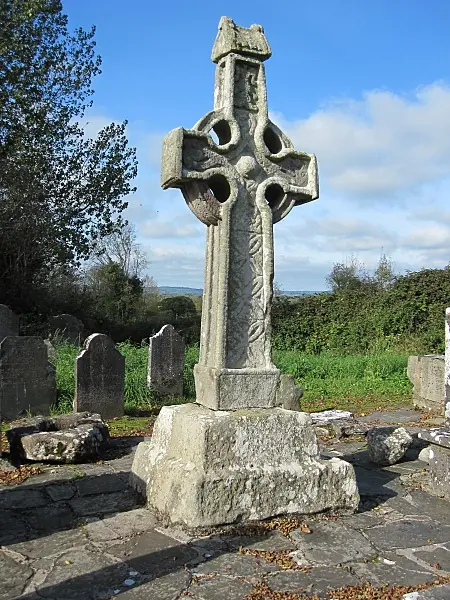
Killamery Cross is a 9th-century high cross and National Monument in Killamery, County Kilkenny, Ireland. It is located in the north of Killamery graveyard.
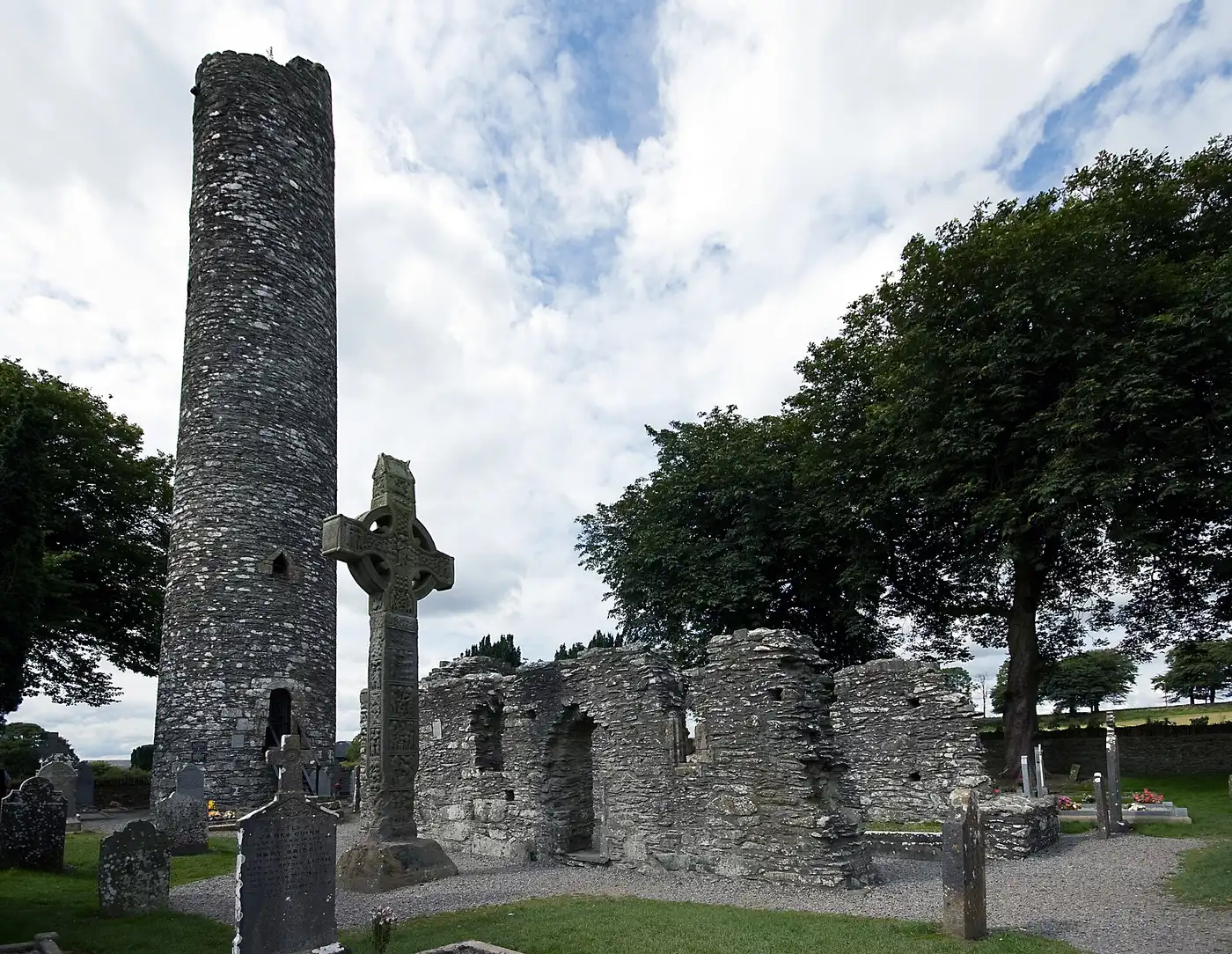
The Monasterboice (Irish: Mainistir Bhuithe) ruins are the remains of an early Christian monastic settlement in County Louth in Ireland, north of Drogheda. The ruins are a national monument of Ireland and also give their name to the local village and to a civil parish of the same name.
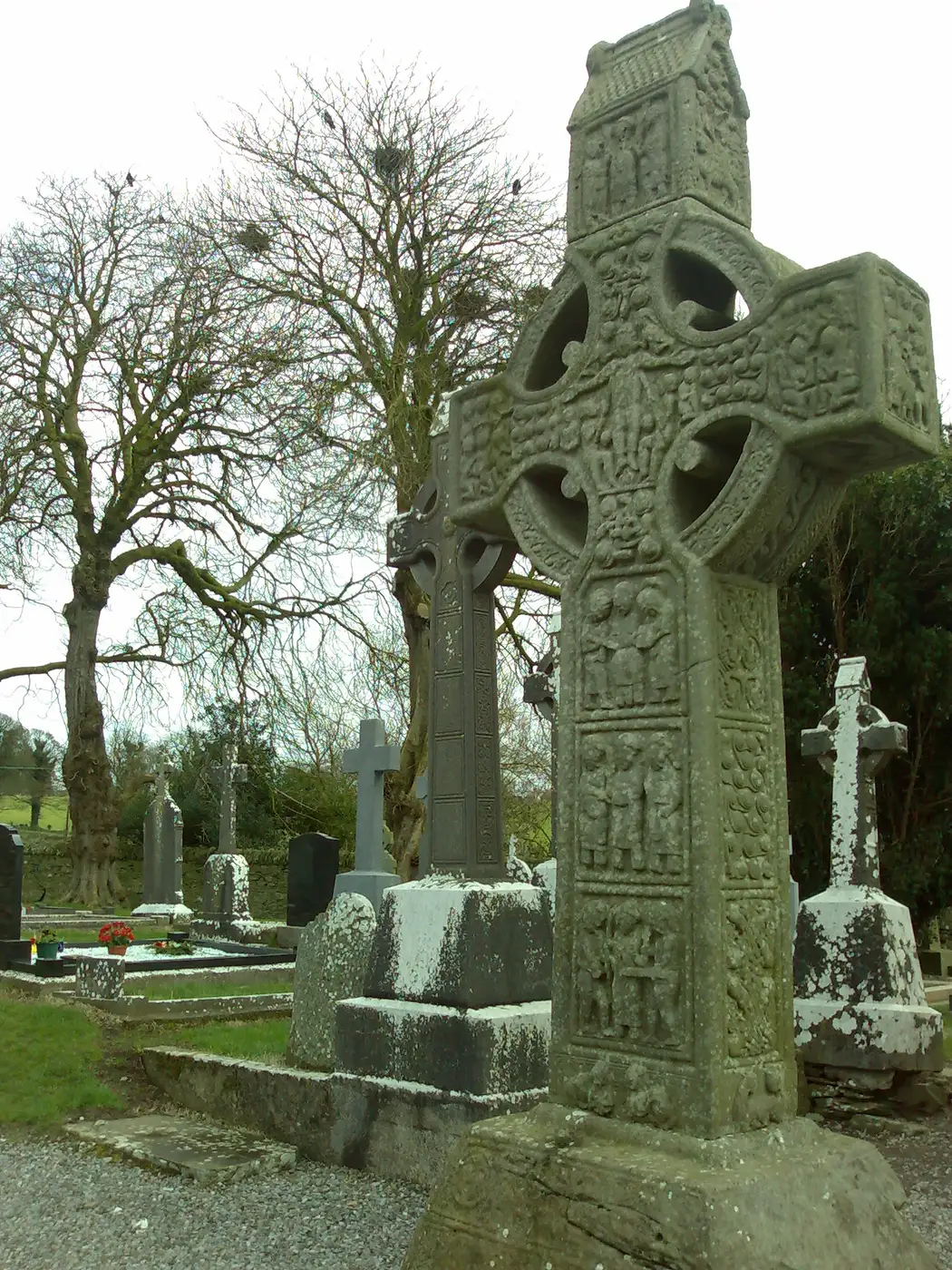
Muiredach's High Cross is a high cross from the 10th or possibly 9th century, located at the ruined monastic site of Monasterboice, in County Louth, Ireland. There are two other high crosses at Monasterboice; in local terms Muiredach's cross is also known as the South Cross.
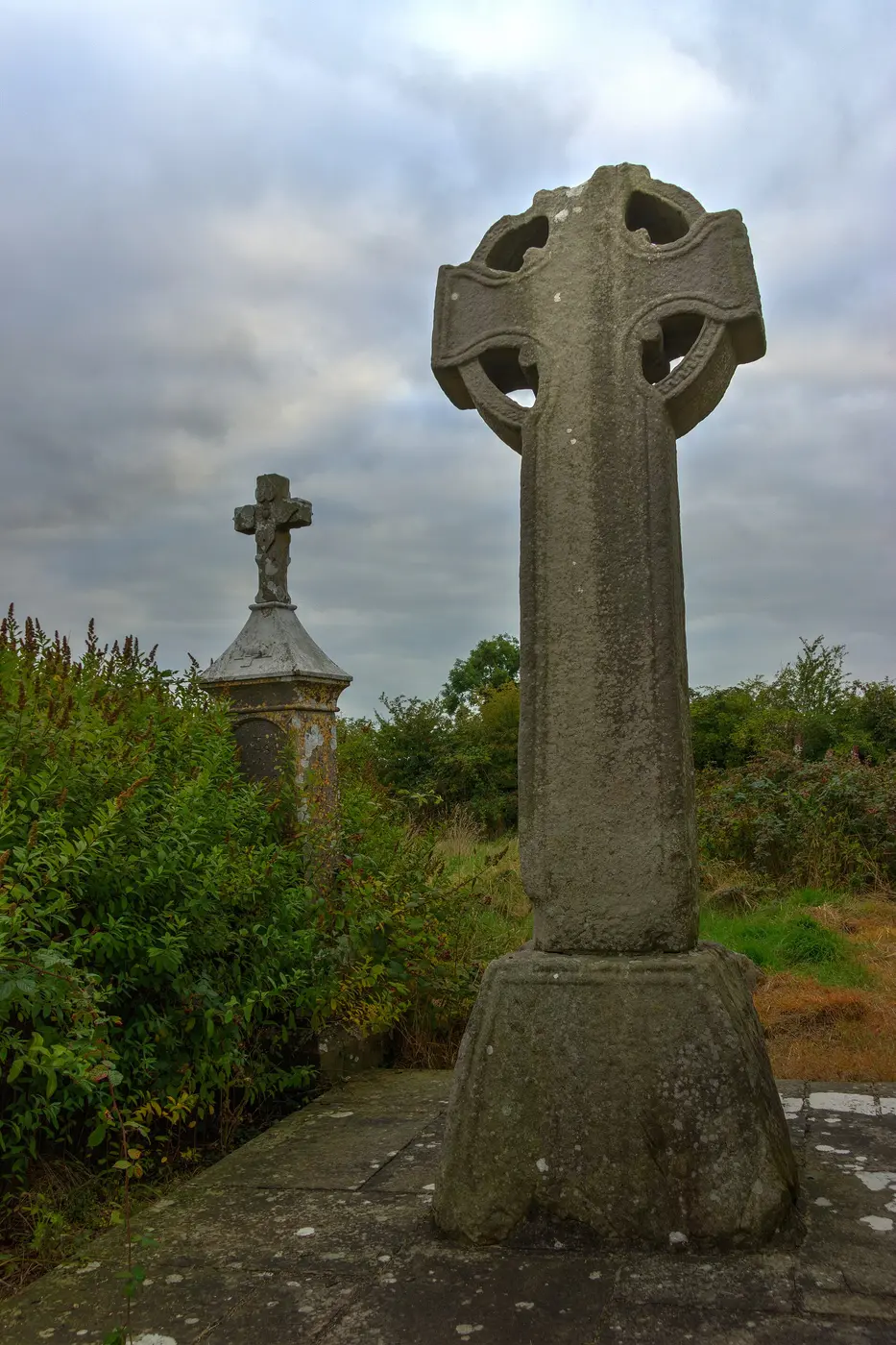
Castlekeeran is a former monastery and a National Monument in County Meath, Ireland.
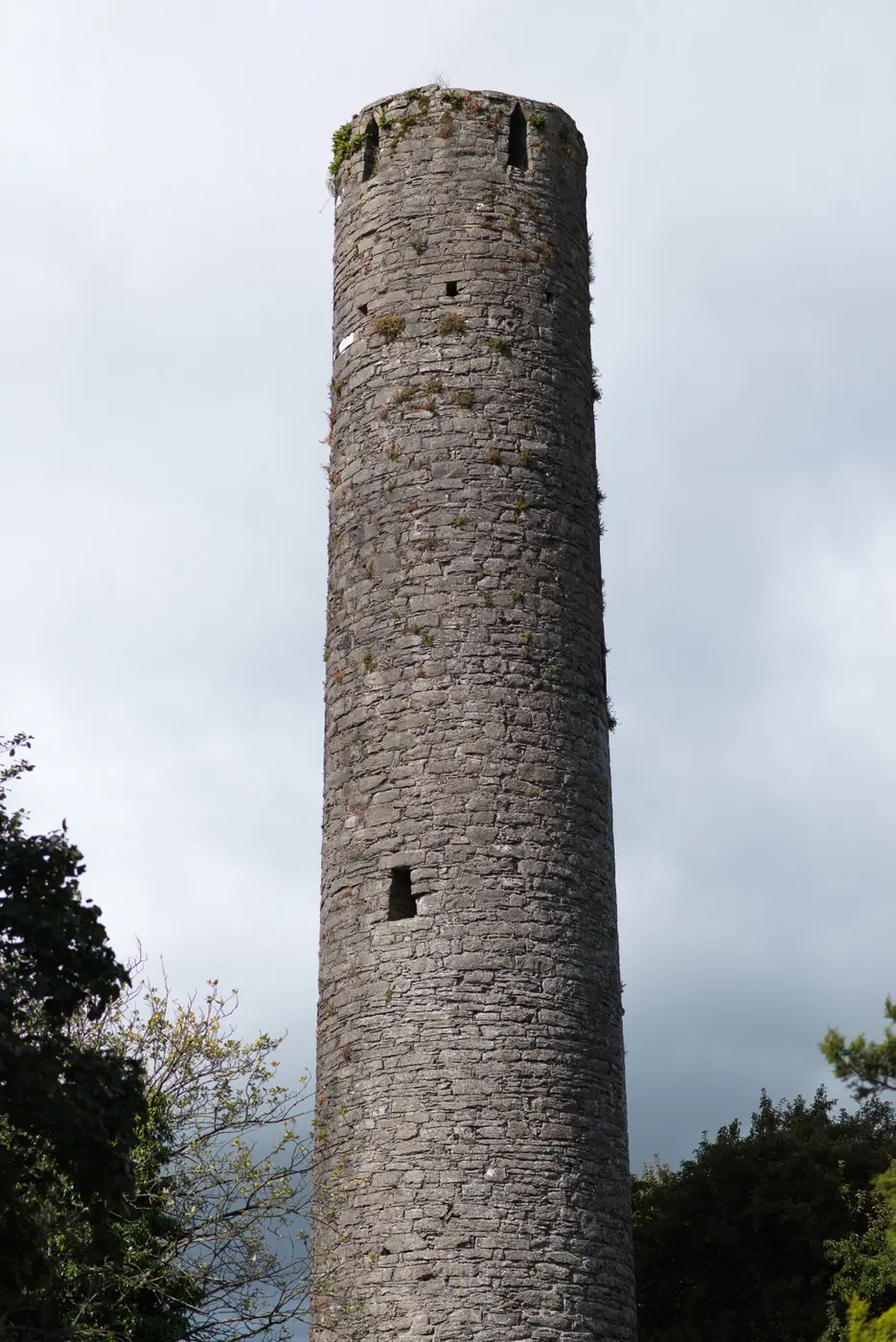
Kells Round Tower is a round tower in Kells, County Meath in Ireland. The tower, and the high crosses nearby, are National Monuments.
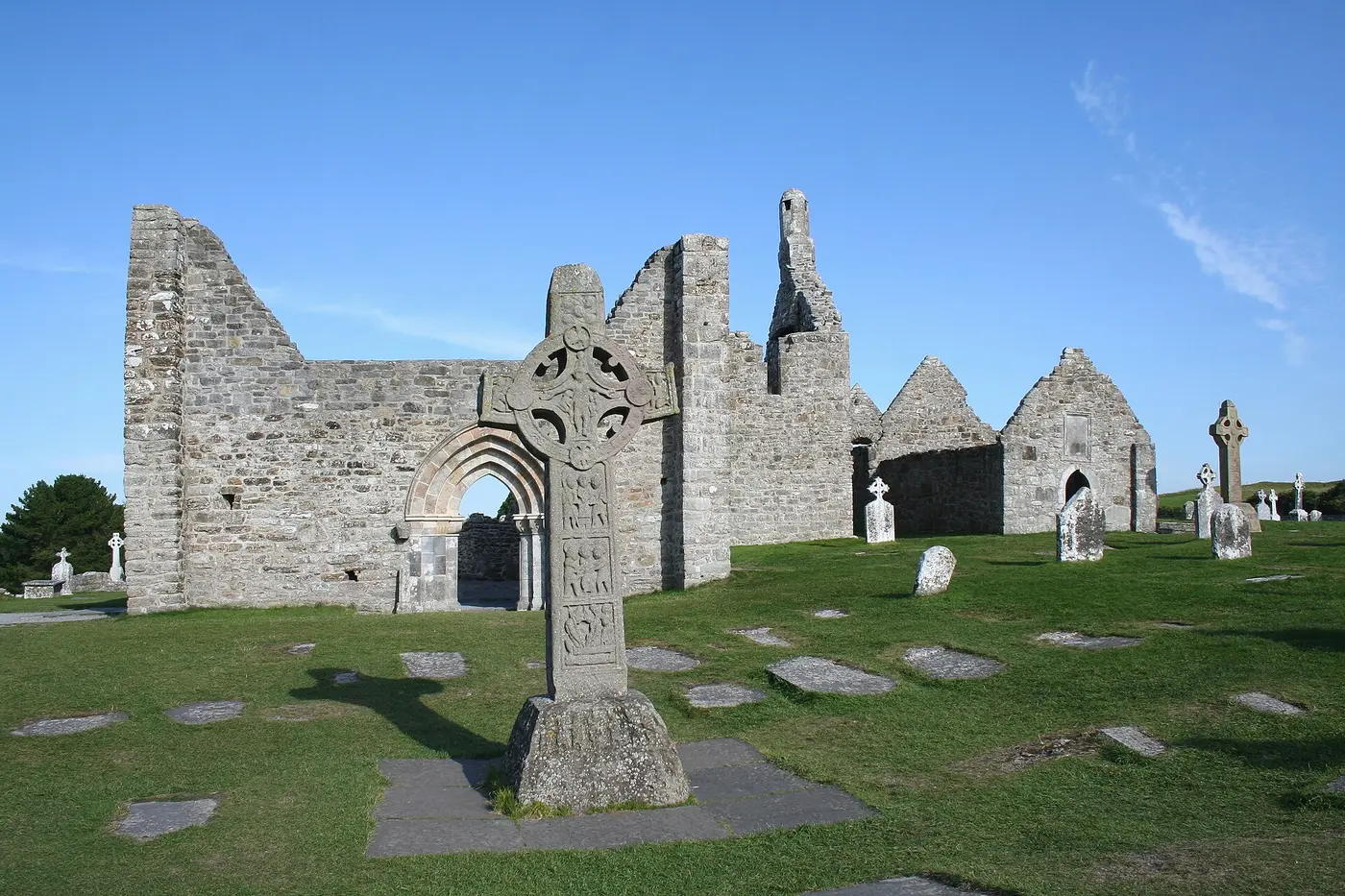
Clonmacnoise or Clonmacnois (Irish: Cluain Mhic Nóis) is a ruined monastery in County Offaly in Ireland on the River Shannon south of Athlone, founded in 544 by Saint Ciarán, from Rathcroghan, County Roscommon. Until the 9th century it had close associations with the kings of Connacht.
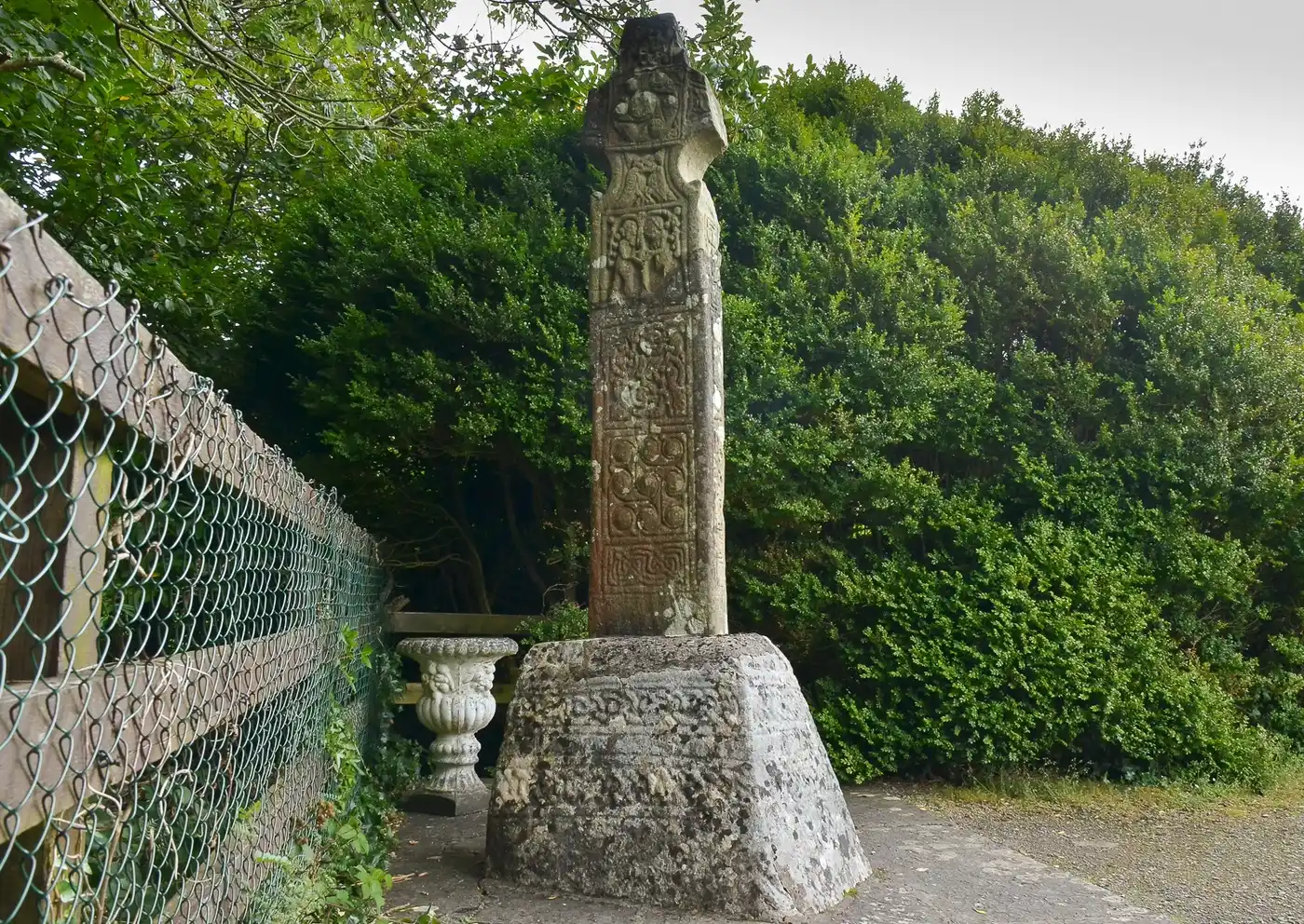
Kinnitty Cross is a high cross and National Monument located near Kinnitty, County Offaly, Ireland.
Cloonshanville High Cross is a high cross which is a National Monument in County Roscommon, Ireland.
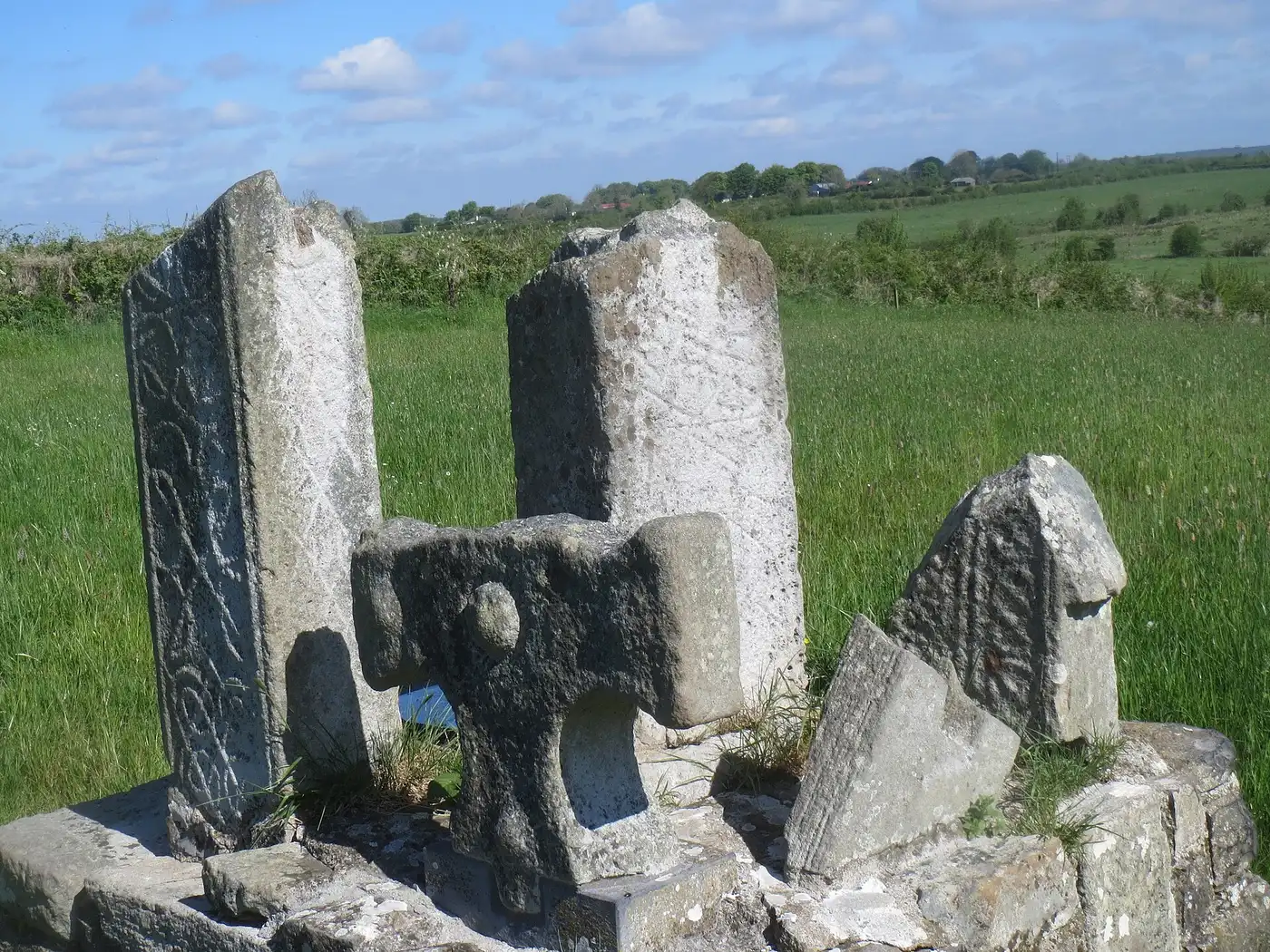
Emlagh High Cross or Emlagh Cross is a high cross which is a National Monument in County Roscommon, Ireland.
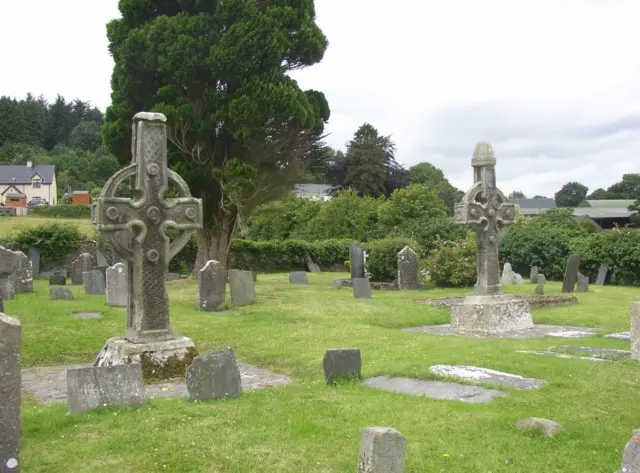
Ahenny (Irish: Áth Eine, meaning 'ford of Eine') is a small village and townland in County Tipperary, Ireland. It is notable for its ancient Irish high crosses. Close to the village is the early Christian foundation of Kilclispeen monastery and in the adjoining graveyard stand two celebrated Irish High Crosses: the Ahenny High Crosses.
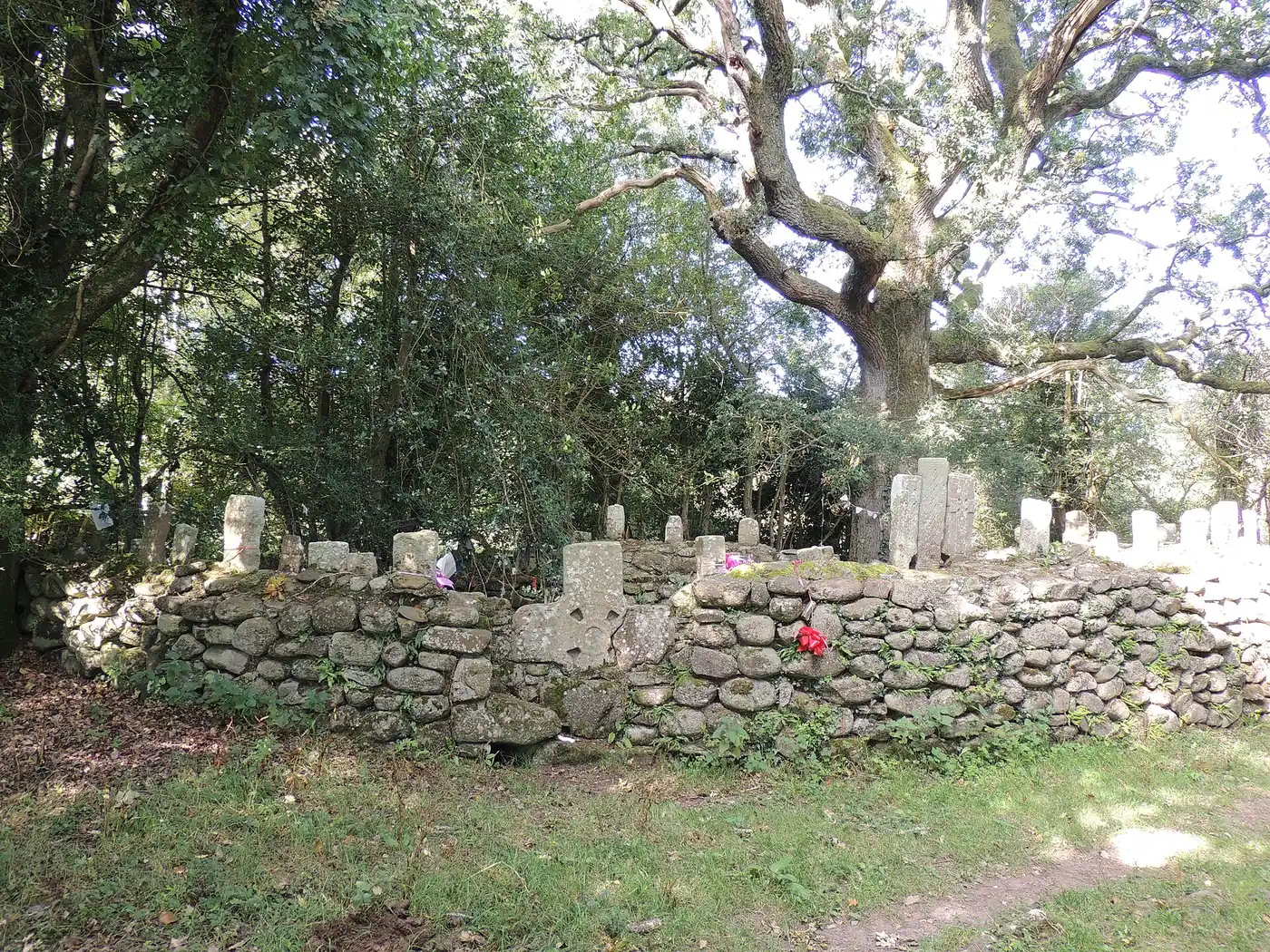
St. Berrihert's Kyle is an ecclesiastical enclosure and National Monument containing cross slabs, wheel crosses, high crosses and a cursing stone located in County Tipperary, Ireland.
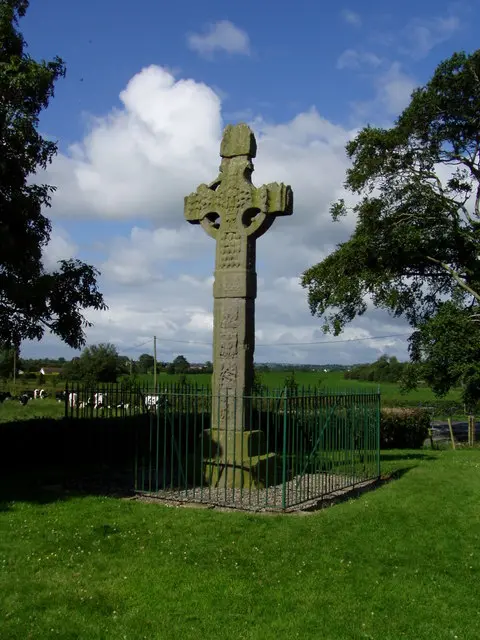
Ardboe High Cross (Irish: Seanchrois Ard Bó) is a high cross and national monument dating from the tenth century located in Ardboe, County Tyrone, Northern Ireland. The cross stands at the entrance to a cemetery and a monastery and a church from the seventeenth century which was founded in 590 by Saint Colman.
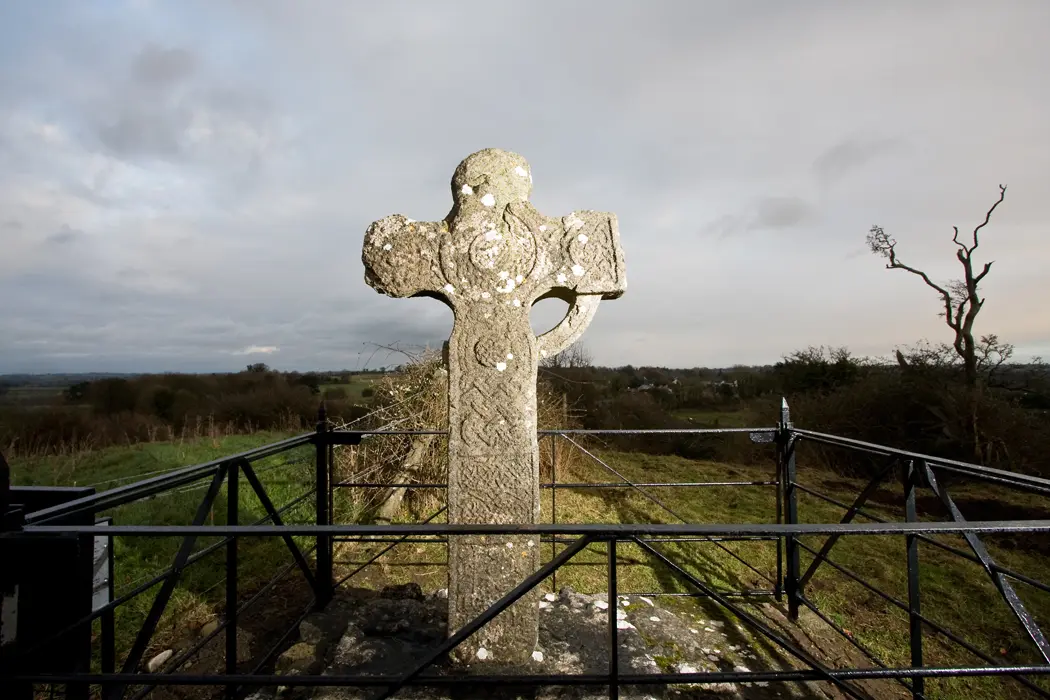
Baylin High Cross is a high cross and National Monument located near Athlone, County Westmeath, Ireland.
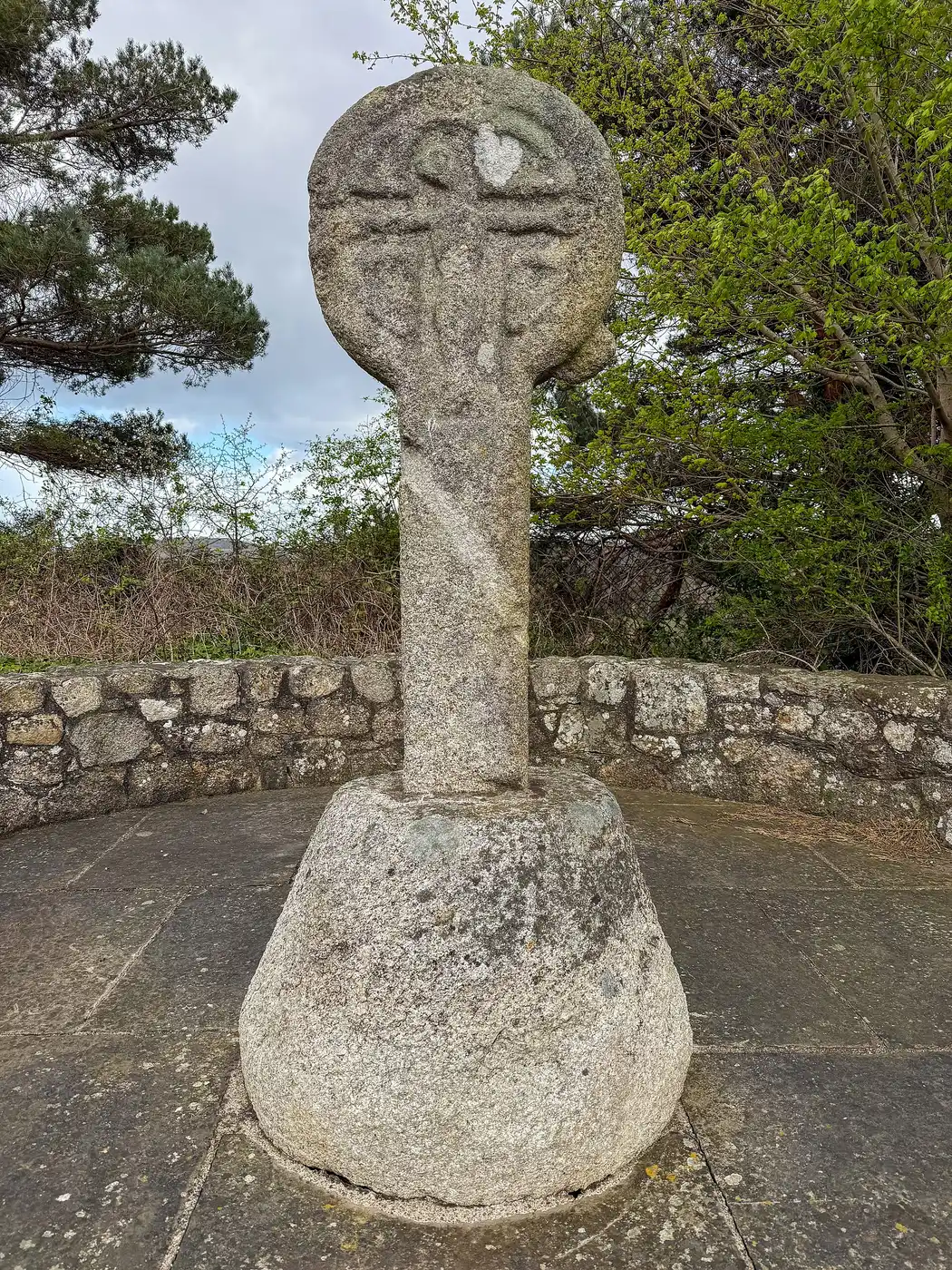
Fassaroe Cross, also called St. Valery's Cross, is a high cross and National Monument located near Bray, County Wicklow, Ireland.
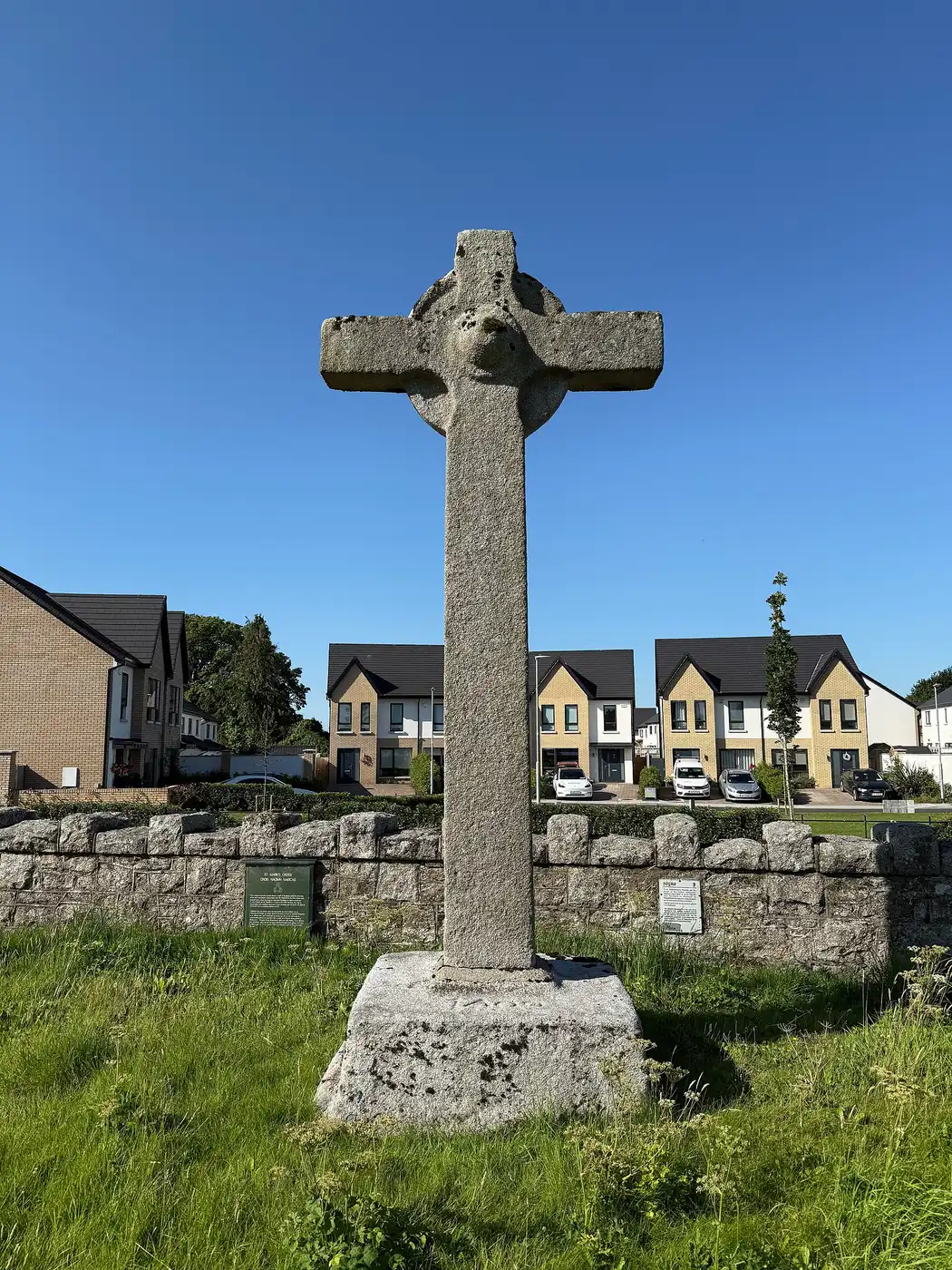
St. Mark's Cross is a high cross and National Monument located in Blessington, County Wicklow, Ireland.
Descriptions are Wikipedia's own opening lines, used under CC BY-SA 4.0 with a link to each article; the list and the coordinates come from the same place. Nothing here is a guide to access — many of these stand on private land.
A free-standing stone cross, usually carved and raised outdoors, of a kind made in early medieval Ireland and Britain and nowhere else. The Irish ones are the largest and the most elaborately carved, and the ring around the crossing is the form the world now calls the Celtic cross.
The Tall Cross, also called the West Cross, at Monasterboice in County Louth — seven metres, about twenty-two feet.
Probably, over a layer of plaster. The paint is long gone, which is why the small crowded scenes are often so hard to make out today.
26, each pinned by its coordinates and linked to its article. There are more fragments and plainer crosses across the country than any list captures.
Know one that is missing? Thousands of high crosses have no article and no pin — a townland name and a rough location is enough to start.
Suggest a site →