Dolmain — the portal tombs

Dolmens of Ireland

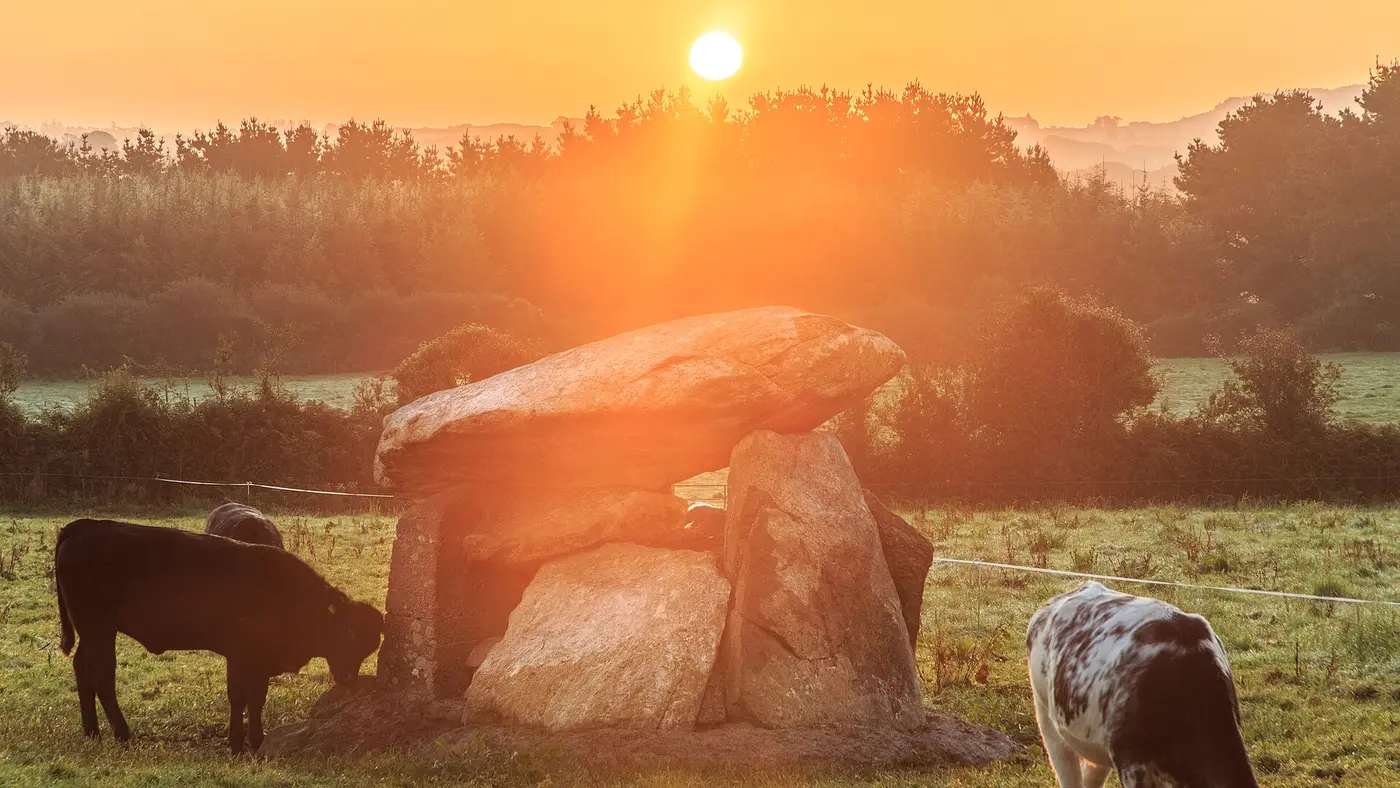
Two or three standing stones and a capstone the weight of a bus, balanced for five thousand years. The dolmen is the tomb with its skeleton showing.

What they are

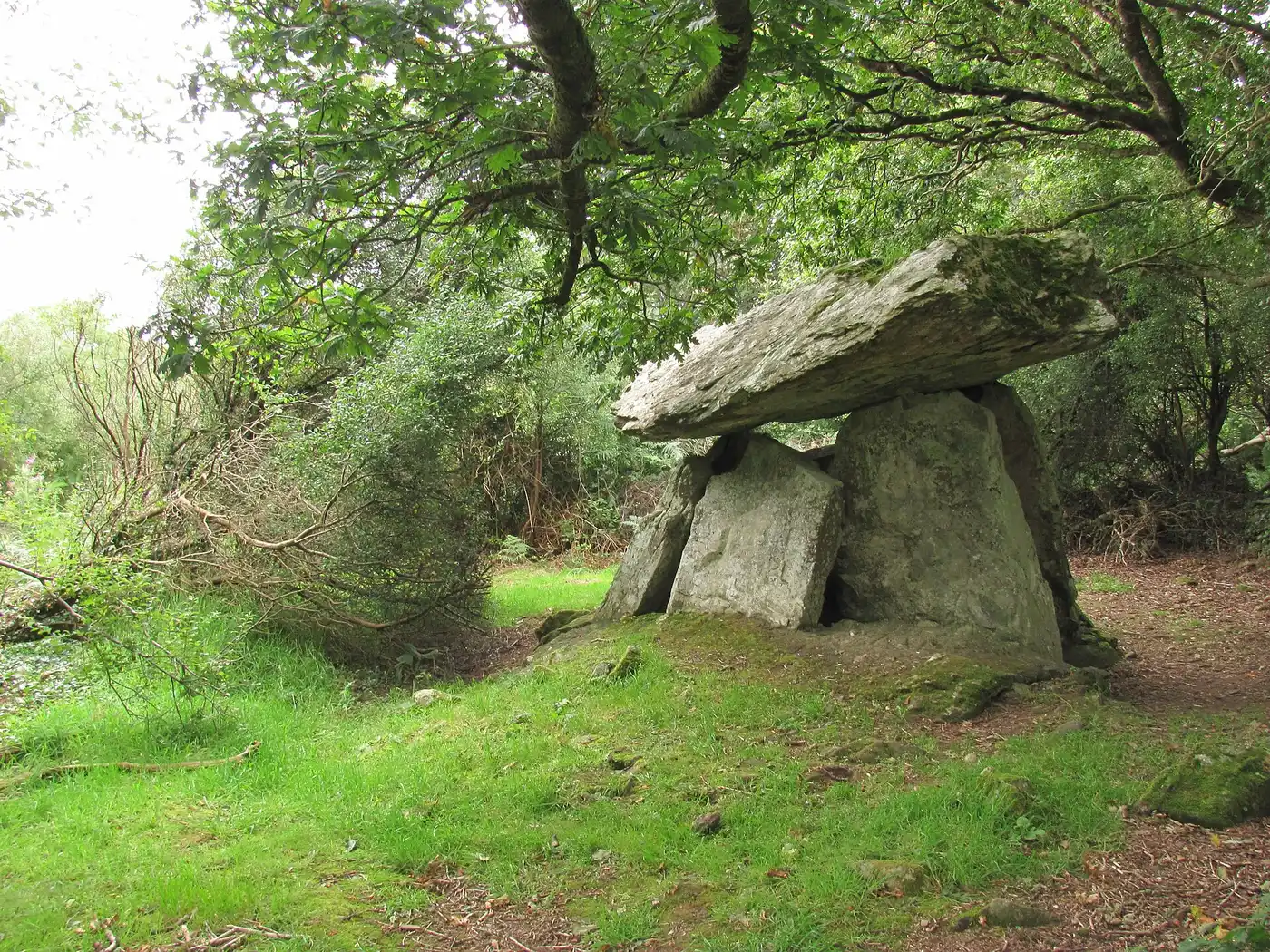
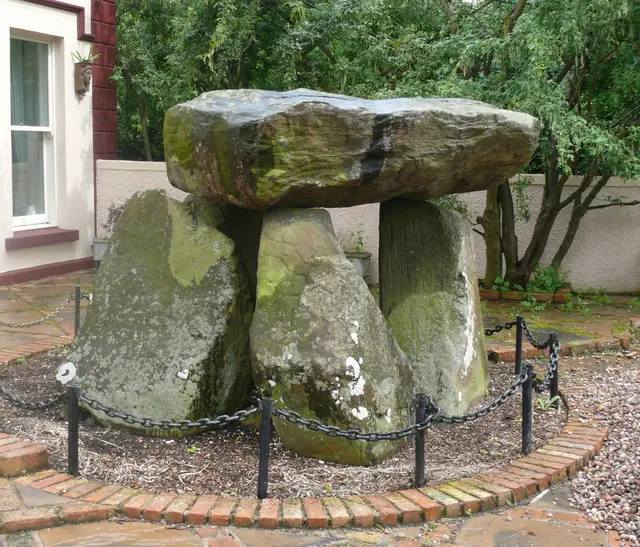
A dolmen, archaeologists prefer portal tomb, is a single-chamber megalithic tomb: two or more upright stones supporting a large, flat capstone. Most were built in the late Neolithic, between about 4000 and 3000 BC, and many were once covered with earth or smaller stones to make a mound. Where the covering has eroded away, what is left is the stone frame, which is what most people picture when they think of a megalith at all.

The capstones are the astonishing part. Some weigh tens of tonnes, raised by people with no metal, no wheel and no draught animals, onto uprights that have held them level, sometimes with small pad-stones wedged in for the purpose, ever since. How exactly it was done is still argued about; that it was done, in a few hundred places across Ireland, is not.

They cluster in the north and the east, with famous outliers in the Burren and the south. The list below has every dolmen with a documented article and a location.

Sources: Wikipedia — Dolmen ↗

The dolmens, county by county

County Antrim · Aontroim · 2

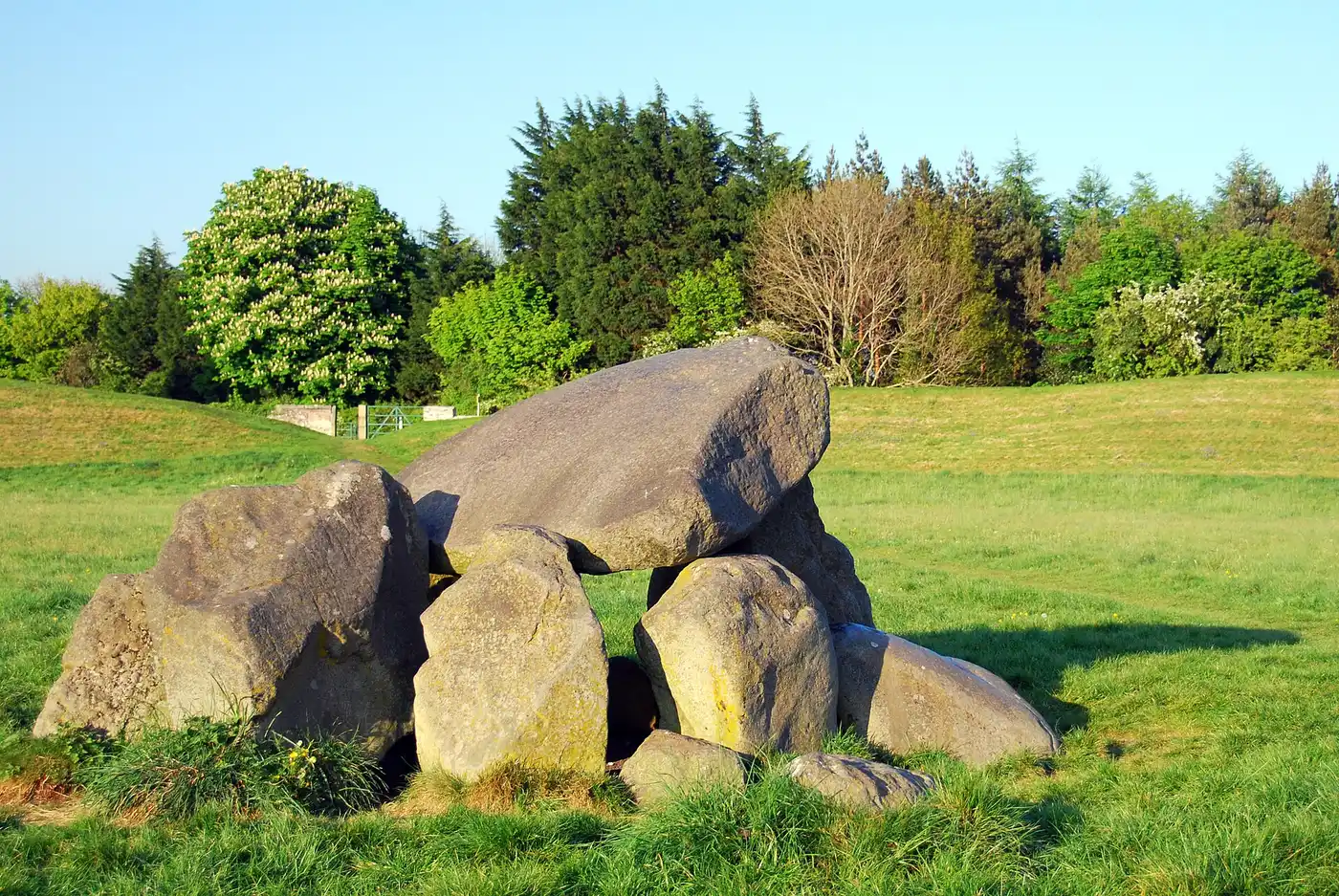
Ballylumford Dolmen, County Antrim
Photograph: Don McCluney · CC BY-SA 2.0 · Wikimedia Commons

Ballylumford Dolmen

The Ballylumford Dolmen is a dolmen in County Antrim, Northern Ireland. It is near the north-west tip of the Islandmagee peninsula by Ballylumford power station. Known locally as the "Druid's Altar", it could be 4,000 years old, or the remains of an even earlier passage grave.
Giant's Ring, County Antrim
Photograph: robertpaulyoung · CC BY 2.0 · Wikimedia Commons

Giant's Ring

The Giant's Ring is a henge monument at Ballynahatty, near Shaw's Bridge, Belfast, Northern Ireland. The site is a State Care Historic Monument and also a Site of Special Scientific Interest.

County Armagh · Ard Mhacha · 1

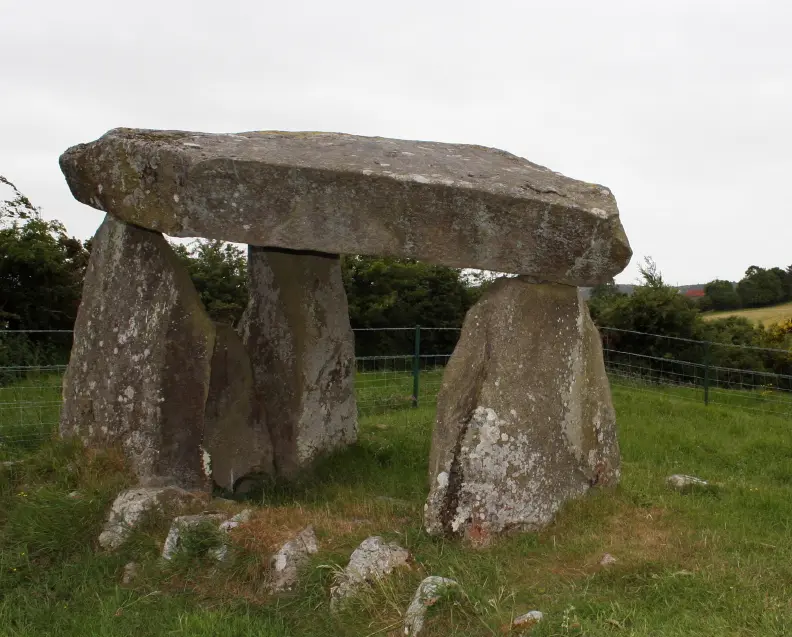
Ballykeel Dolmen, County Armagh
Photograph: Tony Bowden · CC BY-SA 2.0 · Wikimedia Commons

Ballykeel Dolmen

Ballykeel Dolmen is a Neolithic tripod portal tomb and a State Care Historic Monument at the foot of the western flank of Slieve Gullion in Northern Ireland. It is located above a tributary of the Forkhill river, in the Newry, Mourne and Down District Council area, at grid ref: H9950 2132.

County Carlow · Ceatharlach · 1

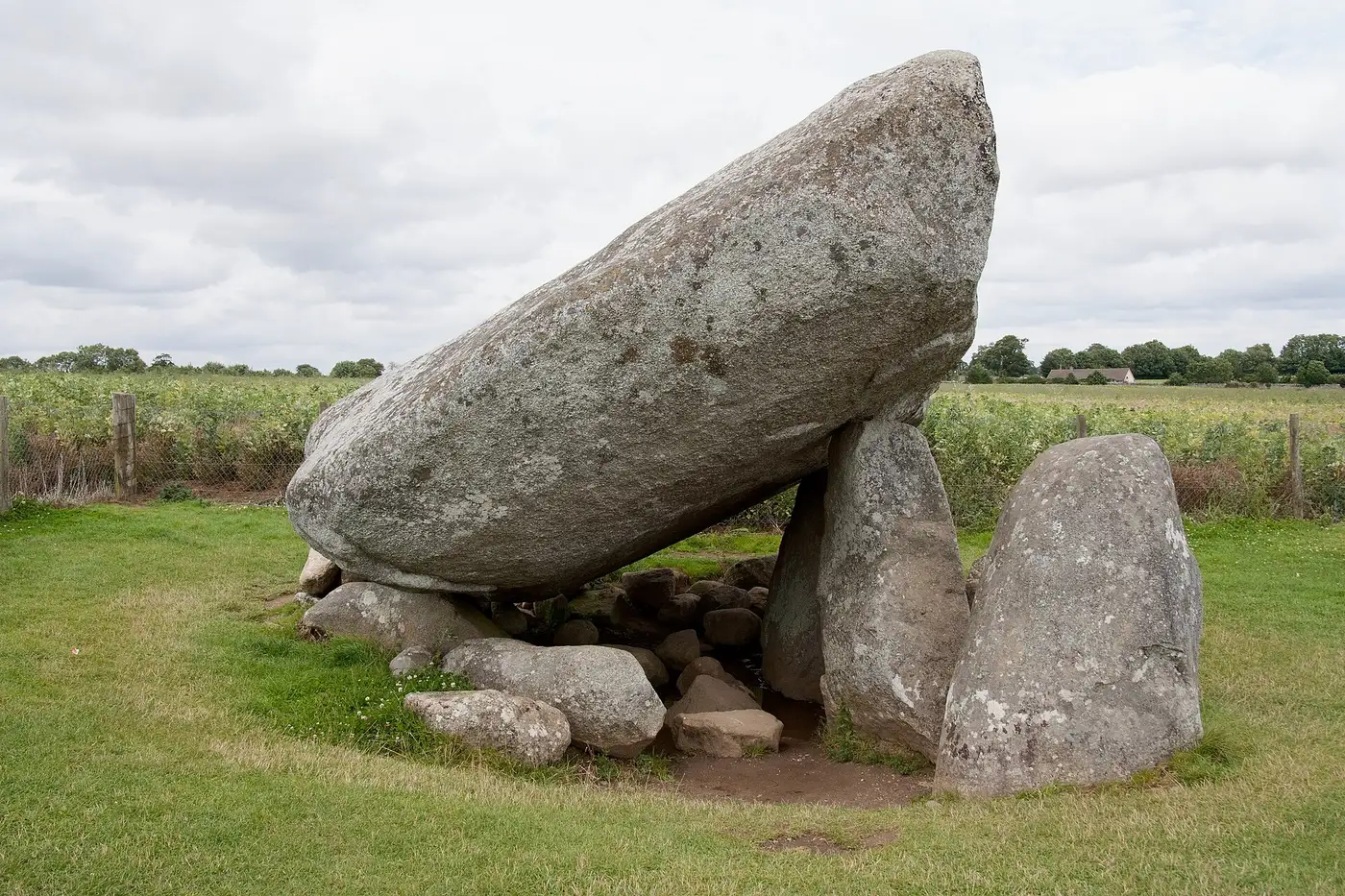
Brownshill dolmen, County Carlow
Photograph: Elliot Tucker · CC BY-SA 4.0 · Wikimedia Commons

Brownshill dolmen

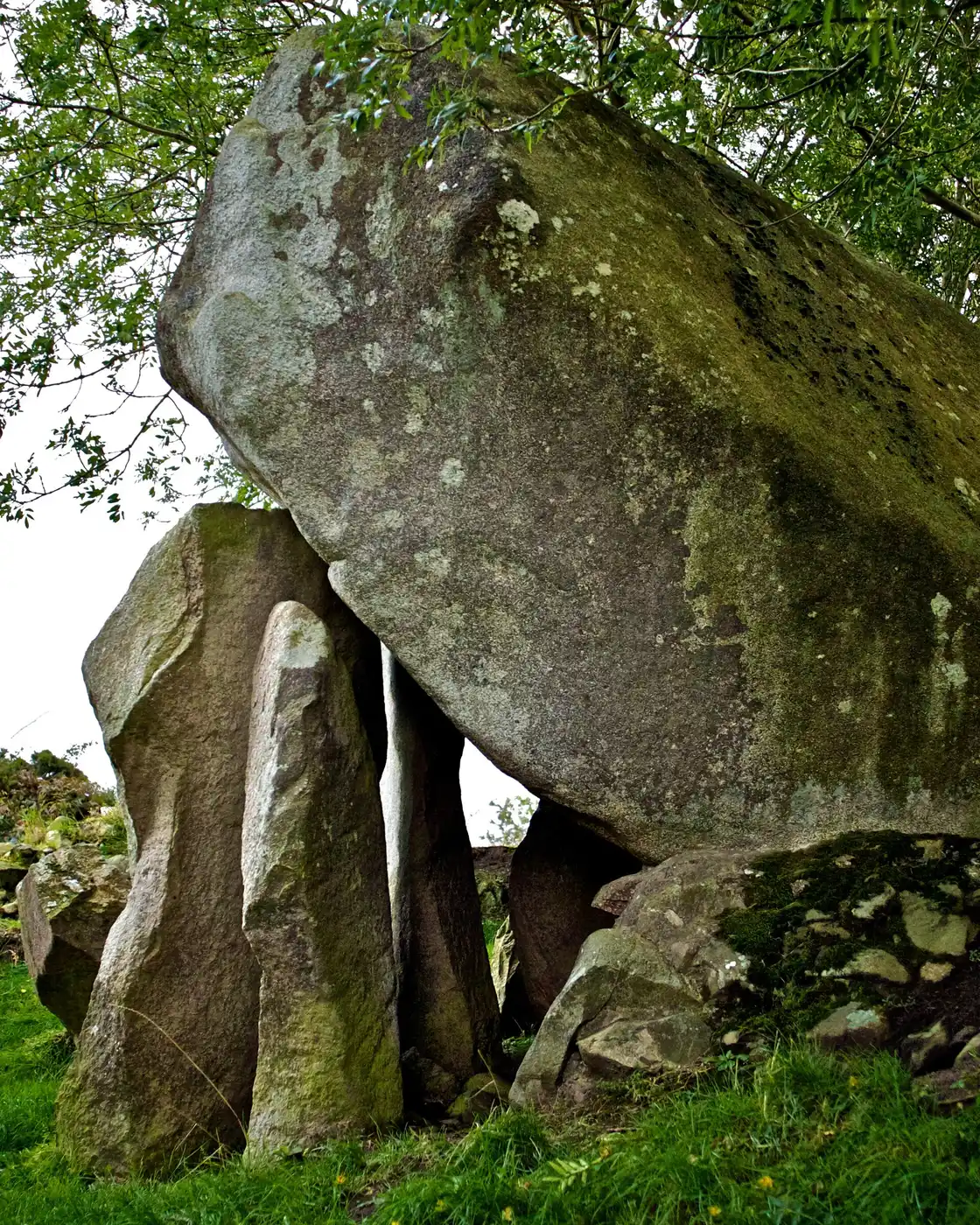
Brownshill Dolmen (Irish: Dolmain Chnoc an Bhrúnaigh) is a very large megalithic portal tomb situated 3 km east of Carlow, in County Carlow, Ireland. Its capstone weighs an estimated 150 metric tons, and is reputed to be the heaviest in Europe. This dolmen has three large uprights and two recumbent stones at the other end.

County Cavan · An Cabhán · 1

County Clare · An Clár · 1

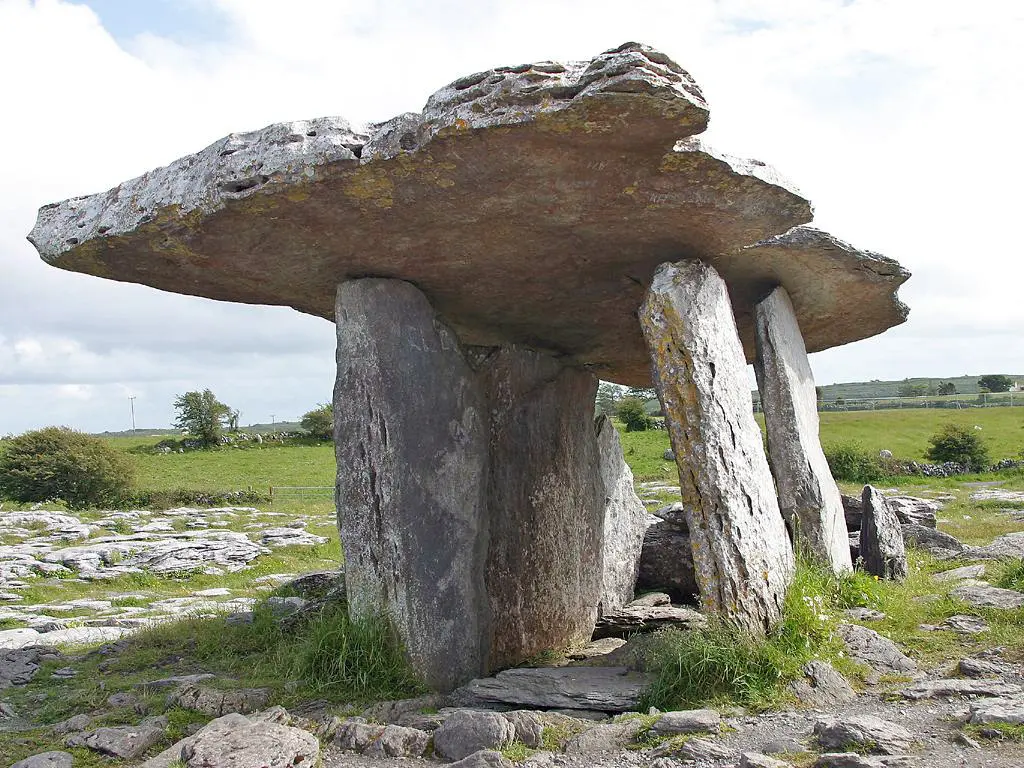
Poulnabrone dolmen, County Clare
Photograph: User Kglavin on en.wikipedia · Public domain · Wikimedia Commons

Poulnabrone dolmen

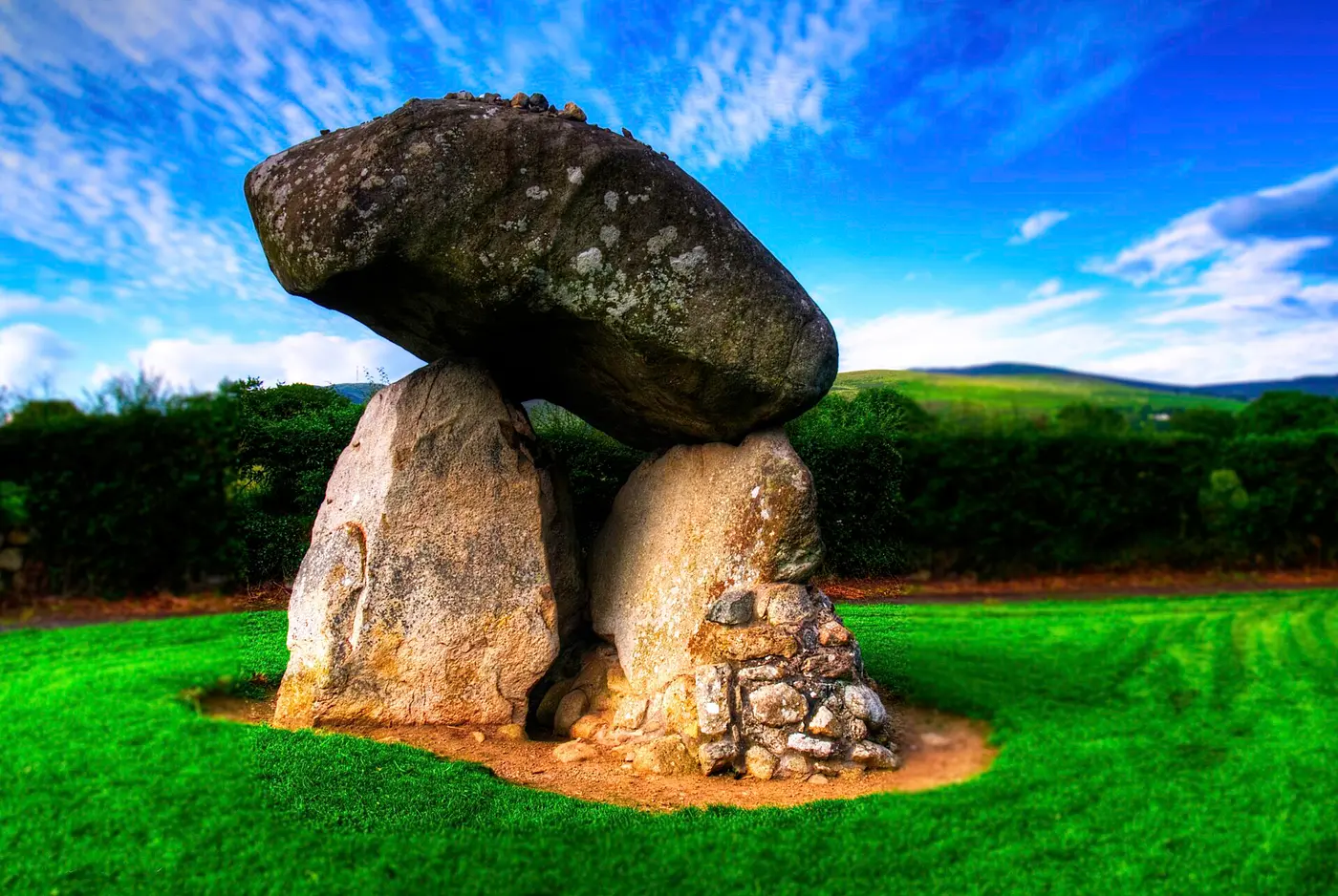
Poulnabrone dolmen (Irish: Poll na Brón, lit. 'Hole of the Quernstone') is a large dolmen (or cromlech, a type of single-chamber portal tomb) located in the Burren, County Clare, Ireland.

County Down · An Dún · 3

Annadorn Dolmen, County Down
Photograph: Ardfern · CC BY-SA 3.0 · Wikimedia Commons

Annadorn Dolmen

Annadorn Dolmen is a dolmen sited at the Buck's Head near Loughinisland, in the townland of Annadorn. Nearby you can find the old Annadorn school and post office in County Down, Northern Ireland. It is on the north-east shore of Loughinisland Lake, on a hillock overlooking Loughinisland Churches, a group of three ruined churches.

Goward Dolmen, County Down
Photograph: Tony Bowden · CC BY-SA 2.0 · Wikimedia Commons

Goward Dolmen

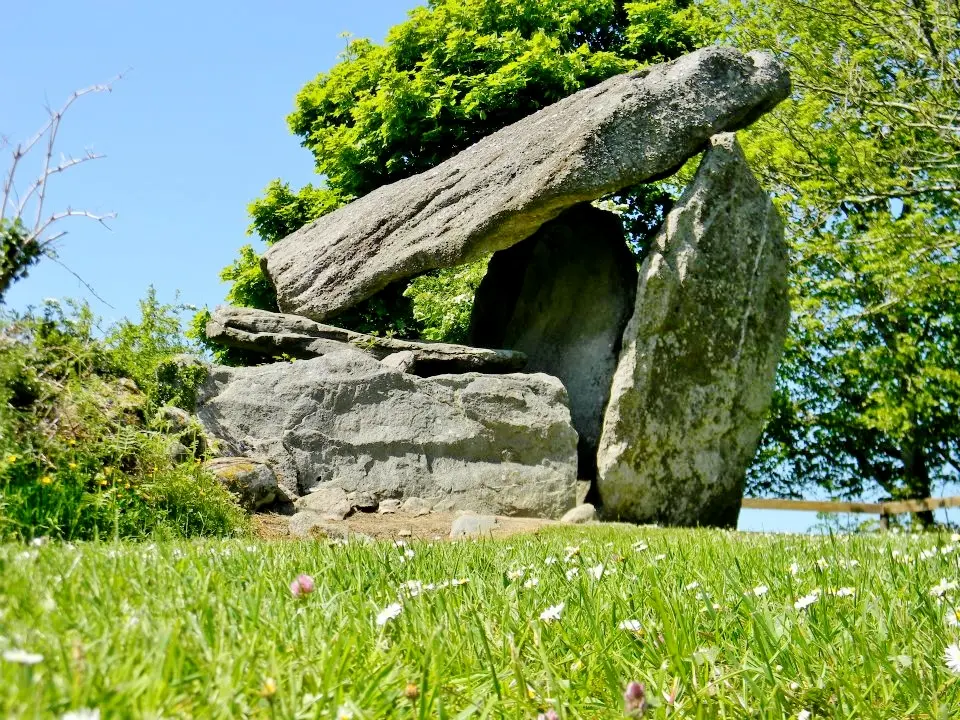
Goward Dolmen is a megalithic dolmen or cromlech situated between Hilltown and Castlewellan in County Down, Northern Ireland, two miles from Hilltown. It is in a farmer's field in the townland of Goward, in the parish of Clonduff. It is known locally as Pat Kearney's Big Stone or Cloughmore Cromlech.

Legananny Dolmen, County Down
Photograph: The Dreaded Lurgi · CC BY-SA 3.0 · Wikimedia Commons

Legananny Dolmen

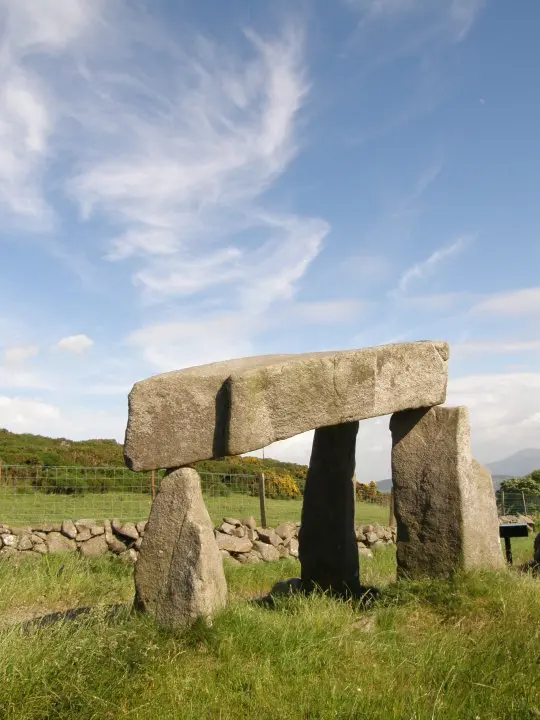
The Legananny Dolmen is a megalithic dolmen or cromlech nine miles southeast of Banbridge and three miles north of Castlewellan, both in County Down, Northern Ireland. It is on the slopes of Slieve Croob near the village of Leitrim in Drumgooland parish, between a farmer's stone wall and a back road.

County Dublin · Baile Átha Cliath · 3

Brennanstown Portal Tomb, County Dublin
Photograph: Wanfried-Dublin · CC BY-SA 4.0 · Wikimedia Commons

Brennanstown Portal Tomb

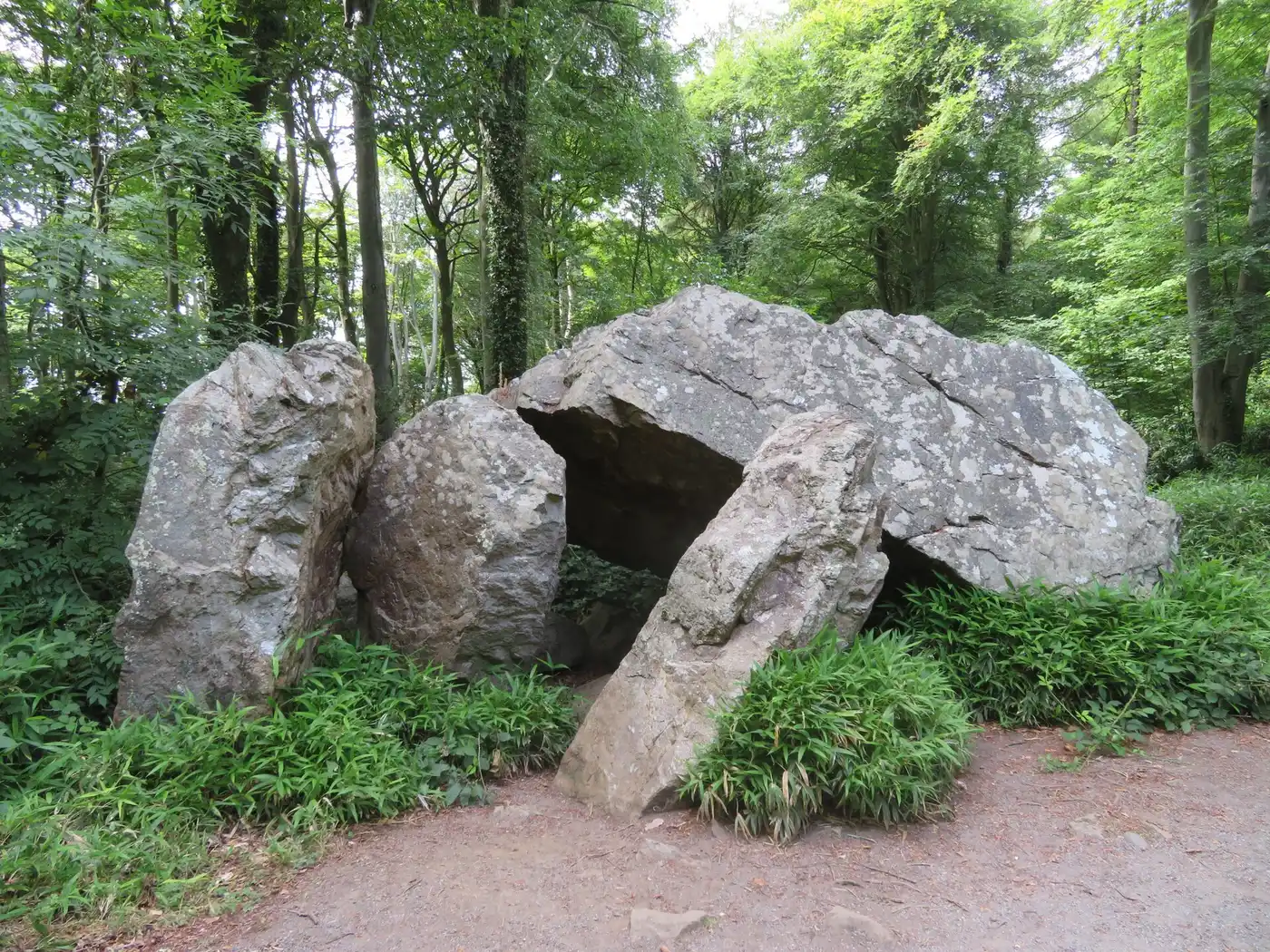
Brennanstown Portal Tomb, also called Glendruid Dolmen or Cabinteely Dolmen, is a dolmen constructed in Prehistoric Ireland and located in County Dublin. It is a National Monument.

Kiltiernan Tomb

Kiltiernan Tomb, also called Kiltiernan Portal Tomb or Kiltiernan Dolmen, is a dolmen located in County Dublin, Ireland. It is a National Monument.

County Kerry · Ciarraí · 1

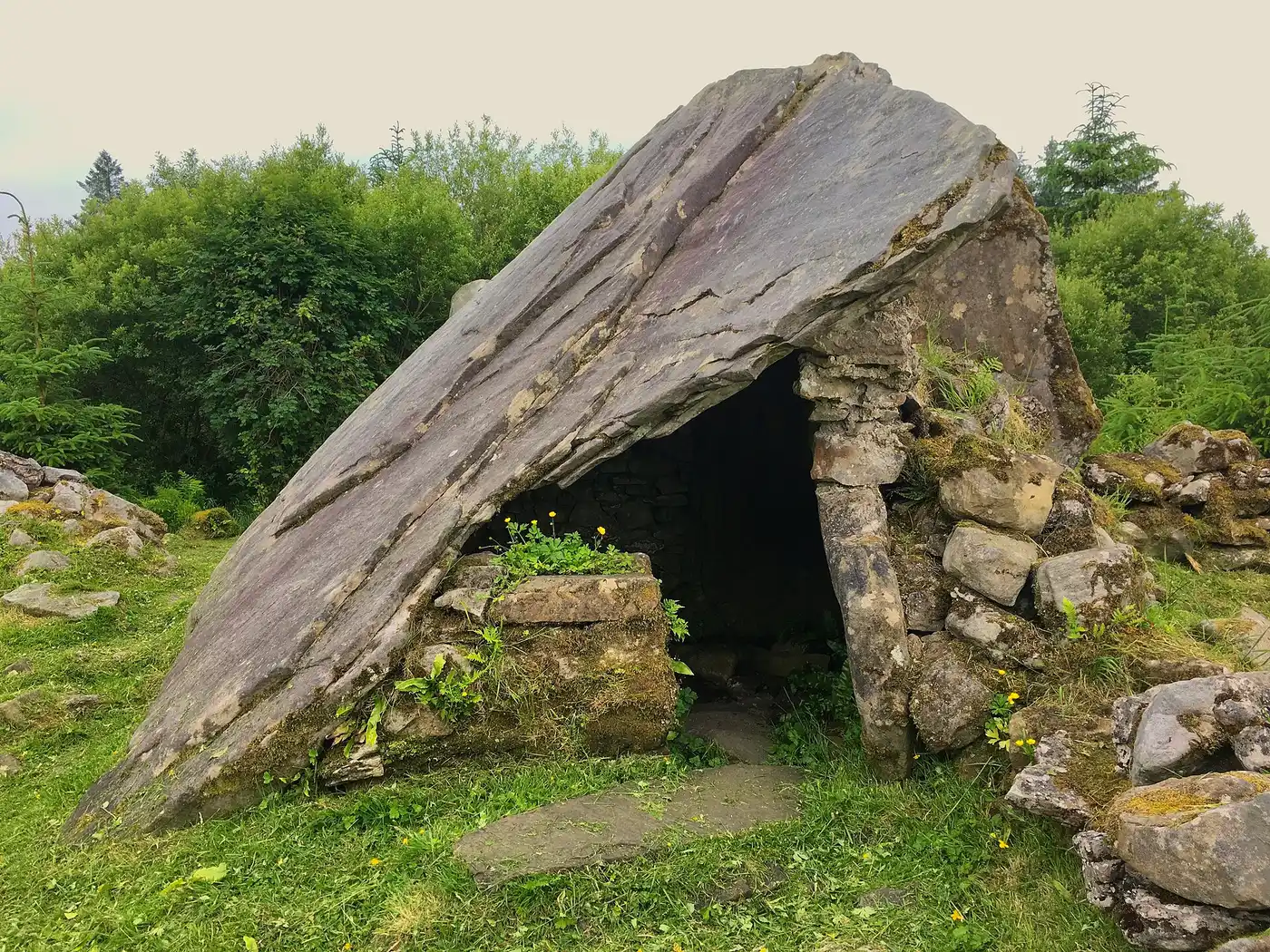
Killaclohane Portal Tomb, County Kerry
Photograph: EducationKerryCountyMuseum · CC BY-SA 4.0 · Wikimedia Commons

Killaclohane Portal Tomb

Killaclohane Portal Tomb is a megalithic tomb located in the townland of Killaclohane, about 2 km east of Milltown, County Kerry, Ireland. This Neolithic tomb dates to 3800 BC and is Kerry’s oldest man-made structure and earliest identified burial monument.

County Kilkenny · Cill Chainnigh · 1

County Louth · Lú · 1

County Roscommon · Ros Comáin · 1

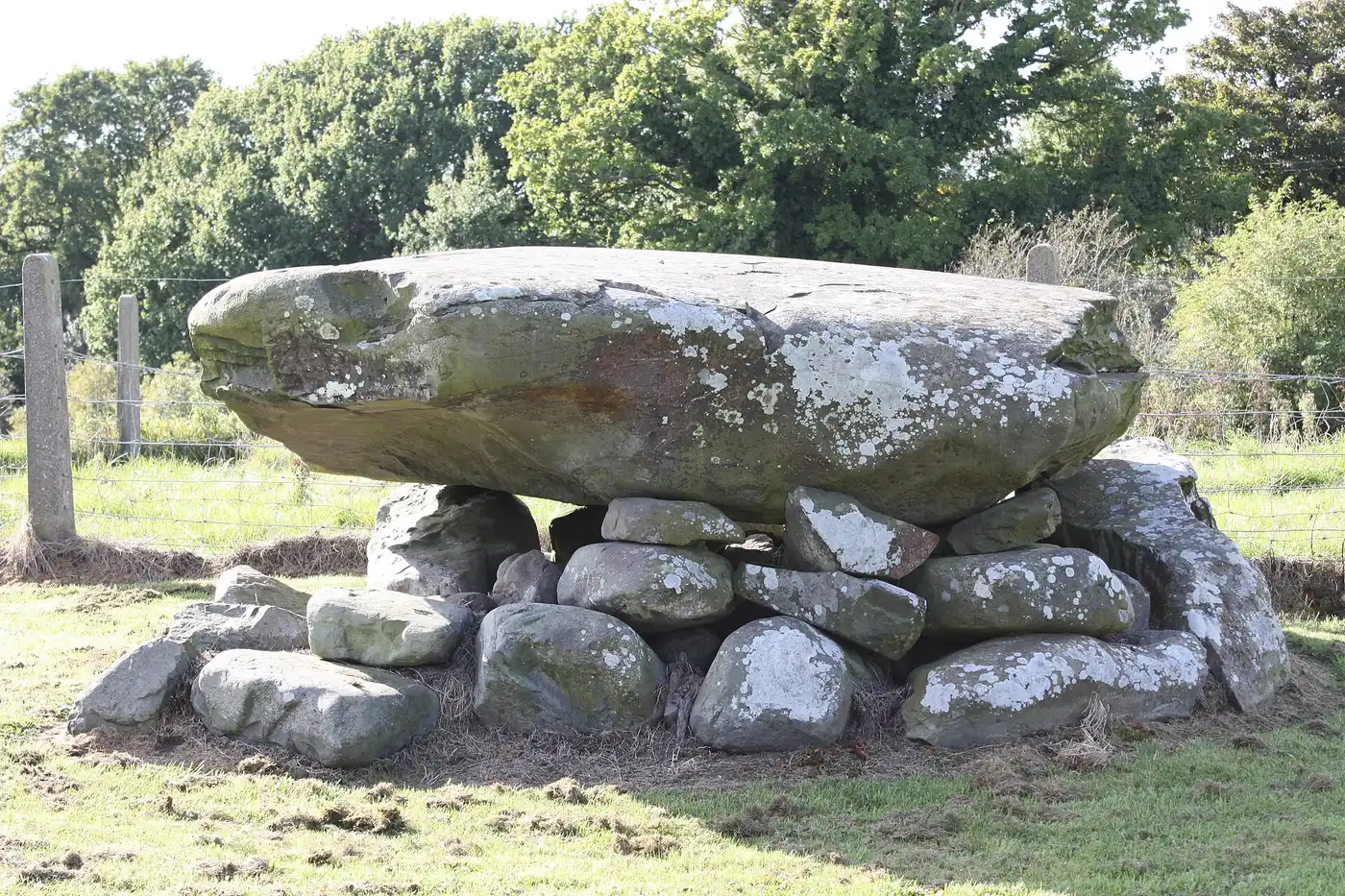
Meehambee Dolmen, County Roscommon
Photograph: Sarah777 at en.wikipedia · Public domain · Wikimedia Commons

Meehambee Dolmen

The Meehambee Dolmen, also known as the Mihanboy Portal Tomb, is a Neolithic portal tomb located in the townland of Mihanboy, near Athlone in County Roscommon, Ireland. The monument is dated to around 3500 BC and is listed as a Recorded Monument under the National Monuments Acts.

County Waterford · Port Láirge · 3

Knockeen Portal Tomb, County Waterford
Photograph: RTG · CC BY-SA 4.0 · Wikimedia Commons

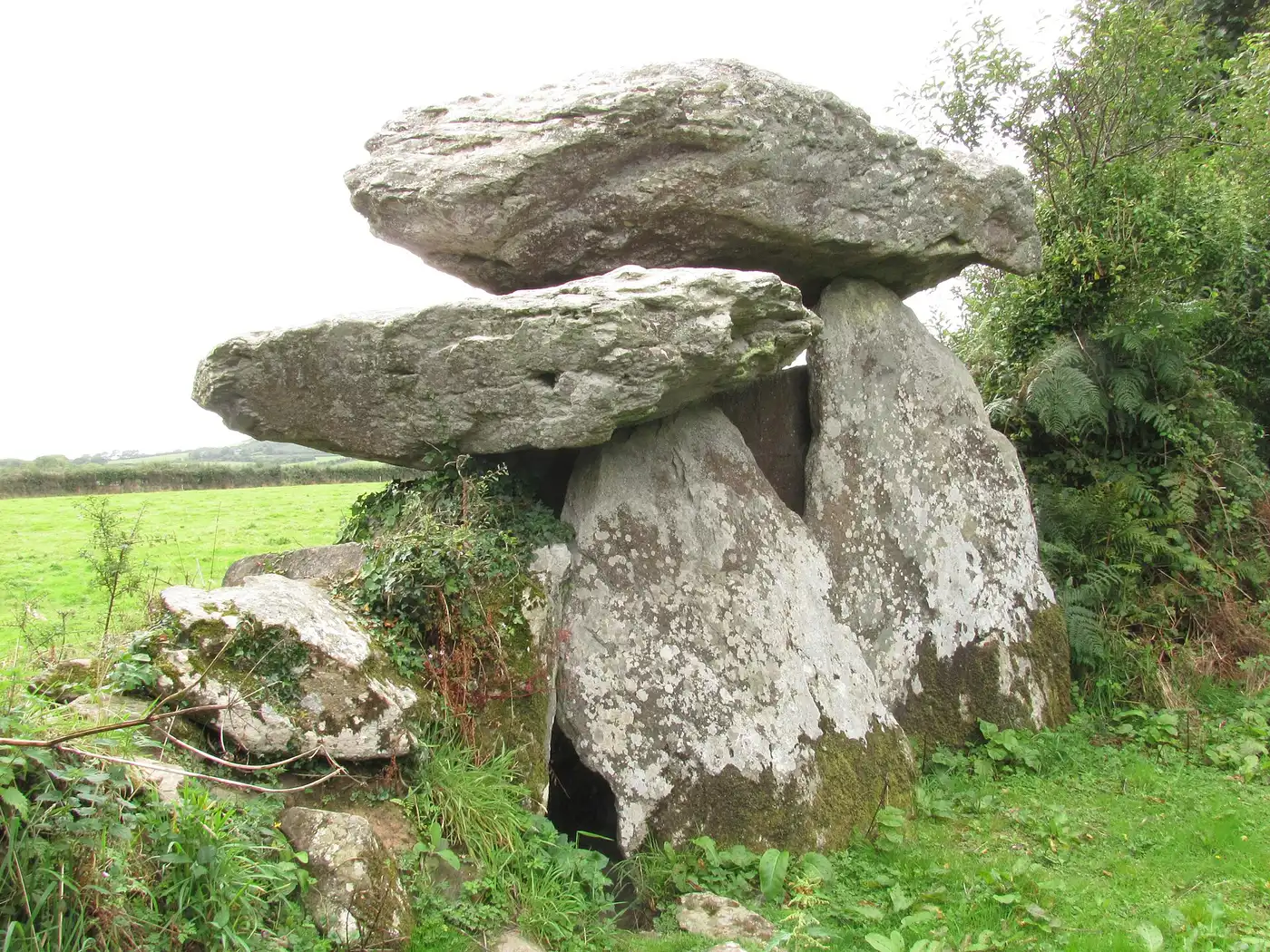
Knockeen Portal Tomb

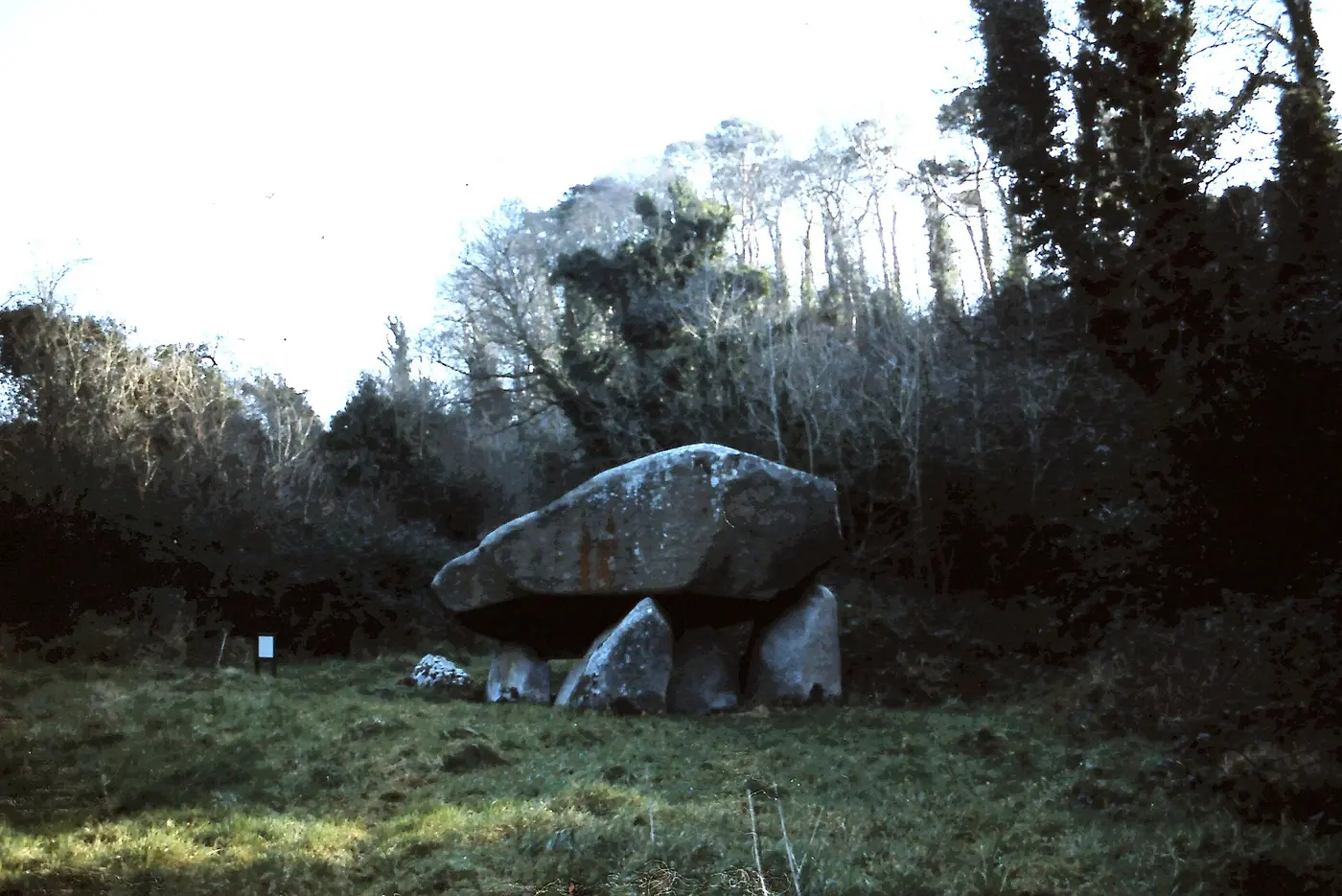
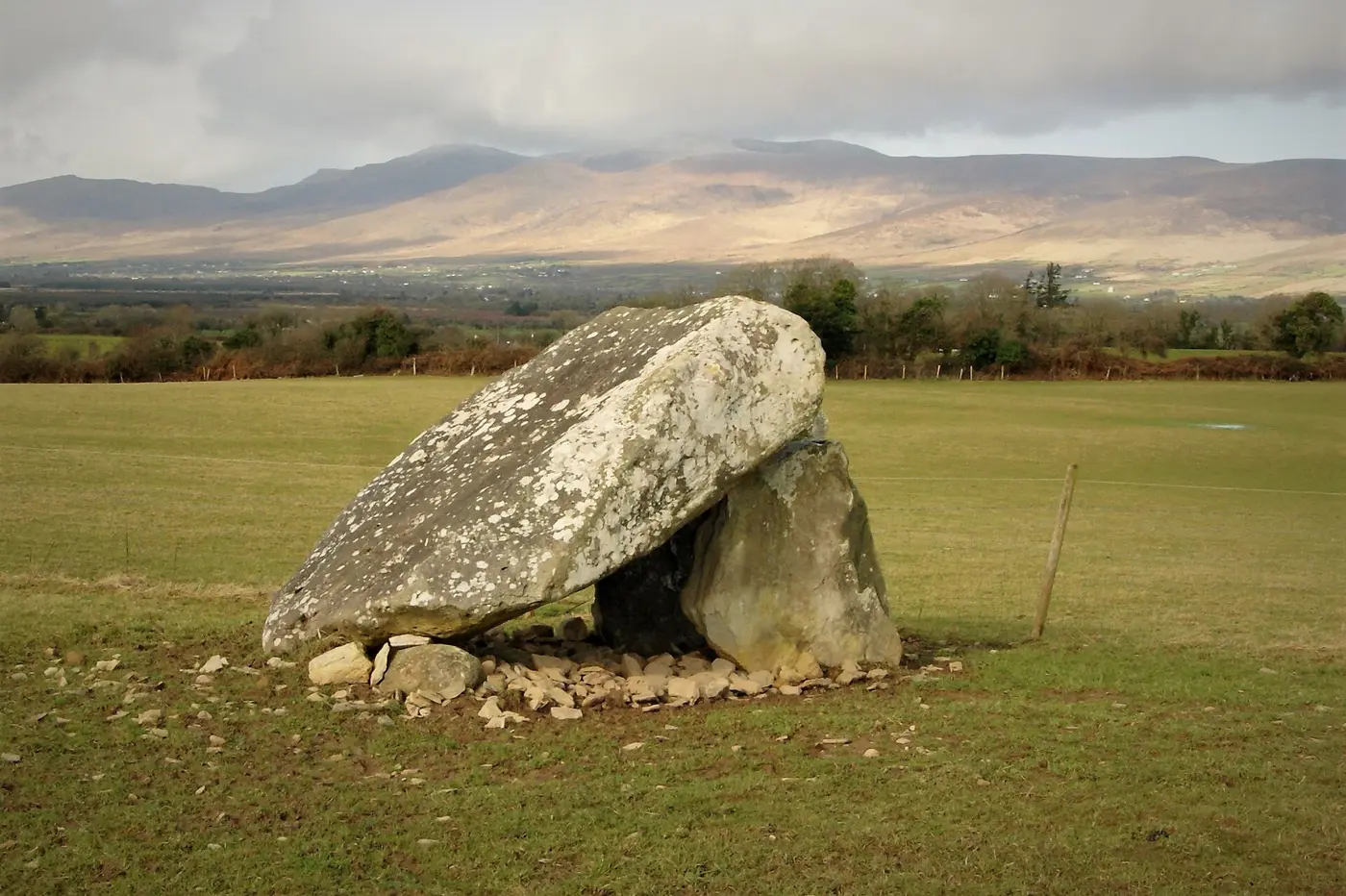
The Knockeen Portal Tomb is a megalith in Knockeen, County Waterford, Ireland. It is the largest dolmen (portal tomb) in County Waterford exhibiting a double capstone configuration, though it is not the tallest standing stone structure. It is one of the finest examples of a dolmen in Ireland.

Descriptions are Wikipedia's own opening lines, used under CC BY-SA 4.0 with a link to each article; the list and the coordinates come from the same place. Nothing here is a guide to access — many of these stand on private land.

Quick answers
What is a dolmen?

A single-chamber megalithic tomb (two or more upright stones carrying a large flat capstone) from the late Neolithic, about 4000–3000 BC. Archaeologists call them portal tombs. Many were once buried under a mound that has since eroded away.

How were dolmen capstones lifted?

By people with no metal tools, no wheel and no draught animals, which is why it is still argued about. Earth ramps, levers and rollers are the usual answer; some capstones weigh tens of tonnes.

How many dolmens are there in Ireland?

A few hundred portal tombs are recorded; this page has the 19 with a documented article and a location.

The other monuments

Know one that is missing? Thousands of dolmens have no article and no pin — a townland name and a rough location is enough to start.

Suggest a site →