Ballinalacken Castle
Ballinalacken Castle is a two-stage tower house located in Killilagh parish of County Clare, Ireland. It is of uncertain date but most likely was built in the 15th or early 16th century.
13 castles, from Norman keeps to the tower houses that Gaelic and Anglo-Irish families raised in their hundreds — and the ones that are now four walls and a jackdaw.
Ballinalacken Castle is a two-stage tower house located in Killilagh parish of County Clare, Ireland. It is of uncertain date but most likely was built in the 15th or early 16th century.
Ballycar Castle stood in the parish of Newmarket-on-Fergus, near the road between Limerick and Galway, 3 miles (5 km) from Sixmilebridge, 9 miles (14 km) from Limerick, and 7 miles (11 km) from Ennis it was said to have been built before 1570 and was a ruin before 1681 when it was sketched by Thomas Dineley.
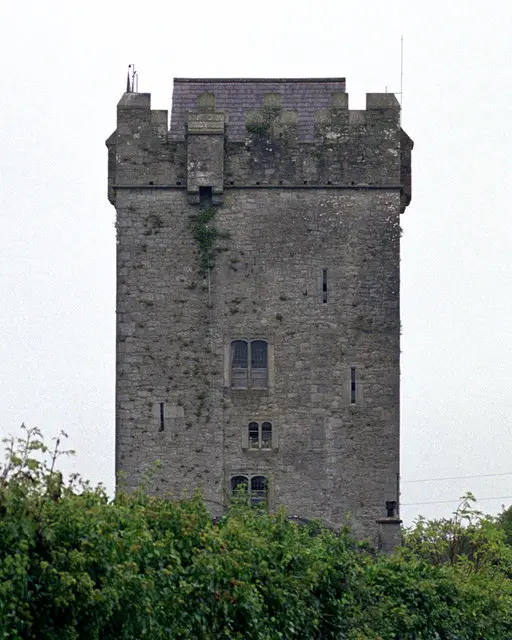
Ballyhannon Castle is a medieval Irish castle dating back to the 15th century, located near the village of Quin in County Clare, on the west coast of Ireland.
Ballymarkahan Castle is a ruined tower house in the parish of Quin, in County Clare, Ireland. It was listed by Irish antiquarian T. J. Westropp as one of the 195 "lesser castles", or peel towers, of County Clare in 1899, by which time it was already a ruin.
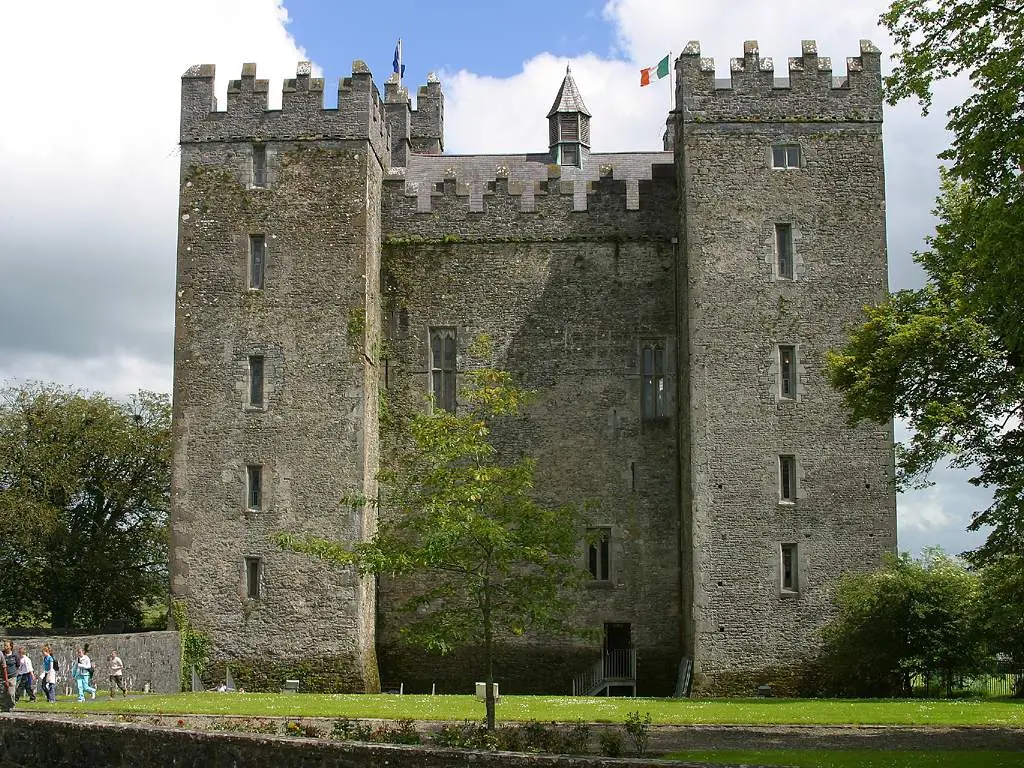
Bunratty Castle (Irish: Caisleán Bhun Raithe) is a large 15th-century tower house in County Clare, Ireland. It is located in the centre of Bunratty village, by the N18 road between Limerick and Ennis, near Shannon Town and its airport.
Castlebawn is a 16th-century tower house, in County Clare, Ireland. It is on a small island on Lough Derg on the River Shannon, it is connected to the shore of Bealkelly by a man-made causeway. It was built by the McNamaras about 1540, severely damaged in 1827, but is now restored although public access is not permitted to the castle.
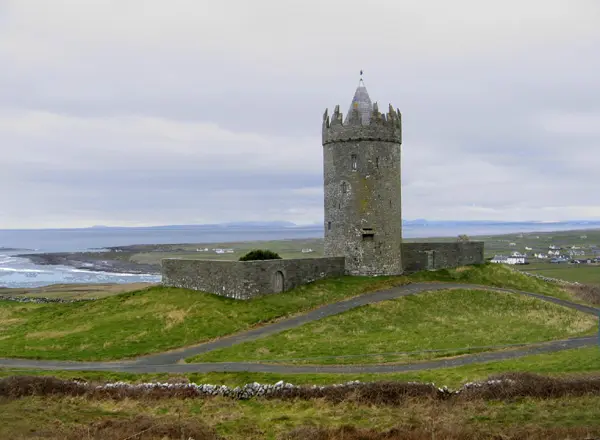
Doonagore Castle is a round 16th-century tower house with a small walled enclosure located about 1 km south of the coastal village of Doolin in County Clare, Ireland. Its name may be derived from Dún na Gabhair, meaning "the fort of the rounded hills" or the "fort of the goats".
Dough Castle (Irish: Dumhach Ui Chonchuir – "sandbank of the O'Connors") is a ruined tower house at Lahinch in County Clare, western Ireland. It was established by the O'Conors in the early 14th century, but nothing remains of the original structures.
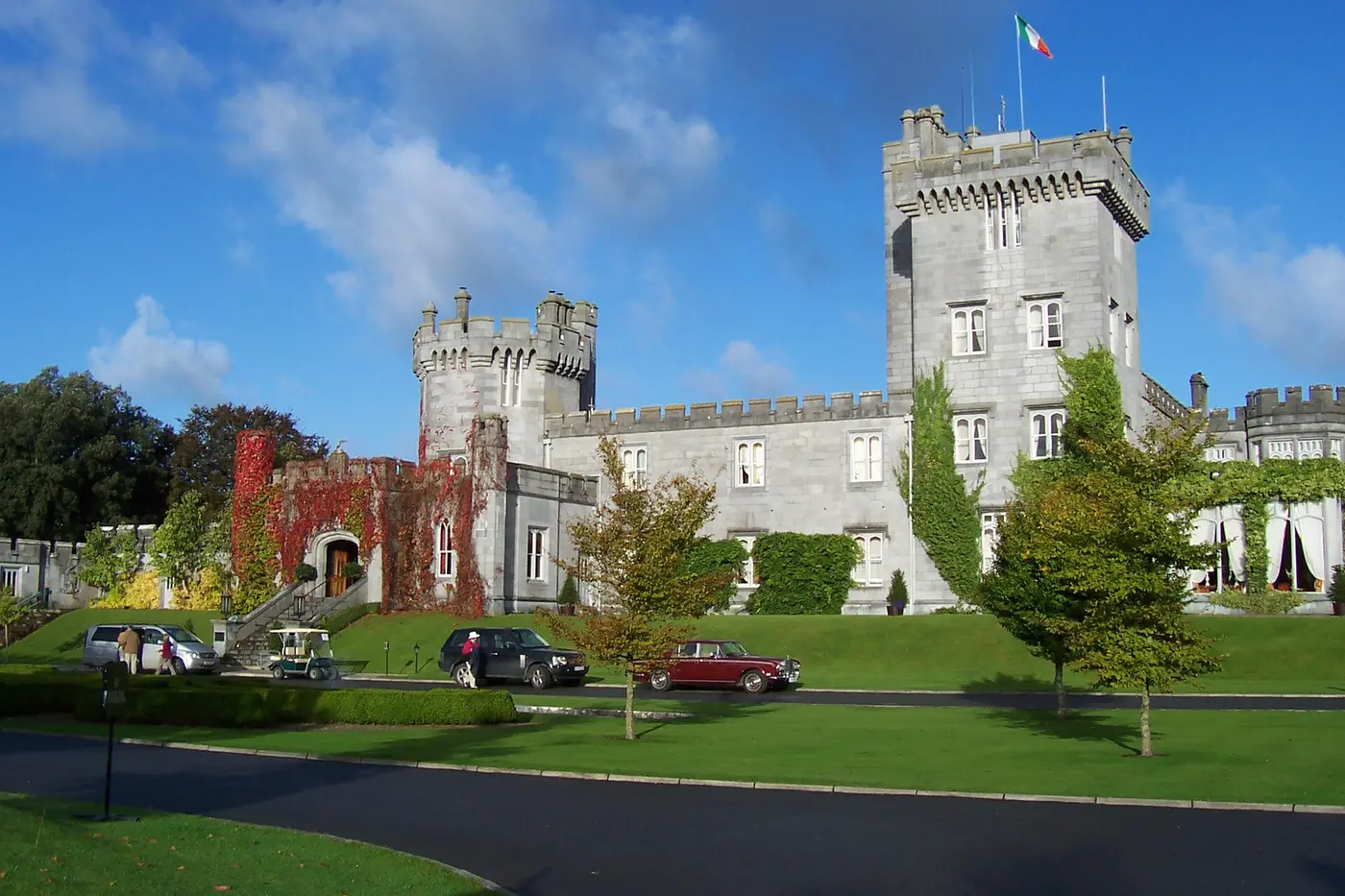
Dromoland Castle (Irish: Drom Ólainn) is a castle, located near Newmarket-on-Fergus in County Clare, Ireland. It is operated as a five-star luxury hotel with a golf course, with its restaurant, the "Earl of Thomond", being awarded a Michelin star in 1995, under head chef Jean Baptiste Molinari.
Dromore Castle is a tower house and National Monument located between the towns of Crusheen and Corofin in County Clare, Ireland. Today, it is administered by the National Parks and Wildlife Service as part of the Dromore Wood Nature Reserve.
Gregans Castle is the name applied to both a 15th-century tower house and a Georgian-style house in the Burren region of County Clare, Ireland, near the village of Ballyvaughan. The latter dates from 1750 and is associated with the Martyn and O'Lochlainn (or O'Loughlen) families.
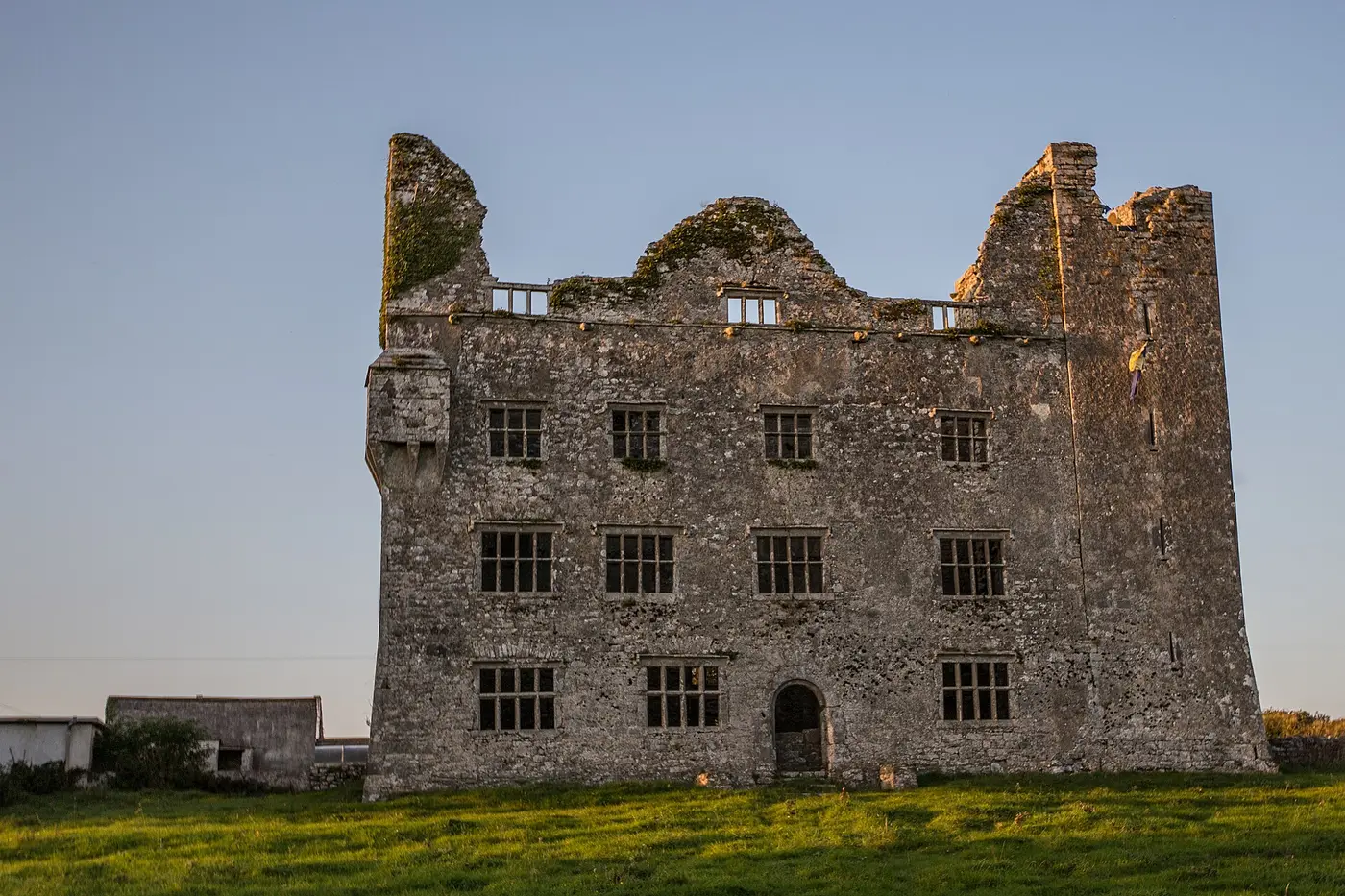
Leamaneh Castle is a ruined castle located in the townland of Leamaneh North, parish of Kilnaboy, between the villages of Corofin and Kilfenora at the border of the region known as the Burren in County Clare, Ireland. It consists of a 15th-century tower house and a 17th-century mansion.
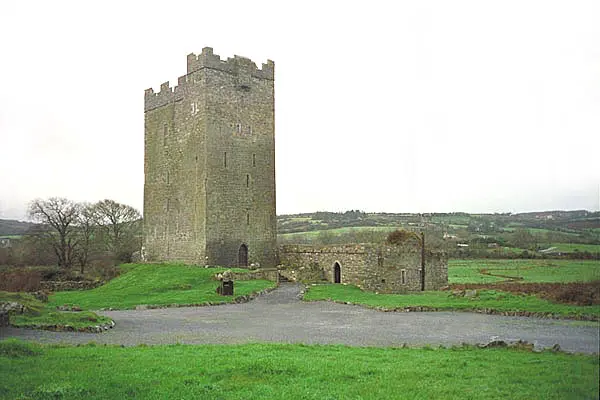
O'Dea Castle, also known as Dysert O'Dea Castle, is an Irish fortified tower house, loosely described as a castle at Dysert O'Dea (Irish: Dísert, meaning 'hermitage'), the former O'Dea clan stronghold, 5 kilometres (3 mi) from Corofin, County Clare.
Descriptions are Wikipedia's own opening lines, used under CC BY-SA 4.0 with a link to each article; the list and the coordinates come from the same place. Nothing here is a guide to access — many of these are private homes or stand in private fields.
What stood in Clare before anybody thought of building a keep.